
FIND US
Davenport, IA
4710 N Brady St
Davenport, IA 52806
Des Moines, IA
2276 NE 46th Ave
Des Moines, IA 50317
Cantilever Racking
Overview
Cantilever racking is a strong, open‑front storage rack system designed to store long and bulky materials that cannot fit in a traditional selective pallet rack. These cantilever racking systems use upright vertical columns, bases, brace sets, and adjustable cantilever rack arms to create custom layouts for many types of long products. The open front allows workers to load and unload materials without dealing with obstruction from vertical posts. This design makes the system especially useful for items like tubing, lumber, trim, and steel bars, which often require extra space and clear access.
Barron Equipment provides light duty, intermediate duty, and heavy duty structural cantilevers to support different storage needs. Light duty systems are suited for smaller, lighter items like thin tubing or trim, while heavier designs support larger loads common in warehouses, manufacturing plants, and building‑material facilities. Because these racks are open and easy to access, they help maximize available storage space and keep long materials organized, visible, and safer to handle.
Cantilever racking is also flexible. Components can be arranged to hold many types of long products, and the rack arms can be repositioned or changed as inventory changes. Many arms are punched on both sides, allowing for more adjustment options. This adaptability helps facilities upgrade or reorganize their storage without replacing the full system.
Types of Cantilever Racking
-

Cantilever Racking – Single or Double Sided Upright – Starter Kit – 12 ft. or 16 ft. Tall
Item ID: MCRSKFrom $693.90 Select options This product has multiple variants. The options may be chosen on the product page -

Intermediate Duty Cantilever
Read more -
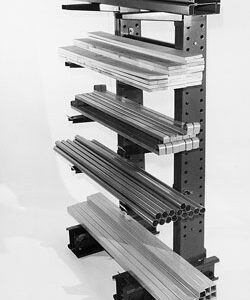
Light Duty Cantilever Racking
Read more -

MECO OMAHA Cantilever Rack
Read more
Features and Benefits
Cantilever racking is constructed using strong steel parts designed for stability and long‑term use. Each system uses uprights, bases, and arms and braces that work together to keep the rack sturdy, even when holding heavy items. The steel structure also allows the system to handle a wide range of arm capacities depending on the type of materials being stored. Straight arm and inclined arm options let users choose the best support style for their inventory. Straight arms create a flat surface ideal for lumber or sheet goods, while inclined arms reduce the risk of round materials—like pipes or bars—rolling off.
These cantilever racking systems can be configured as single sided cantilever racks placed along a wall or as single and double sided racks that offer access from both directions. This choice helps facilities design storage layouts that match their workflow. For example, single‑sided racks work well for narrow aisles or wall‑mounted setups, while double‑sided racks increase storage density in central warehouse locations. Bases and bracing provide strong reinforcement to support upright vertical columns, helping the rack stay secure while holding long loads.
The system’s open‑front design eliminates vertical posts in the loading area, which makes forklift access much easier. Workers can lift, move, and position materials more directly without maneuvering around obstructions. This setup improves safety and helps reduce handling time. Because cantilever systems have no shelf beams on the front, companies can adjust the number of arms or reposition them quickly as the size of their materials changes. These features make cantilever racking a practical choice for any operation that needs flexible storage for long, oversized, or awkward items.
Applications
Common Uses
- Pipes, tubing, and long steel bars
- Lumber, trim, molding, and building materials
- Sheet goods such as drywall or plywood
- Carpet rolls, furniture components, and similar long products
- Light industrial and retail stock requiring open access
Cantilever racking is used in many industries because it creates a safer and more organized way to hold long or uneven materials. Warehouses rely on these systems to keep materials off the floor where they could become damaged or difficult to reach. Manufacturing plants use them to organize tubing, metal bars, and other components used in production. Building‑material centers benefit from the ability to store large, bulky goods like molding, lumber, and sheet products.
Light duty systems are a good fit for smaller profiles such as lightweight tubing and trim, while intermediate and heavy duty systems are designed to support heavier loads commonly found in industrial environments. The ability to store long products in an open layout makes it easier for employees to find materials quickly, maintain safety, and use available storage space more efficiently.
Selection Assistance
Selecting the right cantilever racking system depends on several important factors, including the size and weight of your materials, how often the items are moved, and how much floor space your facility has available. Barron Equipment’s team helps customers determine the proper vertical column height, arm length, and arm capacities needed to safely support their inventory. They can also help facilities decide how many levels they need, the correct number of arms, and whether a single sided or double sided design will work best.
Their specialists also ensure your bases and brace sets match the correct duty level—light duty, intermediate duty, or extra heavy duty—based on your materials and handling equipment. Choosing the proper system is important for maintaining safety, supporting the right loads, and extending the life of the equipment. With the right configuration in place, cantilever racking provides an efficient, durable, and adjustable storage solution that grows with your inventory needs.