
FIND US
Davenport, IA
4710 N Brady St
Davenport, IA 52806
Des Moines, IA
2276 NE 46th Ave
Des Moines, IA 50317
Counterbalance Stackers
Overview
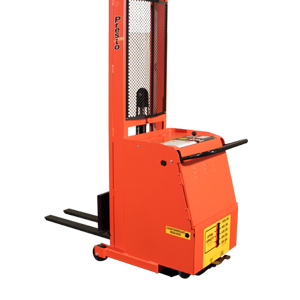
Counterbalance stackers are designed to lift, transport, and stack palletized loads using a rear counterweight system instead of front support legs. This design allows the forks to access pallets directly, making them ideal for handling closed-bottom pallets, skids, and non-standard loads that may not be compatible with other stackers.
Functioning similarly to a compact forklift, counterbalance stackers offer strong lifting capabilities while maintaining a smaller footprint for use in tighter warehouse environments. Available in manual and electric configurations, they are commonly used in facilities that require versatility, load accessibility, and efficient material handling without the size or cost of a full forklift.

Features and Benefits
Counterbalance stackers are built for flexibility, accessibility, and stable load handling across a wide range of applications. Key features and benefits include:
- No Straddle Legs – Open front design allows direct access to pallets, skids, and equipment
- Counterweight Stability – Rear counterweight balances loads for safe lifting and transport
- Forklift-Like Functionality – Handles a wider range of loads compared to traditional stackers
- Versatile Load Handling – Ideal for closed-bottom pallets, containers, and non-standard loads
- Compact Design – Maneuvers easily in tight aisles and confined workspaces
- Manual or Electric Options – Available with powered lift and drive for increased efficiency
- Enhanced Operator Control – Designed with ergonomic controls and safety features for precise handling
Applications
Counterbalance stackers are commonly used in environments where load access and versatility are essential.
Typical applications include:
- Warehouses handling mixed or closed-bottom pallet types
- Manufacturing and production facilities
- Loading and unloading trucks and trailers
- Bulk storage and rack placement
- Material transport in tight or congested areas
- Applications involving non-palletized or irregular loads
In these applications, counterbalance stackers provide a practical alternative to forklifts by allowing operators to handle a wider range of materials without front leg interference. Their ability to access pallets directly from the floor or shelving makes them especially useful in facilities with varied storage configurations and layout constraints
Selection
Selecting the right counterbalance stacker depends on your load requirements and application needs. Key considerations include:
- Load Capacity – Ensure the unit can safely handle your heaviest loads
- Lift Height – Match the stacker to your rack or stacking requirements
- Power Type – Manual for lighter use or electric for higher throughput operations
- Aisle Space – Consider maneuverability and turning radius for your layout
- Load Type – Ideal for closed-bottom pallets, skids, and irregular loads
- Duty Cycle – Evaluate frequency of use and daily workload
Choosing the correct configuration helps maximize efficiency, improve safety, and ensure compatibility with your material handling process.