
FIND US
Davenport, IA
4710 N Brady St
Davenport, IA 52806
Des Moines, IA
2276 NE 46th Ave
Des Moines, IA 50317
Loading Dock Guardrails
Loading dock guardrails are physical barrier systems designed to separate pedestrians from forklift traffic, protect overhead door tracks and building structures from vehicle impacts, and provide edge protection around loading dock areas. At many facilities, loading docks create elevated work areas where employees, forklifts, and material-handling equipment operate close to open edges and active traffic lanes. Guardrails help create a safer and more organized loading environment.
Many of Barron’s guardrail systems use steel construction protected with high-density polyethylene (HDPE) sleeves. HDPE provides a highly visible finish and helps eliminate ongoing painting requirements while protecting the underlying steel structure from everyday wear. The product lineup includes standard-duty guardrails, heavy-duty guardrails, goal post protection systems, door track guards, and custom wall-design guardrails.
Barron Equipment has supplied loading dock equipment since 1979 and serves facilities throughout Iowa and Illinois, plus parts of Wisconsin, Minnesota, Missouri, and Nebraska.
-
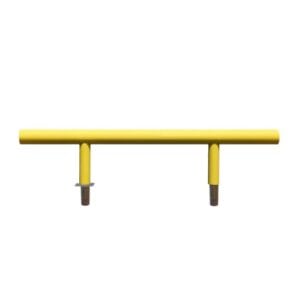
Standard Duty Guardrail
Item ID: SGR-L-LT-HTFrom $295.00 Select options This product has multiple variants. The options may be chosen on the product page -
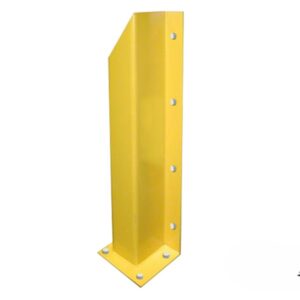
Door Track Guards – Multiple Size Available
Item ID: DTS-LT-WT-HTFrom $95.00 Select options This product has multiple variants. The options may be chosen on the product page -
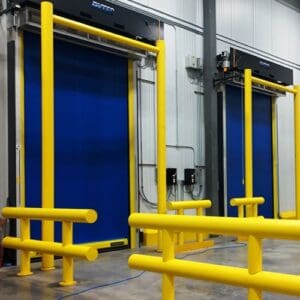
Goal Post Guardrail
Item ID: GP-CLR-WT-HTFrom $1,204.00 Select options This product has multiple variants. The options may be chosen on the product page -
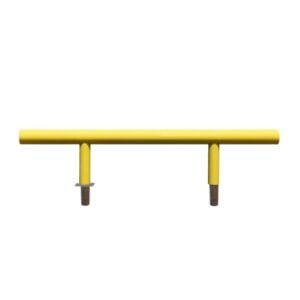
Heavy Duty Guard Rails
Item ID: HGR-L-LT-HTFrom $392.00 Select options This product has multiple variants. The options may be chosen on the product page -

Warehouse Wall Design Safety Guardrail
Read more
What Are Loading Dock Guardrails Used For?
Loading dock guardrails are commonly used to:
- Separate pedestrian pathways from forklift traffic
- Protect loading dock edges
- Shield overhead door tracks from impacts
- Protect structural columns and building corners
- Define dock staging and storage areas
- Create protected walkways through loading and warehouse environments
Unlike loading dock safety gates, which secure individual dock openings, guardrails generally remain fixed in place to define and protect broader operational areas.
Types of Loading Dock Guardrails
Standard Duty Guardrails
Standard duty guardrails are designed for warehouse aisles, pedestrian walkways, and moderate-traffic loading dock areas. Available heights range from approximately 14.75 inches to 42 inches, with lengths from 48 to 144 inches. These systems are commonly selected when protection is needed but traffic exposure is not extreme.
Heavy Duty Guardrails
Heavy-duty guardrails are designed for areas that experience frequent forklift activity and higher impact potential. Larger base plates and reinforced construction help support more demanding dock environments while maintaining clear separation between personnel and material-handling equipment.
Goal Post Guardrails
Goal post systems protect overhead door openings, dock doors, and door tracks from vehicle impacts. These tall protective structures remain one of the most specialized guardrail systems in the category and are commonly installed where forklifts repeatedly travel through active dock door openings.
Door Track Guards
Door track guards provide targeted protection for overhead door tracks and vulnerable door components. Their compact design makes them ideal for protecting door systems without affecting dock operations.
Warehouse Wall Design Guardrails
Warehouse wall design systems provide custom protection around storage perimeters and facility structures while maintaining visibility and airflow. These systems are often customized to the unique layout of the facility.
Loading Dock Guardrail Comparison
| Guardrail Type | Best For | Typical Height Range | Installation |
|---|---|---|---|
| Standard Duty | Moderate-traffic dock and warehouse areas | 14.75″–42″ | Core-in or plated |
| Heavy Duty | High-forklift-traffic environments | 14.75″–42″ | Core-in or plated |
| Goal Post | Overhead door and track protection | 96″–192″ | Core-in or plated |
| Door Track Guards | Protecting overhead door tracks | 24″–48″ | Bolt-on |
| Warehouse Wall Design | Custom perimeter protection | Custom | Core-in or base plate |
OSHA Fall Protection Considerations
Loading docks can create exposed edges whenever a trailer is absent from a dock position. The analysis identifies several OSHA standards commonly associated with dock-edge protection:
- 29 CFR 1910.28(b)(1) addresses fall protection at unprotected sides and edges four feet or more above a lower level.
- 29 CFR 1910.29(b)(1) addresses top-rail height requirements of approximately 42 inches.
- 29 CFR 1910.29(b)(2) addresses mid-rail requirements.
- 29 CFR 1910.29(b)(3) addresses the ability of guardrail systems to withstand at least 200 pounds of force.
Barrier selection alone does not guarantee OSHA compliance. Compliance depends on the opening, installation, operating procedures, employee exposure, and workplace conditions.
Goal Post Guardrails and Automatic Door Activation
One of the most unique products in the category is the Goal Post Guardrail. The analysis identifies an optional BEA Falcon Sensor that can be integrated into the overhead structure. The sensor is described as a microwave radar motion sensor capable of triggering automatic overhead door activation when a vehicle enters the detection area.
This feature may be useful for facilities looking to combine overhead-door protection with automated dock-door operation.
Core-In vs. Plated Installation
Many guardrail systems are available in both core-in and plated mounting configurations.
Core-In
Core-in installations place the guardrail posts directly into concrete, creating a highly secure anchoring system often preferred in higher-impact areas. The analysis associates this method with greater impact resistance.
Plated
Plated systems use surface-mounted base plates anchored to the slab. They can simplify future changes to the layout because they are generally easier to remove or relocate.
The appropriate installation method depends on traffic conditions, concrete construction, future layout plans, and project requirements.
Typical Loading Dock Applications
Loading dock guardrails are commonly used for:
- Open dock-edge protection
- Forklift-to-pedestrian separation
- Door-track protection
- Building-corner protection
- Dock staging areas
- Refrigerated dock entrances
- Dock leveler pit protection
Facilities seeking aisle protection or in-plant traffic separation should also review Barron’s separate warehouse guardrail category, which is focused on warehouse-space management rather than dock-edge protection.
Frequently Asked Questions
What is a loading dock guardrail?
A loading dock guardrail is a barrier system that helps separate pedestrians from vehicle traffic, protect dock structures, and help address fall hazards near loading dock areas.
Which OSHA standards apply to loading dock guardrails?
The analysis identifies OSHA 29 CFR 1910.28 and 1910.29 as the primary standards associated with dock-edge fall protection and guardrail performance.
What is the difference between Standard Duty and Heavy Duty guardrails?
Heavy-duty models are designed for areas with greater forklift traffic and potential impact exposure, while standard-duty systems are commonly used in moderate-traffic environments.
What is a Goal Post Guardrail?
A Goal Post Guardrail is a tall protective structure installed around overhead door openings to protect doors, tracks, and surrounding structures from vehicle impacts.
What is the Falcon Sensor?
The Falcon Sensor is an optional motion-detection system associated with certain Goal Post Guardrail configurations that can trigger automatic door activation.
Where does Barron Equipment install loading dock guardrails?
Barron Equipment serves facilities throughout Iowa and Illinois, plus parts of Wisconsin, Minnesota, Missouri, and Nebraska.
Loading Dock Guardrail Selection & Installation
Barron Equipment helps warehouses, distribution centers, manufacturing facilities, food-processing plants, and commercial properties select loading dock guardrails based on opening conditions, forklift traffic, facility layout, and safety objectives. Request a quote online to determine the best loading dock guardrail system for your facility.