
FIND US
Davenport, IA
4710 N Brady St
Davenport, IA 52806
Des Moines, IA
2276 NE 46th Ave
Des Moines, IA 50317
Insulated Rolling Doors
An insulated rolling door is a commercial overhead coiling door constructed from double-skin interlocking steel slats with a thermal insulation core between the interior and exterior metal skins. The insulated curtain helps reduce heat transfer and air infiltration while coiling compactly above the opening without ceiling-mounted horizontal tracks.
Barron Equipment supplies and installs CornellCookson THERMISER® and Thermiser Max® insulated rolling doors for commercial, industrial, and institutional facilities. Common applications include warehouses, distribution centers, manufacturing plants, cold storage facilities, data centers, healthcare buildings, hospitality properties, government facilities, and climate-controlled commercial spaces.
-

Extreme® 300 Series High Performance Rolling Door
Featuring a springless overhead door design, this door is ideal for industrial rolling door applications that do not need a million cycle door, but do require continuous uptime.Read more -
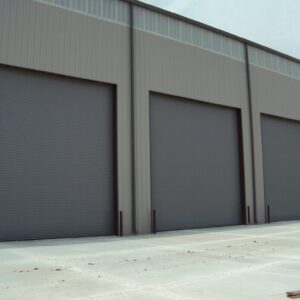
Thermiser Max® Insulated Roll Up Door
The Thermiser Max Insulated Rolling Door decreases air infiltration by 94% versus standard products. It is certified as the most energy-efficient insulated rolling door available today.Read more -
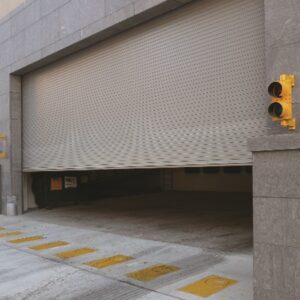
THERMISER® Insulated Roll Up Door
Designed for exterior openings where maintaining different temperatures on each side of the door is necessary.Read more
Improve Thermal and Environmental Separation
Exterior doors and openings between temperature zones can affect indoor conditions each time they open or close. Insulated rolling doors combine an insulated curtain with perimeter-sealing components to help manage environmental separation while preserving overhead space.
Depending on the selected model and configuration, available features may include:
- Double-skin interlocking steel slats
- Foamed-in-place urethane insulation
- Perimeter weather seals
- Thermally broken guide assemblies
- Lintel seals
- Manual or motorized operation
- High-cycle construction
- Battery-backup operators
- Operators for specialized environments
- Energy-code documentation
Product capabilities vary by model, opening size, operator, and configuration. Selection should account for the temperature difference between spaces, air-infiltration requirements, daily cycles, exterior conditions, opening dimensions, and applicable energy standards.
THERMISER vs. Thermiser Max
Barron’s Insulated Rolling Doors category currently includes two CornellCookson product families:
THERMISER® Insulated Rolling Door
The THERMISER ESD20 is a standard insulated rolling door designed for exterior openings and other applications where maintaining different temperatures on each side of the door is important.
Its double-skin curtain contains 7/8-inch closed-cell, pressure-foamed-in-place urethane insulation and has an R-value of 8.0 calculated using the ASHRAE Handbook of Fundamentals. The door is warranted for 50,000 cycles under standard operating conditions of up to 20 cycles per day.
THERMISER may be appropriate for:
- Warehouses
- Distribution facilities
- Industrial buildings
- Hospitality properties
- Retail service openings
- Exterior commercial entrances
- Openings requiring basic thermal separation
Thermiser Max® Insulated Rolling Door
Thermiser Max ESD30 combines an R-8.0 insulated curtain with an enhanced perimeter-sealing system. Its design includes thermally broken guide assemblies and a lintel seal to help limit air infiltration around the complete opening.
The full assembly has an independently tested U-factor of 0.82 and an air-infiltration rate of less than 0.3 CFM per square foot. The analysis also identifies a 94% reduction in air infiltration compared with standard rolling doors.
Thermiser Max may be appropriate for:
- Energy-code-regulated projects
- LEED-focused buildings
- Warehouses and distribution centers
- Climate-controlled industrial facilities
- Data centers
- Healthcare buildings
- Government and institutional facilities
- Openings requiring documented full-assembly performance
THERMISER and Thermiser Max Comparison
| Feature | THERMISER® ESD20 | Thermiser Max® ESD30 |
|---|---|---|
| Door Type | Standard insulated rolling door | Enhanced insulated rolling door |
| R-Value | 8.0 | 8.0 |
| Insulation | 7/8-inch closed-cell foamed-in-place urethane | Foamed-in-place urethane |
| U-Factor | Confirm with manufacturer | 0.82 for the complete assembly |
| Air Infiltration | Standard perimeter-sealing configuration | Less than 0.3 CFM per square foot |
| Perimeter Sealing | Standard sealing components | Enhanced perimeter system with thermally broken guides and lintel seal |
| Energy Standards | Confirm for selected configuration | ASHRAE 90.1, applicable IECC air-infiltration requirements, and California Title 24 |
| LEED Contribution | Confirm for selected configuration | May contribute up to 38 points across five credit categories |
| Standard Cycle Rating | 50,000 cycles | 50,000 cycles |
| Standard Daily Use | Up to 20 cycles per day | Up to 20 cycles per day; high-cycle construction available |
| Best Suited For | Commercial exterior openings requiring thermal separation | Projects requiring documented full-assembly energy and air-infiltration performance |
What Is the Difference Between R-Value and U-Factor?
R-value and U-factor measure different parts of thermal performance.
R-Value
R-value measures resistance to heat flow through a material or component. For an insulated rolling door, the published R-value typically refers to the insulation within the slat cavity rather than the complete installed assembly.
A higher R-value indicates greater resistance to heat transfer through that component.
U-Factor
U-factor measures heat transfer through the complete assembly. For a rolling door, this can account for the curtain, guides, bottom bar, hardware, seals, and other areas where heat transfer or air leakage may occur.
A lower U-factor indicates better overall thermal performance. U-factor can provide a more complete comparison for architects and specifiers because it evaluates more than the insulation inside the slats.
Why Two Doors Can Have the Same R-Value
THERMISER and Thermiser Max both have a published R-value of 8.0, but that does not mean their complete assemblies perform identically.
Thermiser Max adds:
- An enhanced perimeter-sealing system
- Thermally broken guide assemblies
- A lintel seal
- Independently tested full-assembly performance
- Documented air-infiltration performance
These features address areas surrounding the insulated curtain where air leakage and thermal transfer may occur. This is why buyers should compare the complete door assembly rather than relying only on the slat insulation’s R-value.
Energy Performance and Code Considerations
Thermiser Max is designed for projects requiring documented air-infiltration and thermal-performance information.
The product is identified as meeting:
- ASHRAE 90.1 requirements
- Applicable IECC air-infiltration requirements
- California Title 24 air-infiltration standards
Its independently tested air-infiltration rate is less than 0.3 CFM per square foot. The product may also contribute up to 38 points across five LEED certification credit categories.
The applicable IECC edition should be confirmed with the project engineer or authority having jurisdiction. Barron’s existing product page and current manufacturer information reference different editions, so this page should not identify a specific edition until that discrepancy is resolved.
Energy Performance Depends on the Complete Opening
Door performance can be affected by more than the insulated curtain. A project evaluation should consider:
- Full-assembly U-factor
- Curtain R-value
- Perimeter sealing
- Air infiltration
- Opening frequency
- Time the door remains open
- Temperature difference between spaces
- Wind exposure
- Interior pressure
- Wall construction
- Bottom-bar sealing
- Installation conditions
An insulated curtain can reduce heat transfer while the door is closed, but frequent operation and poor perimeter sealing can affect the overall performance of the opening.
Where Are Commercial Insulated Rolling Doors Used?
Warehouses and Distribution Centers
Insulated rolling doors can help separate conditioned warehouse areas from exterior loading, receiving, and service openings. Selection should account for exterior exposure, vehicle traffic, opening frequency, clearance, and temperature differences.
Cold Storage and Refrigerated Facilities
Temperature-controlled facilities may use insulated rolling doors where environmental separation is needed between refrigerated and ambient spaces.
For frequently cycled cooler or freezer openings, buyers should also compare insulated rolling steel doors with high-speed fabric doors designed for cold storage. A faster door may reduce the time an opening remains exposed, while an insulated rolling door provides thermal resistance when closed.
Manufacturing Facilities
Manufacturing plants may use insulated rolling doors to separate production zones, conditioned work areas, equipment spaces, and exterior entrances.
The appropriate configuration depends on cycle frequency, opening size, material-handling traffic, operator requirements, and surrounding environmental conditions.
Food-Processing Facilities
Insulated doors may support temperature separation at receiving, storage, and production-area openings. Material, finish, sanitation, moisture, and corrosion requirements should be evaluated separately for each facility.
Data Centers
Data centers and other energy-intensive facilities may require documented full-assembly thermal performance at exterior or equipment-access openings. U-factor, air infiltration, controls, security, and power-loss operation may all affect product selection.
Healthcare Facilities
Potential applications include service corridors, receiving entrances, storage areas, and other controlled facility openings. Traffic, access control, safety, finish, and environmental-separation requirements should be reviewed before selection.
Hotels and Convention Centers
Insulated rolling doors may be used at back-of-house service areas, loading entrances, storage spaces, and exterior openings where thermal separation and compact overhead storage are important.
Government and Institutional Buildings
Projects governed by specific energy standards may benefit from a door with independently tested U-factor and air-infiltration data. Required documentation should be confirmed during design and specification.
Retail and Commercial Facilities
Retail back-of-house openings, receiving entrances, storage areas, and service spaces may require a combination of security, thermal separation, and compact overhead operation.
Cycle Requirements
Both THERMISER and Thermiser Max are associated with a standard 50,000-cycle warranty and normal operation of up to 20 cycles per day. One cycle consists of one complete opening and closing sequence.
A standard insulated rolling door may be appropriate when:
- The opening operates 20 times per day or fewer
- Thermal separation while closed is the primary requirement
- Maximum opening speed is not the leading concern
- Traffic does not require continuous high-speed access
A high-cycle configuration or different door technology should be considered when:
- The opening exceeds 20 cycles per day
- Traffic regularly waits for the door
- Faster operation is required
- The opening connects high-traffic temperature zones
- Continuous operation is important
For heavier cycle demands, compare applicable high-cycle Thermiser Max configurations with Barron’s Rapid Roll Doors and High-Performance Coiling Doors.
Operating Options
Depending on the model, size, and configuration, insulated rolling doors may be available with:
- Electric motor operation
- Chain-hoist operation
- Hand-crank operation
- Push-up operation
- Access-control integration
- Safety and sensing devices
- High-cycle spring construction
The MG operator is identified as a medium-duty option for doors operating no more than 20 cycles per day. The SG operator is intended for larger doors or applications that may periodically exceed 20 cycles per day.
EverGard battery-backup and specialized NEMA operator configurations are identified in current manufacturer information for Thermiser Max but are not yet described on Barron’s product page. Those options should be confirmed and added to the product page before they are promoted on this category page.
Insulated Rolling Doors vs. Insulated Service Doors
Barron’s Roll Up Service Doors category includes insulated and non-insulated Clopay service-door options. Those products may overlap with some insulated rolling-door searches.
The categories should be distinguished as follows:
CornellCookson Insulated Rolling Doors
THERMISER and Thermiser Max focus on insulated curtain construction, environmental separation, and, for Thermiser Max, independently tested full-assembly energy and air-infiltration performance.
Clopay Insulated Service Doors
The Clopay CESD20 provides an insulated rolling service-door option within Barron’s broader standard service-door category.
The right product family depends on required dimensions, cycle frequency, insulation, complete-assembly performance, material, operator, energy documentation, and project specifications.
What About Thermiser Max Low U?
CornellCookson also manufactures the Thermiser Max Low U ESD40, which uses mineral wool insulation and a CPVC backer. It is identified in the analysis with a full-assembly U-factor of 0.532. However, it is not currently displayed on Barron’s Insulated Rolling Doors category page.
Barron’s availability and authorization for ESD40 must be confirmed before presenting it as an available product, creating a product page, or adding it to the category ItemList schema.
How to Choose an Insulated Rolling Door
Identify the Temperature Difference
Document the temperatures on both sides of the opening. An exterior warehouse entrance may have different requirements from an opening separating two conditioned interior areas.
Review the Complete Assembly
Compare the curtain’s R-value with available full-assembly U-factor and air-infiltration data. Do not assume that two doors with the same R-value provide identical overall performance.
Calculate Daily Cycles
Estimate how often the door opens and closes during a normal operating day. Openings exceeding 20 cycles per day may require high-cycle construction or a high-performance alternative.
Evaluate Opening Dimensions
Record:
- Finished opening width
- Finished opening height
- Available headroom
- Side clearance
- Wall construction
- Floor condition
- Interior or exterior location
- Nearby building systems
Final measurements should be verified before ordering.
Review the Applicable Energy Standards
Determine whether the project must meet ASHRAE 90.1, IECC, California Title 24, LEED objectives, or other performance requirements. Confirm the applicable standard and edition with the project team.
Consider Air Infiltration
For facilities prioritizing environmental separation, compare perimeter seals, guide construction, lintel sealing, and independently tested air-infiltration performance.
Choose the Operating System
The operator should match the door’s dimensions, curtain weight, daily cycles, control requirements, power conditions, and operating environment.
Frequently Asked Questions
What is an insulated rolling door?
An insulated rolling door is a commercial overhead door made from double-skin interlocking steel slats with an insulation core between the metal skins. The curtain coils above the opening, providing compact storage without horizontal ceiling tracks.
What is the difference between THERMISER and Thermiser Max?
THERMISER ESD20 is a standard insulated rolling door with an R-value of 8.0 and standard perimeter sealing. Thermiser Max ESD30 adds an enhanced perimeter system, thermally broken guides, a lintel seal, a full-assembly U-factor of 0.82, and tested air infiltration below 0.3 CFM per square foot.
Does Thermiser Max meet ASHRAE 90.1 and IECC requirements?
Thermiser Max is identified as meeting ASHRAE 90.1, applicable IECC air-infiltration requirements, and California Title 24, with tested air infiltration of less than 0.3 CFM per square foot. The applicable IECC edition should be confirmed for each project.
What is the R-value of THERMISER and Thermiser Max?
Both products have an R-value of 8.0 calculated for the insulated door section using the ASHRAE Handbook of Fundamentals. R-value describes the thermal resistance of the insulated component rather than the complete installed assembly.
What is the difference between R-value and U-factor?
R-value measures resistance to heat flow through a material or component. U-factor measures heat transfer through the complete door assembly. A higher R-value and a lower U-factor indicate better performance within their respective measurements.
Where are insulated rolling doors used?
Common applications include warehouses, distribution centers, manufacturing plants, cold storage facilities, food-processing operations, data centers, healthcare buildings, hospitality facilities, government buildings, and retail service entrances.
How frequently can an insulated rolling door operate?
THERMISER and Thermiser Max are associated with a standard 50,000-cycle rating and operation of up to 20 cycles per day. High-cycle configurations may be available for applications with greater use.
What operators are available?
Available operating methods may include electric motors, chain hoists, hand cranks, and push-up operation. Operator selection depends on the door size, curtain weight, daily use, controls, and installation environment.
Where does Barron Equipment install insulated rolling doors?
Barron Equipment serves all of Iowa and Illinois, plus parts of Wisconsin, Minnesota, Missouri, and Nebraska.
Insulated Rolling Door Selection and Installation
Barron Equipment helps commercial and industrial facilities compare insulated rolling doors based on opening dimensions, temperature differences, air-infiltration requirements, energy standards, daily cycles, and operating conditions. Our team serves all of Iowa and Illinois, plus parts of Wisconsin, Minnesota, Missouri, and Nebraska. Request a quote online to compare THERMISER and Thermiser Max configurations for your facility.