
FIND US
Davenport, IA
4710 N Brady St
Davenport, IA 52806
Des Moines, IA
2276 NE 46th Ave
Des Moines, IA 50317
Edge of Dock Levelers
Overview
An edge of dock leveler is a permanent loading dock device mounted directly to the concrete dock face to bridge the gap between trailers and the warehouse floor. Serving as an economical alternative to pit-style levelers, edge of dock levelers are operated mechanically or hydraulically. They are designed for facilities with light-to-moderate volume where trailer heights consistently stay within a narrow working range of three inches above or below dock height.
As an alternative to larger pit-style dock levelers, edge of dock levelers offer straightforward installation, reliable operation, and reduced construction requirements. They are frequently used in warehouses, distribution centers, manufacturing facilities, and commercial loading docks that require dependable loading access without the expense of a full dock leveler pit system.
Interested in learning more? Read our Blog!
-
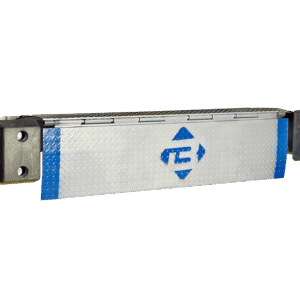
Bluff EZ-Pull Mechanical Edge of Dock Leveler | Model EP
Item ID: EPEODFrom $1,869.00 Select options This product has multiple variants. The options may be chosen on the product page -

Edge of Dock Levelers – Mechanical & Hydraulic
Read more
Features and Benefits
Edge of dock levelers provide a permanent dock access solution for facilities that regularly load and unload trailers at or near standard dock height. Mechanical models utilize spring-assisted activation for simple, dependable operation, while hydraulic models provide convenient push-button control and powered operation. Both options help create a smoother transition between trailers and the warehouse floor, improving loading efficiency and reducing downtime.
Unlike portable dock boards and dock plates, edge of dock levelers remain permanently mounted to the dock face, making them readily available whenever loading operations begin. Compared to pit-style dock levelers, they typically require less structural preparation and can be a cost-effective solution for facilities with light-to-moderate loading volumes and consistent trailer heights. Their durable construction, low maintenance requirements, and dependable operation make them a popular choice for many loading dock environments.
Edge of Dock Levelers vs. Dock Boards, Dock Plates & Pit Levelers
| Loading Dock Solution | Best Use | Key Benefits |
|---|---|---|
| Edge of Dock Levelers | Facilities with consistent trailer heights and light-to-moderate loading volume | Permanent dock-mounted solution, economical alternative to pit levelers, available in mechanical or hydraulic operation |
| Pit-Style Dock Levelers | Facilities with varying trailer heights and high-volume loading operations | Greater operating range, accommodates more trailer height variation, ideal for demanding dock environments |
| Dock Boards | Portable forklift loading applications | Forklift-rated, heavy-duty construction, portable between dock positions |
| Dock Plates | Hand trucks, carts, dollies, and manual pallet jacks | Lightweight, portable, economical solution for non-powered loading applications |
Capacities, Widths & Operating Range
Edge of dock levelers are available in a variety of standard capacities and widths to accommodate different loading dock applications. Common capacity ratings include 20,000 lb, 25,000 lb, and 30,000 lb CIR, while standard widths commonly include 66-inch, 72-inch, and 78-inch models.
Many edge of dock levelers are designed for loading situations where trailer heights remain close to dock height. Typical operating ranges include approximately ±3 inches of recommended working range and up to ±5 inches of operating range above or below dock level, depending on the model and configuration.
Safety & Performance Considerations
Choosing the correct loading dock equipment begins with evaluating trailer height, traffic volume, equipment type, and load requirements. Edge of dock levelers should be selected based on the intended application and the manufacturer’s rated capacity. Facilities should consider forklift weights, pallet loads, loading frequency, and dock conditions when evaluating loading dock equipment.
Industry standards such as ANSI MH30.1 establish performance and testing requirements for dock leveling devices and provide important guidelines for the design, testing, and operation of loading dock equipment. Safe loading operations also depend on proper equipment selection, installation, maintenance, and employee training.
Applications
Edge of dock levelers are commonly used in:
- Warehouses and distribution centers
- Manufacturing facilities
- Commercial loading docks
- Shipping and receiving operations
- Facilities without existing dock leveler pits
- Operations with relatively consistent trailer heights
- Light-to-moderate volume loading applications
These levelers provide a practical solution for facilities that need permanent dock access equipment without the complexity and expense of a full pit-style dock leveler installation.
FAQs
What is an edge of dock leveler?
An edge of dock leveler is a loading dock device that mounts directly to the face of a dock and bridges the gap between the dock and trailer.
What is the difference between an edge of dock leveler and a pit-style dock leveler?
Edge of dock levelers mount to the dock face and require less installation work, while pit-style dock levelers are installed in a recessed pit and generally accommodate a wider range of trailer heights.
Are edge of dock levelers available in hydraulic and mechanical models?
Yes. Edge of dock levelers are commonly available in both hydraulic and mechanical designs, allowing facilities to choose the operating style that best fits their needs.
What facilities are best suited for edge of dock levelers?
They are ideal for warehouses, shipping departments, and loading docks with light to moderate traffic where trailers consistently arrive near dock height.
Are edge of dock levelers cost-effective?
Yes. Edge of dock levelers are often one of the most economical loading dock solutions because they require less installation work and typically have a lower upfront cost than pit-style systems.
Do edge of dock levelers require a lot of maintenance?
Routine inspections and lubrication help maintain reliable performance. Many models are designed with maintenance-friendly features that simplify service requirements.
How do I choose the right edge of dock leveler?
Important factors include dock height, trailer height range, traffic volume, load capacity requirements, and whether hydraulic or mechanical operation is preferred.
Selection Assistance
Choosing the right edge of dock leveler depends on your loading environment, trailer height variation, traffic volume, and material handling equipment.
A mechanical edge of dock leveler may be ideal for facilities seeking an economical, low-maintenance solution for routine loading operations. A hydraulic edge of dock leveler may be preferred when push-button operation, reduced manual effort, and increased convenience are priorities.
For facilities experiencing significant trailer height variation or high-volume loading activity, a pit-style dock leveler may provide greater flexibility. If portability is required, a dock board or dock plate may be a more appropriate solution depending on equipment type and load capacity requirements.
Barron Equipment can help evaluate your loading dock environment and recommend an edge of dock leveler, dock board, dock plate, or pit leveler that best fits your operation.