Dock Leveler Types
Every dock environment is different. Choosing the right leveler depends on traffic volume, trailer variation, operational priorities, and available infrastructure.
Hydraulic Dock Levelers
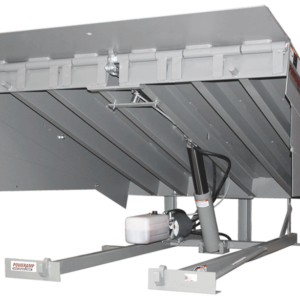
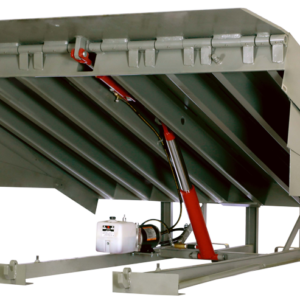
Hydraulic dock levelers use push-button controls and hydraulic cylinders to raise the deck and position the lip automatically. They are commonly selected for high-volume facilities where ease of operation and higher capacities are important. Models are available from 25,000 to 120,000 pounds CIR.
Air-Powered Dock Levelers
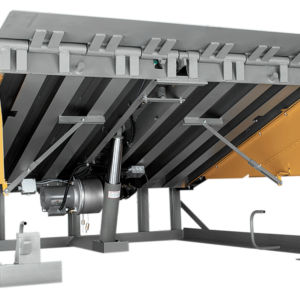
Air-powered levelers use an air bag or bellows system instead of hydraulic cylinders. They provide push-button operation with fewer hydraulic components and are available in capacities up to 60,000 pounds CIR.
Mechanical Dock Levelers
Mechanical levelers use extension springs and pull-chain activation. They require no electricity or compressed air and are often chosen for moderate-traffic facilities seeking a simple, low-maintenance solution. Capacities range up to 55,000 pounds CIR.
Edge-of-Dock Levelers
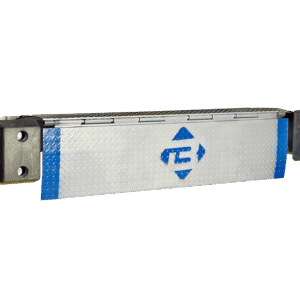
Edge-of-dock (EOD) levelers mount directly to the dock face and require no concrete pit. They are commonly used for retrofit projects with consistent trailer heights. Their recommended working range is ±3 inches, with a maximum operating range of ±5 inches.
Vertical Storing Dock Levelers
Vertical storing levelers store upright against the wall when not in use. This allows the overhead door to seal directly to the pit floor, making them a popular choice for food-processing facilities, refrigerated warehouses, and cold-storage environments.
Dock Leveler Comparison
| Leveler Type | Capacity Range | Working Range | Power Requirement | Best For |
| Hydraulic | 25,000–120,000 lbs CIR | ±12″ | Electric / Hydraulic | High-volume loading docks |
| Air-Powered | 25,000–60,000 lbs CIR | ±12″ | Electric or Compressed Air | Warehouses seeking lower maintenance |
| Mechanical | 25,000–55,000 lbs CIR | ±12″ | None | Moderate-traffic facilities |
| Edge-of-Dock | 20,000–30,000 lbs CIR | Recommended ±3″ (Maximum ±5″) | Varies by model | Retrofits and consistent trailer heights |
| Vertical Storing | 40,000–50,000 lbs CIR | ±12″ | Hydraulic | Food processing and cold storage |
What Is CIR?
CIR (Comparative Industry Rating) is used to determine the correct dock leveler capacity. To calculate the minimum CIR needed, combine the weight of the forklift, operator, attachments, and the heaviest load that will cross the leveler. Selecting the proper capacity is one of the most important factors in dock leveler safety and durability.
Typical Applications
Dock levelers are commonly used in:
- Warehouses and distribution centers
- Manufacturing facilities
- Food-processing plants
- Cold-storage facilities
- Retail receiving operations
- Truck-loading and shipping facilities
While hydraulic, air-powered, and mechanical levelers are common in general warehouse environments, vertical storing levelers are frequently used where cleanliness, environmental separation, and temperature control are critical.
Dock Leveler Safety Features
Depending on the model, available safety features may include:
- Velocity fuses
- Toe guards
- Maintenance struts
- Air-ride trailer float systems
- Lip keepers
- Lockout/tagout provisions
Poweramp hydraulic dock levelers include velocity-fuse systems designed to limit unexpected free fall in the event of hydraulic pressure loss. The analysis also identifies ANSI MH 30.1 and OSHA conformance across the Poweramp product line.
How to Choose the Right Dock Leveler
The best dock leveler depends on four factors:
- Capacity (CIR) based on forklift and load weight.
- Working range required for trailer-height variation.
- Power source available at the dock.
- Application type, including warehouse, manufacturing, food processing, or cold storage.
Facilities with consistent trailer heights may find an edge-of-dock leveler appropriate, while operations with heavier traffic often benefit from hydraulic solutions. Food-processing and refrigerated facilities frequently choose vertical storing models.
Frequently Asked Questions
What is a dock leveler?
A dock leveler bridges the gap between a warehouse floor and a trailer bed, allowing forklifts and material-handling equipment to move safely between them.
What types of dock levelers are available?
The primary types are hydraulic, air-powered, mechanical, edge-of-dock, and vertical storing dock levelers.
What is CIR?
CIR stands for Comparative Industry Rating and is the standard load-capacity rating used for dock levelers.
What is the working range of a dock leveler?
Most pit-style levelers operate within ±12 inches of dock level, while edge-of-dock levelers are generally limited to ±5 inches.
When should I choose an edge-of-dock leveler?
Edge-of-dock levelers are often used when a concrete pit is impractical and trailer heights remain relatively consistent.
What is a vertical storing dock leveler?
A vertical storing leveler stores upright when not in use, allowing the overhead door to seal directly to the pit floor.
How often should dock levelers be maintained?
Maintenance frequency should match traffic volume and operating conditions, with higher-use facilities generally requiring more frequent inspections and service.
Where does Barron Equipment install and service dock levelers?
Barron Equipment serves Iowa and Illinois, plus parts of Wisconsin, Minnesota, Missouri, and Nebraska.
Dock Leveler Selection & Installation
Barron Equipment helps warehouses, manufacturers, food-processing facilities, and distribution centers select dock levelers based on capacity, working range, traffic volume, trailer heights, and operating conditions. Request a quote online to discuss your dock and determine the right leveler for your facility.