
FIND US
Davenport, IA
4710 N Brady St
Davenport, IA 52806
Des Moines, IA
2276 NE 46th Ave
Des Moines, IA 50317
Loading Dock Stop and Go Traffic Lights
Loading dock stop and go traffic lights, also called dock communication lights or dock safety lights, are red and green signal systems installed inside and outside a loading dock door to communicate loading status between forklift operators, dock personnel, and truck drivers. When the inside light indicates it is safe for loading activity, the exterior light displays the opposite message to the driver, helping reduce confusion and the risk of premature trailer departure. Systems range from basic manual toggle-switch units to advanced sensor-driven controls that integrate with dock levelers, vehicle restraints, and overhead doors.
Barron Equipment offers dock communication products from Tri Lite Inc. and Poweramp for warehouses, manufacturing facilities, distribution centers, and commercial loading operations.
-

iDock Controls – Loading Dock Communication Software
Read more -

Poweramp Dock Alert
Read more -

Tri Lite “Stop and Go” LED Light Conversion Kits
Read more -
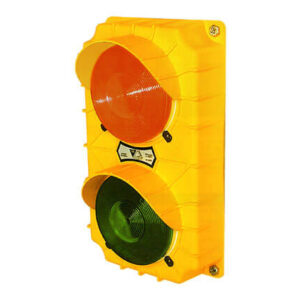
Tri Lite Stop-Go Loading Dock Safety Light (SG10)
Read more -

Tri Lite Stop-Go Loading Dock Safety Light Set (SG30)
Read more -

Tri Lite Stop-Go Loading Dock Safety Light Set with Switch and Flasher (SG20)
Read more
Why Stop and Go Lights Matter
Loading docks remain one of the busiest and highest-risk areas in many facilities. According to information referenced in the analysis, trailer separation and premature departure remain significant loading dock safety concerns. Communication lights help provide a clear visual signal to both drivers and dock personnel, reducing the chance of a trailer pulling away while loading or unloading is still underway.
Rather than relying on hand signals or verbal communication, stop-and-go systems provide a simple visual indication of dock status.
Types of Dock Communication Systems
Standalone Signal Units
The Tri Lite SG10 functions as a standalone drone unit. It displays red or green signals but relies on an external control source to determine which signal is shown. These units are often used in facilities with existing dock-control infrastructure.
Master Control Units
The Tri Lite SG20 serves as the master control unit. It includes a built-in flasher and a three-position toggle switch that allows dock personnel to select red, green, or off. A no-switch version is also available for installations using remote or automated controls.
Complete Signal Sets
The Tri Lite SG30 combines an SG20 master unit, an SG10 drone unit, and a communication cable into a complete inside/outside signaling package. When one side displays green, the opposing side displays red.
LED Conversion Kits
Tri Lite Inc. also offers LED conversion kits that allow facilities to upgrade existing incandescent stop-and-go systems without replacing the entire assembly.
Dock Alert Communication Systems
The Poweramp Dock Alert uses a single exterior signal displaying a flashing Red X or Green O. Available in manual and automatic versions, it can integrate with dock equipment to automate signal changes.
iDock Controls
iDock Controls combines traffic lights, equipment controls, sensors, and an interactive display into one dock-management system. It uses three-color communication lights (red, amber, and green) and supports cloud connectivity through myQ Dock Management.
Product Comparison
| System | Type | Activation | Signal States | Best Application |
|---|---|---|---|---|
| Tri Lite SG10 | Standalone drone unit | External controller | Red / Green | Existing control systems |
| Tri Lite SG20 | Master control unit | Manual toggle or remote switch | Red / Green | Single dock position |
| Tri Lite SG30 | Complete signal set | Manual toggle | Opposing Red / Green | Full inside/outside communication |
| Tri Lite LED Conversion Kit | Upgrade kit | Existing controls | Red / Green | LED retrofits |
| Poweramp Dock Alert | Single exterior system | Manual or automatic | Red X / Green O | Dock and door integration |
| iDock Controls | Integrated dock management system | Sensor-triggered | Red / Amber / Green | Advanced dock sequencing |
Manual vs. Automatic Operation
One of the most important buying decisions is whether the system should be controlled manually or automatically.
Manual Systems
Manual systems rely on a dock attendant who changes the signal when loading conditions change. The SG20 and SG30 are examples of manually controlled communication systems.
Automatic Systems
Automatic systems use sensors and equipment integration to switch signals without operator intervention. They may connect to:
- Dock levelers
- Vehicle restraints
- Overhead doors
- Truck-present sensors
- Forklift-activity sensors
These systems help reduce human error and are often selected for higher-volume operations.
Understanding the Amber Light
Most traditional stop-and-go systems use only red and green signals.
The exception is iDock Controls, which adds an amber signal. According to the analysis, amber is used to indicate a fault or bypass condition, such as when a vehicle restraint cannot properly secure a trailer and the system enters bypass mode. This tells dock personnel to proceed with additional caution.
Dock Communication and Equipment Integration
Modern dock communication systems do more than control lights.
The analysis identifies integration capabilities with:
- Dock levelers
- Vehicle restraints
- Overhead doors
- Dock-management software
These systems can create a coordinated sequence of operation where loading equipment, restraints, and signal lights work together to improve dock safety.
Tri Lite Specifications
The analyzed Tri Lite Inc. products include:
- UL and cUL certification
- IP54 dust- and water-resistant construction
- LED and incandescent options
- 12 VDC, 24 VDC, and 115 VAC configurations
- Made in the USA
- Three-year limited warranty on LED models
These features make them suitable for both indoor and outdoor dock environments.
Related Loading Dock Equipment
Dock communication lights are often installed alongside:
- Truck Dock Lights
- Loading Dock Guide Lights
- Dock Levelers
- Vehicle Restraints
- Overhead Door Systems
Together, these products help create a safer and more efficient loading operation.
Installation and Service
Barron Equipment has more than 40 years of experience installing and servicing loading dock equipment. Services include:
- New stop-and-go light installations
- LED conversion upgrades
- Integration with dock levelers and vehicle restraints
- Dock communication system troubleshooting
- Ongoing service and maintenance
Barron Equipment serves all of Iowa and Illinois, plus parts of Wisconsin, Minnesota, Missouri, and Nebraska.
Frequently Asked Questions
What is a loading dock stop-and-go traffic light?
A loading dock stop-and-go traffic light is a red-and-green communication system that helps coordinate trailer movement between truck drivers and dock personnel.
What is the difference between a drone unit and a master control unit?
The SG20 master control unit contains the controls and flasher. The SG10 drone unit receives commands from the master unit and displays the opposing signal.
What is the difference between manual and automatic dock communication systems?
Manual systems depend on operator input using a toggle switch. Automatic systems use sensors and equipment integration to manage signal changes.
What does iDock Controls do?
iDock Controls integrates dock communications, dock equipment controls, sensors, message displays, and cloud-based dock management into a single platform.
What is the amber light used for?
On iDock Controls, amber indicates a fault or bypass condition that requires additional operator attention.
Does Barron Equipment install stop-and-go traffic lights?
Yes. Barron Equipment installs and services dock communication systems throughout its service territory.
Loading Dock Communication System Selection
Barron Equipment helps warehouses, manufacturers, distribution centers, and commercial facilities select stop-and-go traffic lights based on traffic volume, equipment integration, operational goals, and dock safety requirements.
Request a quote online to discuss the right loading dock communication system for your facility.