
FIND US
Davenport, IA
4710 N Brady St
Davenport, IA 52806
Des Moines, IA
2276 NE 46th Ave
Des Moines, IA 50317
Dock and Truck Restraints
Overview
A vehicle restraint system, commonly known as a dock lock, is an industrial safety device designed to secure a semi-trailer’s rear impact guard, or RIG, to a loading dock. By locking the vehicle in place, these systems help prevent hazardous dock separation incidents including trailer creep, landing gear collapse, trailer pop-up, trailer up-ending, and premature truck departure during forklift loading and unloading operations.
Dock and truck restraints are used in warehouses, distribution centers, manufacturing facilities, cold storage operations, and commercial loading docks where trailer movement can create serious safety risks. These systems help maintain a secure connection between the trailer and the loading dock while materials are moved in and out of the trailer.
Barron Equipment offers dock and truck restraint solutions designed to improve safety, communication, and control at the loading dock. Available options may include automatic vehicle restraints, mechanical truck restraints, hook-style restraints, barrier-style restraints, dock lock systems, and wheel chock alternatives depending on the facility’s trailer types, loading patterns, and safety requirements.
Interested in learning more? Read our Blog!
-
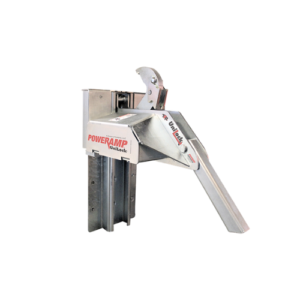
TPR UniLock Loading Dock Automatic Vehicle Restraints
Read more -
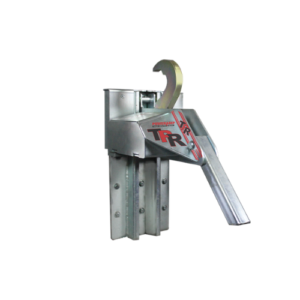
Truck Positioned Restraints – TPR Series
Read more -
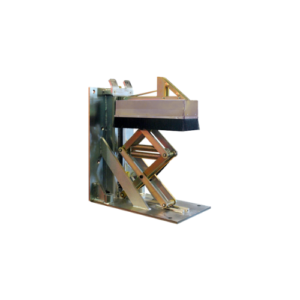
Automatic Loading Dock Truck Restraint – PowerStop Series
Read more -
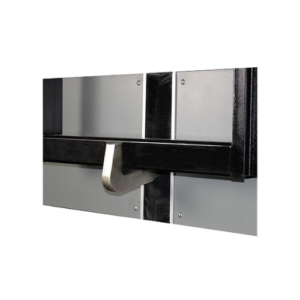
Vehicle Restraint System – PowerHook Series
Read more -

Cast-In Style Truck Restraints – 350 Series
Read more -

Flange Style Vehicle Restraints – 350 Series
Read more -

Lock and Load Truck Restraints
Read more -

Lock-Up Truck Restraints
Read more -

Low Profile Cast-In Style Truck Restraint
Read more -

Low Profile Flange Style Truck Lock
Read more
Features & Benefits
Dock and truck restraints help facilities create a safer loading environment by reducing the risk of unintended trailer movement while forklifts, pallet jacks, and other material handling equipment enter and exit trailers. Many vehicle restraint systems are designed to secure the trailer’s rear impact guard, while wheel chock systems help prevent wheel movement when trailers are positioned at the dock.
Compared with relying on manual communication alone, restraint systems provide a more controlled loading process by integrating physical restraint, visual communication, and dock safety sequencing. Interior and exterior signal lights can help communicate when a trailer is secured and when it is safe for dock workers or drivers to proceed. These systems are especially valuable in busy loading environments where miscommunication, trailer movement, or early departure can create dangerous conditions.
Dock restraints also support improved operational consistency. By helping standardize trailer securement procedures, facilities can reduce the risk of dock separation, improve loading confidence, and support safer material handling workflows across multiple dock positions.
Loading Dock Safety Risks Vehicle Restraints Help Prevent
Trailer Creep
Trailer creep occurs when a trailer gradually moves away from the dock during loading and unloading. This movement can be caused by repeated forklift movement, suspension shifting, trailer float, or changes in load distribution. Vehicle restraints help reduce trailer creep by securing the trailer in position throughout the loading process.
Early Departure
Early departure happens when a driver pulls away from the dock before loading or unloading is complete. This can create a serious hazard if a forklift or worker is still inside the trailer. Dock restraint systems help prevent premature truck departure by physically securing the trailer and using communication lights to indicate when movement is not permitted.
Landing Gear Collapse
Landing gear collapse can occur when trailer support legs fail or become unstable during loading activity. This risk is especially important when trailers are not properly supported, positioned, or restrained. Vehicle restraints help reduce movement-related hazards by keeping the trailer secured at the dock during loading and unloading.
Trailer Pop-Up
Trailer pop-up occurs when the nose or rear of a trailer rises due to uneven weight distribution or forklift movement inside the trailer. This can affect the stability of the trailer and the dock-to-trailer transition. Restraint systems help maintain a more controlled loading condition by limiting trailer movement while equipment enters and exits the trailer.
Trailer Up-Ending
Trailer up-ending is a severe instability event where the trailer can tip or pivot due to improper loading, unloading, or support conditions. While no single dock safety device eliminates every risk, vehicle restraints are an important part of a broader dock safety strategy that includes correct trailer positioning, inspection, communication, and proper loading procedures.
Wheel Chock Alternatives
Traditional wheel chocks are used to help prevent trailer movement by blocking the trailer wheels. However, some facilities require more advanced dock safety systems that integrate trailer securement with visual communication, interlocks, or automated controls.
Vehicle restraints and electronic wheel chock systems can serve as wheel chock alternatives by helping facilities improve consistency and reduce reliance on manual wheel chocking alone. RIG-based dock locks secure the trailer’s rear impact guard, while wheel-based restraint or chock systems help control trailer movement at the wheels. The right approach depends on trailer design, dock configuration, traffic volume, driver procedures, and facility safety requirements.
For facilities comparing dock locks and wheel chock alternatives, important considerations include trailer compatibility, RIG condition, restraint force capacity, communication lights, dock leveler interlocks, maintenance requirements, and operator training.
Restraint Type Comparison Matrix
| Restraint Type | How It Works | Best For | Key Considerations |
|---|---|---|---|
| Hook-Style Vehicle Restraints | Secure the trailer’s rear impact guard with a rotating or engaging hook mechanism. | Facilities using standard trailers with accessible RIG bars. | Review RIG height range, hook engagement, pullout force capacity, and compatibility with damaged or obstructed RIGs. |
| Barrier-Style Vehicle Restraints | Use a vertical barrier or blocking mechanism to secure a trailer at the dock. | Facilities needing broader trailer compatibility or restraint for varied RIG configurations. | Review engagement range, barrier position, trailer fit, and restraint force capacity. |
| Wheel Chock Systems | Help restrict trailer movement at the wheels using manual or electronic chocking methods. | Facilities comparing wheel-based securement with RIG-based dock locks. | Review driver compliance, wheel position, dock procedures, and whether communication or interlock features are needed. |
| Integrated Dock Lock Systems | Combine vehicle restraint, lights, signage, controls, and dock equipment sequencing. | High-traffic loading docks that need improved communication and process control. | Review compatibility with dock levelers, overhead doors, signal lights, controls, and facility safety procedures. |
Force Capacity & RIG Compatibility
Vehicle restraints should be selected based on trailer compatibility, RIG condition, loading volume, dock design, and required restraint performance. Many truck restraint systems are evaluated using pullout force capacity, which helps indicate the amount of force the restraint is designed to withstand during trailer securement.
Product specifications may reference restraining force capacities in excess of 32,000 lbs or 38,000 lbs depending on the restraint type, manufacturer, and model. RIG range compatibility is also important because rear impact guards can vary by trailer type. Common compatibility ranges may include engagement heights around 9 inches to 30 or 31 inches above grade depending on the product design.
Because ratings vary by manufacturer and model, facilities should always verify the exact pullout force capacity, RIG engagement range, horizontal operating range, and installation requirements for the specific vehicle restraint being considered.
ANSI MH30.3 & Loading Dock Safety Standards
ANSI MH30.3 is the industry standard associated with vehicle restraining devices. This standard addresses performance and testing requirements related to the design, use, and maintenance of vehicle restraints used at loading docks.
When evaluating dock and truck restraints, facilities should review whether the selected product has been designed, tested, or documented in alignment with ANSI MH30.3 requirements. This is especially important for safety-critical loading dock applications where trailer securement, RIG engagement, communication systems, and restraint force capacity must be clearly understood.
ANSI-related language should be matched to the specific product documentation. If a manufacturer states that a restraint meets, exceeds, or is tested to ANSI MH30.3, that claim can be used on the product page. If the manufacturer documentation does not explicitly make that claim, the safer wording is to explain that ANSI MH30.3 is the relevant standard for vehicle restraining devices rather than claiming compliance.
Material & Durability Considerations
Dock and truck restraints operate in demanding loading dock environments where impact, weather exposure, corrosion, and frequent use can affect long-term performance. When comparing vehicle restraint systems, facilities should review structural materials, finish, housing design, track construction, impact components, motor protection, and corrosion resistance.
Depending on the manufacturer and product series, restraint systems may reference material and construction details such as zinc-plated housings, corrosion-resistant tracks, structural steel components, steel barriers, reinforced hooks, or heavy-duty mounting assemblies. Some competitor product literature also references specific steel-grade entities such as A514 Grade B steel plate, 1018 cold-rolled steel, and ASTM A572 Grade 50 steel tracks. These terms are useful comparison points when evaluating durability, but they should only be used as product-specific claims when confirmed in the manufacturer’s own documentation.
Applications
Dock and truck restraints are commonly used in:
- Warehouses and distribution centers
- Manufacturing facilities
- Cold storage and refrigerated facilities
- Shipping and receiving docks
- High-traffic loading dock environments
- Facilities with frequent forklift trailer entry
- Operations with mixed trailer types
- Logistics, transportation, and supply chain facilities
- Facilities looking to reduce trailer creep, early departure, and dock separation risks
- Loading docks requiring improved communication between drivers and dock attendants
Selection Assistance
Choosing the right dock restraint system starts with understanding how trailers arrive, how loading takes place, and what types of risks need to be controlled.
A hook-style vehicle restraint may be a good fit when trailers have accessible rear impact guards and the facility needs a reliable RIG-based dock lock.
A barrier-style vehicle restraint may be preferred when the facility handles varied trailers or needs a restraint design that can accommodate a broader range of RIG configurations.
A wheel chock system or electronic chock solution may be appropriate when wheel-based securement is required or when trailers cannot be reliably restrained by the rear impact guard.
An integrated dock lock system may be the best choice when the facility needs restraint controls, signal lights, dock leveler interlocks, and improved communication at the loading dock.
Barron Equipment can help evaluate dock layout, trailer types, RIG compatibility, loading volume, restraint force requirements, and safety procedures to recommend the right dock and truck restraint solution for your operation.
Barron Equipment’s experienced technicians install, service, and maintain truck restraint systems from leading manufacturers, including Poweramp and NOVA Technology. We can help evaluate dock layout, trailer types, RIG compatibility, loading volume, restraint force requirements, and safety procedures to recommend the right dock and truck restraint solution for your operation.