
Stop Energy Loss at the Door—Then Optimize the Whole Space: Air Curtains and HVLS Fans
Why Facilities Lose Energy in Two Predictable Places
Within manufacturing plants, warehouses, and distribution centers, energy costs are one of the largest and most difficult expenses to control. In many facilities, energy loss happens in the same two places—over and over again.
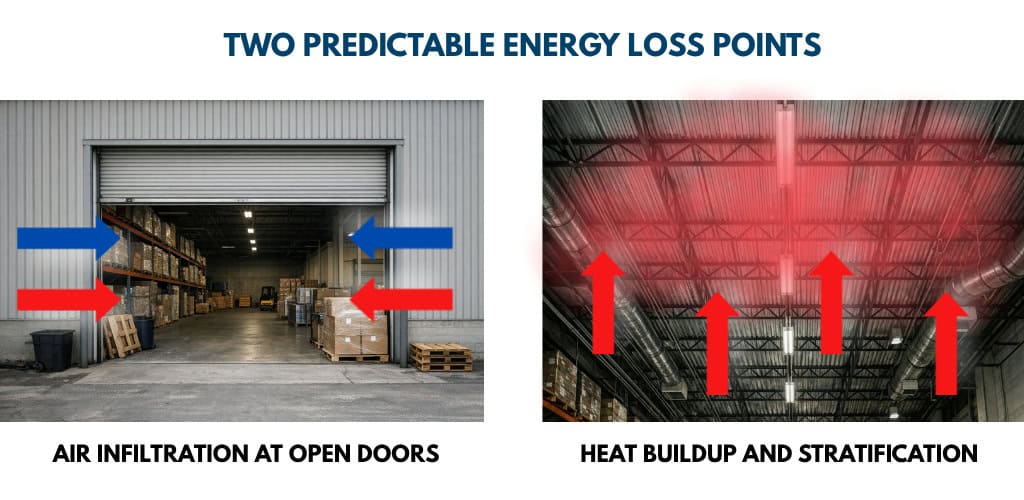
First, energy escapes at door openings through uncontrolled outdoor air infiltration. Second, energy is wasted inside the building due to temperature stratification in tall, open spaces.
When doors open frequently, conditioned air is lost—whether that means heated air escaping in winter or cooled air spilling out in summer. At the same time, warm air rises and collects near the ceiling, leaving employees uncomfortable at floor level and HVAC systems working harder than necessary.
If these issues aren’t addressed, facilities experience higher energy costs, longer HVAC runtimes, reduced employee comfort, and greater difficulty meeting sustainability goals. The solution isn’t complicated—but it does require addressing both problems together.
That’s where air curtains and HVLS (high‑volume, low‑speed) fans work best as a combined energy‑efficiency strategy.
Air Curtains = Energy Efficiency at the Door
What an Air Curtain Does (in energy terms)
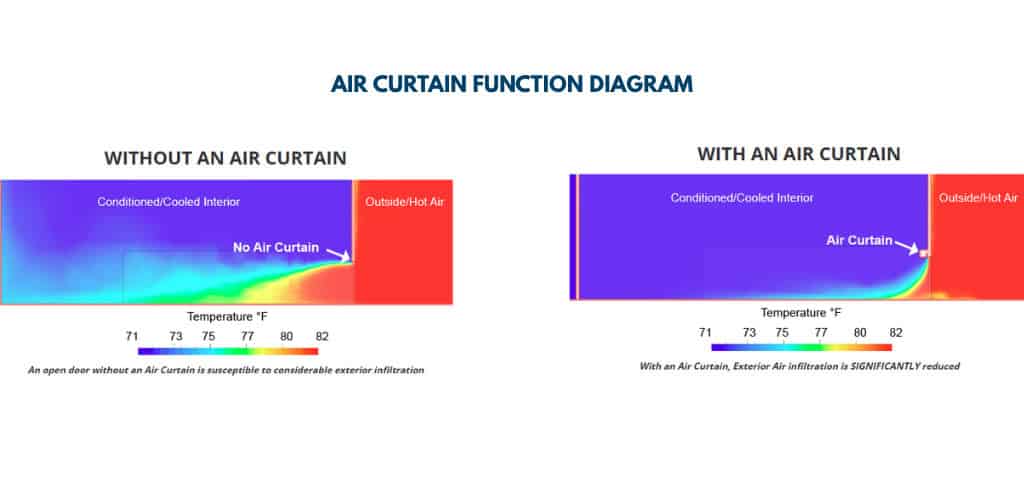
An air curtain is mounted above a doorway and creates a controlled stream of air across the opening when the door is open. This “invisible barrier” helps limit the exchange of indoor and outdoor air, allowing the building to maintain more stable temperatures.
Proper selection and installation are critical. Factors such as door size, mounting location, building pressure, and whether heat is required all influence performance. When specified correctly, air curtains significantly reduce infiltration and help facilities avoid unnecessary energy loss.
Sustainability Wins from Air Curtains
By reducing infiltration, air curtains lower HVAC and refrigeration demand, which directly translates into reduced energy consumption and operating costs. Less conditioned air is wasted, and systems cycle less frequently.
In addition to energy savings, facilities often see secondary benefits such as improved employee comfort, better indoor air quality, and reduced exposure to insects and contaminants—supporting both operational efficiency and sustainability initiatives.
Best-fit Applications
While air curtains are applicable to any industry that has an overhead door or a man door, there are some types of businesses that benefit the most:
Cold Storage & Freezers
Utilizing an air curtain in cold storage/freezer areas will help reduce warm air infiltration and can help with fog, frost, and ice issues.
Loading Docks & High-Traffic Doors
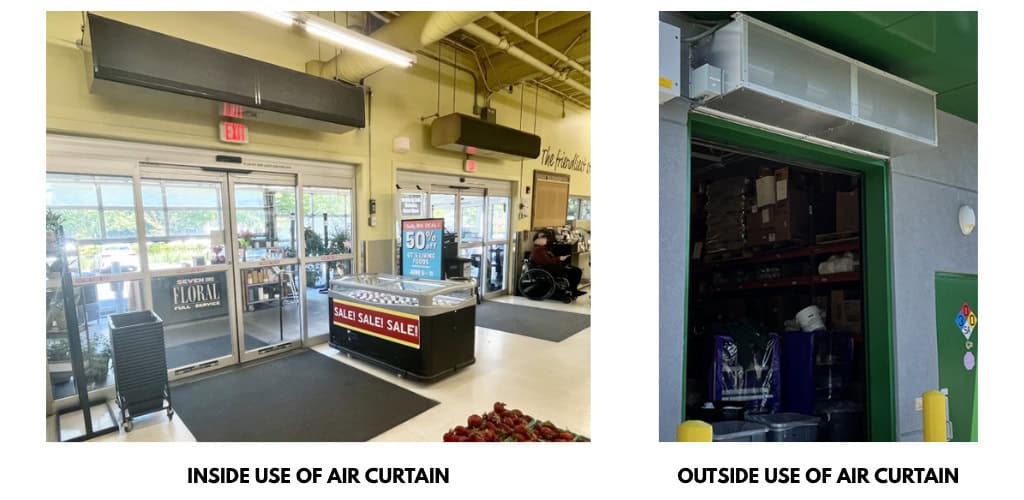
Inside of manufacturing and warehouse facilities, doors are frequently opened and closed all day long. This includes overhead doors and man doors. An air curtain helps reduce conditioned air loss during these frequent openings.
Retail & Food Service Entrances
Commonly used in food service back door entrances, as well as drive-thru windows, air curtains provide comfort for employees, as well as bug and pest control.
Code & Performance Credibility
Barron Equipment supplies AMCA‑certified air curtains that meet the requirements of the International Energy Conservation Code (IECC). Many models also comply with ASHRAE 90.1, qualifying for vestibule exceptions in applicable situations.
Selecting tested, certified equipment ensures predictable performance and simplifies compliance—especially for facilities navigating energy codes or sustainability targets.
Selection Checklist
When shopping for an air curtain door, it’s important to know what specifications are necessary to order the right one. Considerations include:
- Dimensions of door(s)
- Type of door
- Whether or not you’d like the air curtain to be heated
- Interior vs. exterior mounting preferences
- Where the air curtain should be mounted in relation to the door
- Voltage requirements
Having a good understanding of the application prior to ordering an air curtain will allow the Barron team to make the best recommendation.
HVLS Fans = Whole-Building Efficiency Through Air Mixing
What HVLS Fans Do for Energy Efficiency
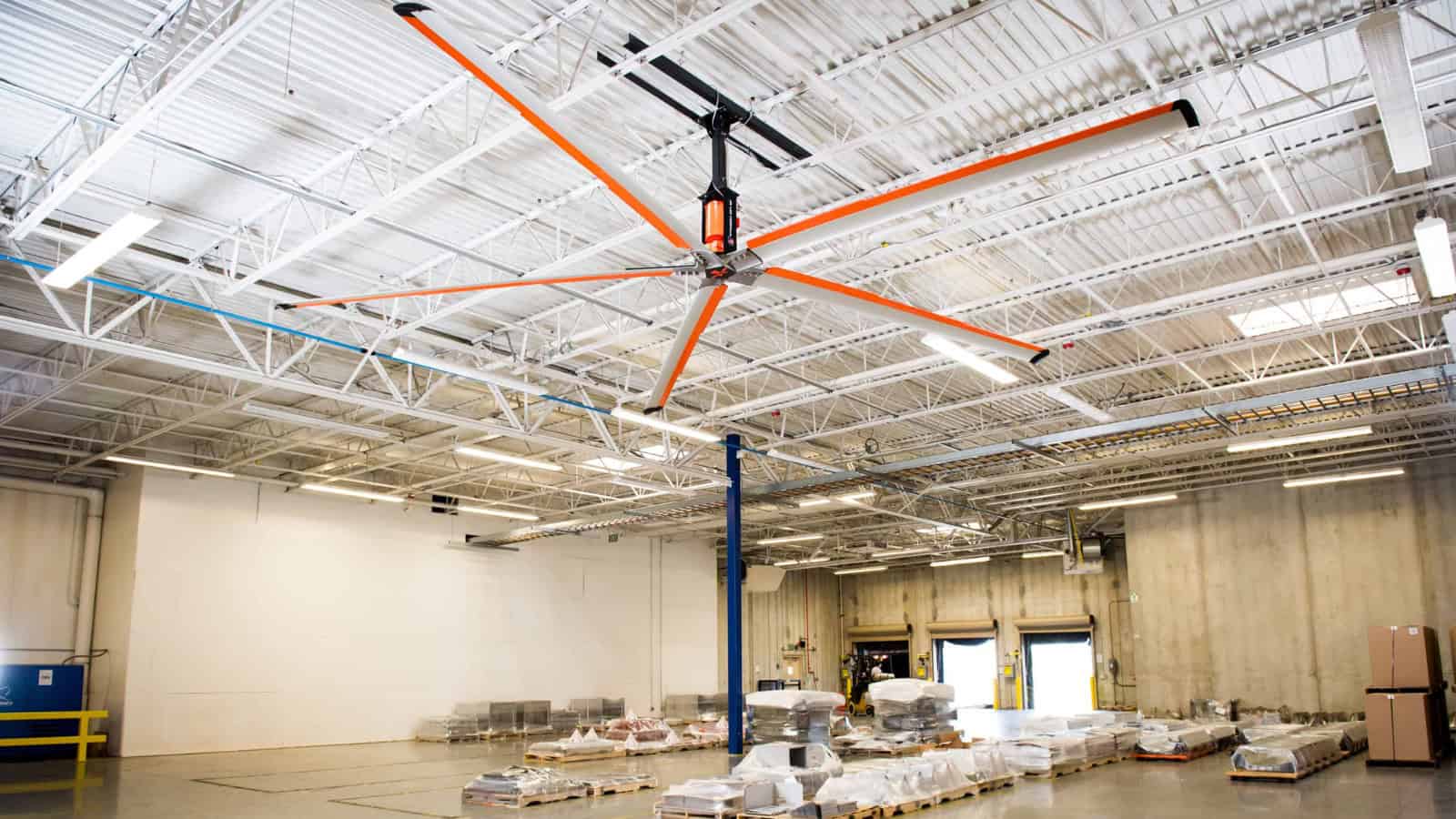
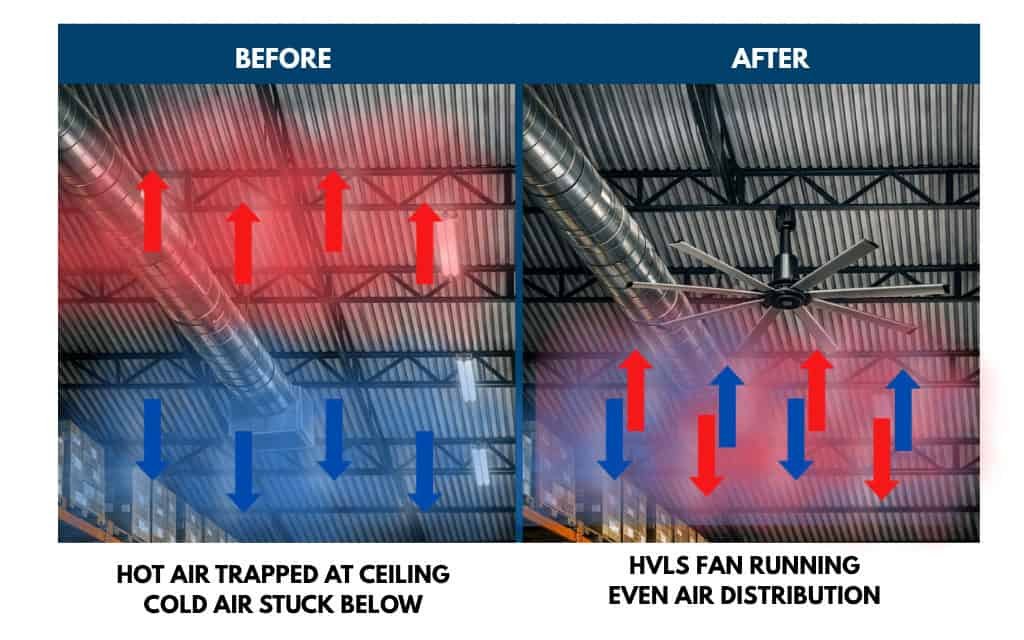
High velocity low speed fans are excellent at destratification. Destratification is the process of mixing air or water to eliminate stratified (or clustered) layers of temperature or heat, resulting in a more balanced environment. HVLS fans are particularly effective in large spaces such as warehouses, plants, hangars, and gyms, where traditional air movement solutions fall short.
Sustainability Wins from HVLS Fans
By promoting more uniform temperatures, HVLS fans can reduce the demand placed on heating and cooling systems. Improved air movement also enhances employee comfort, which can support productivity without relying solely on HVAC adjustments.
Many HVLS fans offer reversible operation, allowing facilities to redistribute warm air during colder months and support year‑round efficiency.
HVLS Fan Design/Spec Considerations
Most industrial application utilize between 3 and 8 blades per fan. It can be easy to assume that the higher the blade count, the better the output, but this is not necessarily the case. Studies have shown that if motor power is the same between two fans and one has 3 blades and one has 6, there is very little difference in performance. Other factors that determine the efficiency of an HVLS fan include; output power, torque of the motor, operating speed of the fan, and the design of the blades. Be sure to review product specification sheets thoroughly when comparing fans.
Best Fit Applications
As mentioned above, large spaces benefit the most from a high speed low velocity fan. The best areas for these fans include:
Warehouses & Distribution
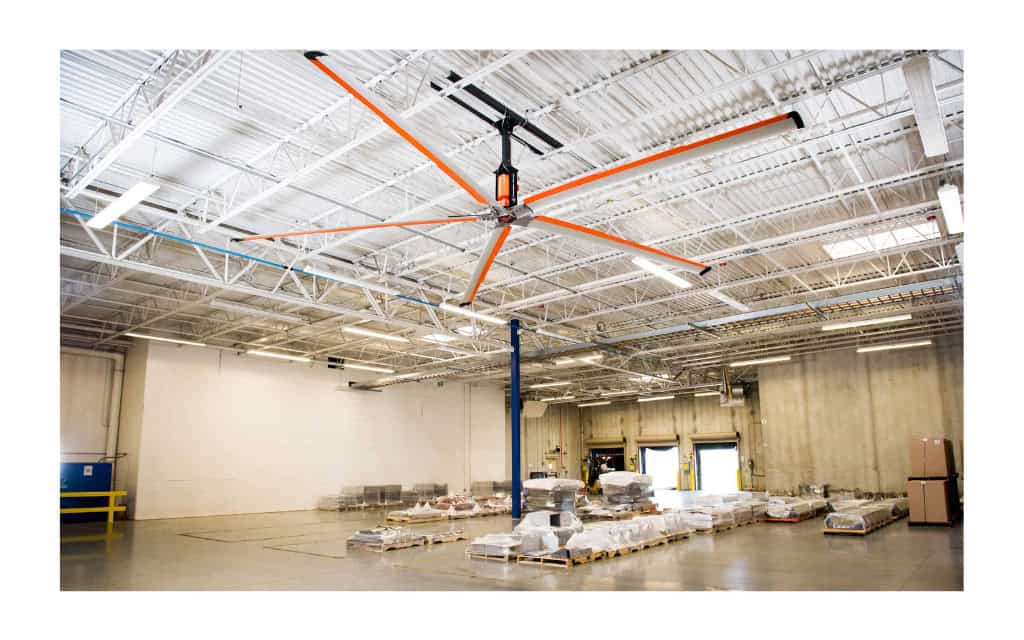
Large fans provide comfort for employees, as well as ventilation support during the busy working hours.
Manufacturing & Industrial Bays
For the same reasons as above, HVLS fans keep employees happy and healthy. They also allow for large air mass mixing and avoid energy waste.
The “Two-Zone Efficiency Strategy” (Air Curtains + HVLS Together)
Why Pair Them?
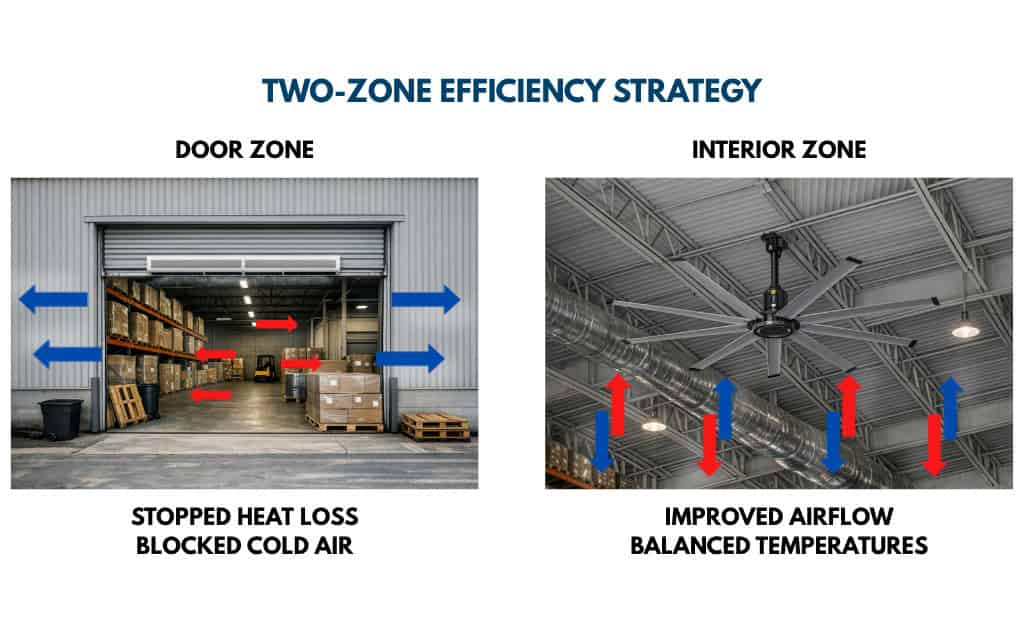
Energy efficiency in large facilities isn’t solved with a single product—it requires addressing both where energy escapes and where it’s wasted.
Air curtains protect the building envelope by limiting energy loss at door openings. HVLS fans improve conditions inside the space by reducing stratification and improving air mixing. Together, they address two of the most common drivers of HVAC inefficiency in facilities with frequent door use and high ceilings.
Example Scenarios
Barron Equipment specialists often see these two products working in tandem in a variety of facilities. Examples include:
- A facility with cold storage and high ceilings. This facility used an air curtain above the cold storage doors to reduce infiltration and an HVLS fan to support uniform conditions in adjacent staging areas.
- A loading dock area in a manufacturing facility with lots of traffic. Air curtains above the loading dock doors helped reduce air exchange and HVLS fans assisted with evening the temperature deeper into the space.
- Large retail building with an open floor added an air curtain at the entrance and an HVLS to improve comfort and reduce HVAC swings.
How Barron Helps You Spec the Right Setup
What We Measure / What You Provide
Barron Equipment works with facilities across Iowa and beyond to design practical, application‑specific energy solutions. Our specialists evaluate door openings, ceiling heights, traffic patterns, and operational goals to ensure the right air curtain and HVLS fan selection.
For facilities in Iowa and surrounding states, on‑site assessments are available. For customers outside the Midwest, our team can review photos, measurements, and floor plans to provide accurate recommendations and quotes.
Air Curtain Information Request
HVLS Fan Information Request
FAQs
1. What is the purpose of a heated air curtain?
A heated air curtain helps prevent outside air, dust, debris, and flying insects from entering a building while supporting consistent indoor temperatures.
2. How do electric air curtains work?
Electric air curtains use heavy duty 3/4 HP motors and galvanized fans to create a strong, steady airflow barrier, functioning like a doorway air curtain or fan over door system.
3. Where are commercial air curtains typically used?
These commercial air curtains are suitable for restaurants, hospitals, warehouses, grocery stores, office buildings, and schools, making them ideal air curtains industrial solutions.
4. Do air curtains keep flies and bugs out?
Yes, air curtains are USDA, FDA, and AIB approved for insect control, making it effective as a fly blower for doors to keep insects out.
5. Do air curtains save energy?
Yes, air curtains reduce the exchange of indoor and outdoor air, helping maintain temperature control and improving overall energy efficiency.
6. How are the commercial door wind curtains maintained?
Maintenance is simple. The motor/blower plate can be removed as one piece, and the intake screen should be kept clean to maintain proper airflow and performance.
7. How does a Z-Tech HVLS fan cool a large space?
Z-Tech high volume low speed HVLS fans do not lower the air temperature. Instead, they move a large volume of air across the space to create a cooling effect on people and equipment. This steady air movement helps evaporate moisture from the skin, making the space feel cooler and more comfortable. These industrial HVLS fans also help reduce humidity and prevent hot or cold air from collecting near the ceiling in large industrial and commercial spaces.
8. How much area can one Z-Tech fan cover?
A single z tech fan can cool up to 32,400 square feet under the right conditions. This wide coverage allows facilities to install fewer warehouse HVLS fans while still achieving strong and even airflow. The fan’s blade design and 20° plus blade pitch help move air farther, making it one of the best HVLS fans for large industrial areas that require consistent circulation.
9. Do HVLS fans help with warm air during winter?
Yes. Z-Tech HVLS ceiling fans are designed with true reversibility, which allows them to push warm air down from the ceiling during colder months. This process, called heat destratification, helps keep temperatures more even from floor to ceiling. By mixing warm air back into occupied areas, these HVLS industrial fans support better comfort and energy efficiency in large buildings.
9. Are Z-Tech fans energy efficient?
Z-Tech fans are built to move a large amount of air while using low amounts of power. Their efficient drive motor and variable frequency control allow precise speed adjustment based on the space’s needs. Compared to using many smaller fans or increasing HVAC use, industrial HVLS fans can help lower overall energy consumption while maintaining strong airflow in large industrial and commercial spaces.
10. What kind of warranty comes with Z-Tech HVLS fans?
Z-Tech fans are built for long-term use and come with strong warranty coverage. The motor, gearbox, and hub have a 15-year warranty, while the blades and mounting system are covered for life. This level of protection reflects the durability of the fan’s design and provides added confidence for facilities investing in HVLS fans for warehouse and industrial applications.
Conclusion
Air curtains reduce energy loss at door openings, while HVLS fans improve temperature consistency throughout large spaces. Used together, they provide a practical, cost‑effective approach to improving comfort, reducing HVAC demand, and supporting sustainability goals.