
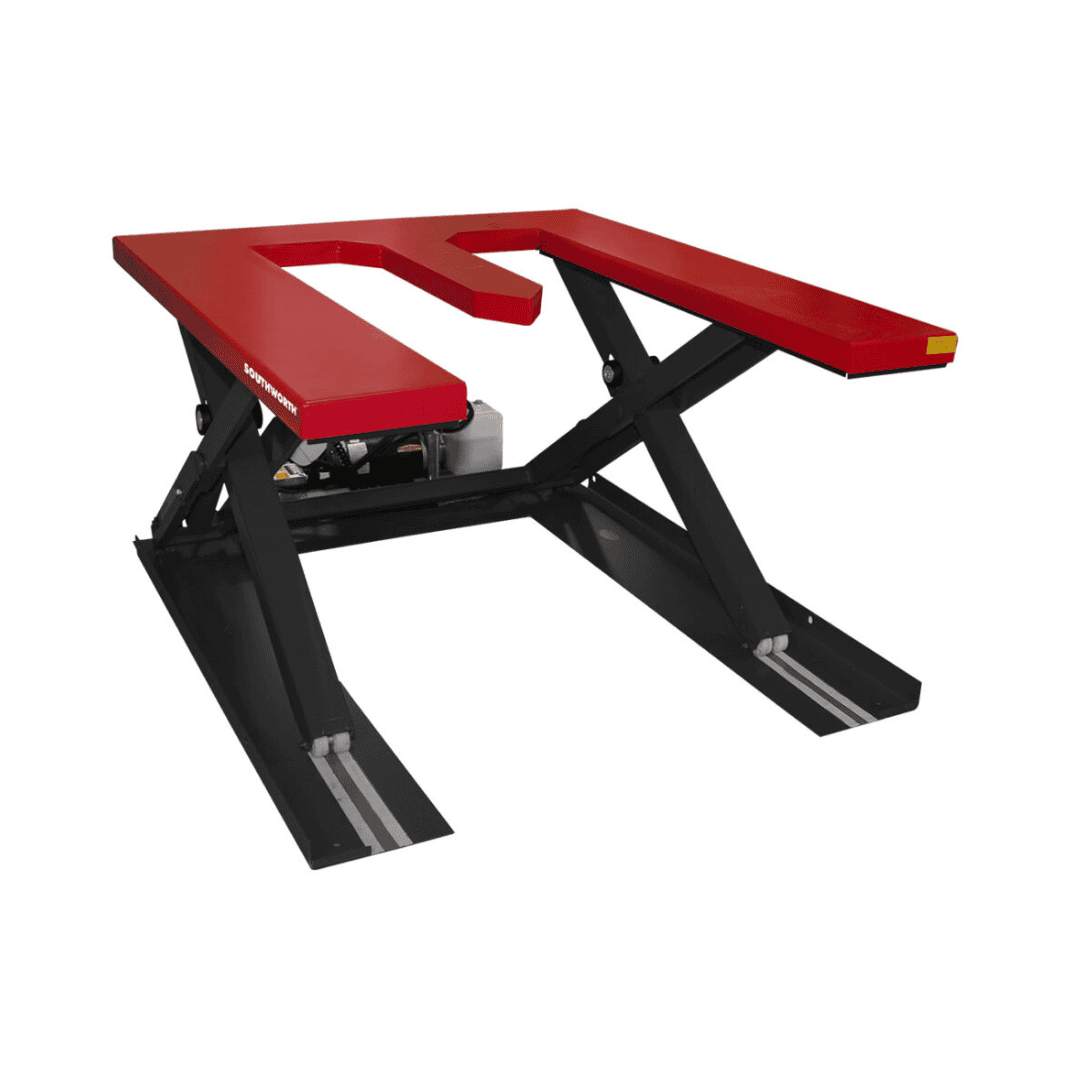

Overview
The ROLL‑E‑2.2‑31 roll in pallet lifter streamlines pallet access in tight aisles and busy production areas. It rolls its legs directly into pallet openings, engages the load quickly, and lifts with smooth, controlled motion. As dependable pallet handling equipment, it reduces manual effort, shortens cycles, and improves day‑to‑day material handling in staging, line feeding, and changeovers.
Manual pallet or roll lifting asks the body to do too much. Large muscle groups must stabilize heavy loads. Heart rate spikes during sudden heaves. Safe range of motion narrows as fatigue sets in. Repeated physical activity like this can mimic poor strength training technique and raise the chance of soft‑tissue strain or even stress fractures. The ROLL‑E changes that equation. Operators guide the machine, and the machine provides the lift. The result is ergonomic roll handling that helps reduce injury risk while maintaining pace.
Features & Benefits
Heavy duty construction keeps the frame square and stable through frequent lifts. The roll‑in leg geometry lets the unit enter common pallet openings, so the operator spends less time repositioning around the load. That geometry also supports mixed tasks: rolls, cartons, drums, or containers. As a versatile roll lifter for industrial roll handling, it brings predictable control to narrow spaces where larger trucks struggle.
Controls are simple and repeatable. Lift and lower speeds help the operator place loads with care, whether docking to a conveyor, aligning to a wrapper, or feeding a line. Steering and visibility support small course corrections without losing stability. Because motion is guided by the machine—not by body leverage—operators avoid the high‑effort “mini workouts” that drain energy during long shifts.
Ergonomics are built into every step. Keeping hands at the control zone and letting the lifter carry the weight promotes a safer posture. The operator stays within a healthier range of motion, reduces twisting, and avoids sudden spikes in heart rate linked to manual hoists. Across a shift, those incremental gains add up to steadier output and fewer fatigue‑related errors.
| Platform Size (in.) | Raised Height (in.) | Lowest Height (in.) | Load Capacity (lbs.) | Lifting Speed |
|---|---|---|---|---|
| 51 x 60.5 | 34.75 | 3.25 | 2,000 | 22 Seconds |
Applications
Use the ROLL‑E‑2.2‑31 roll in pallet lifter wherever controlled handling in tight spaces is critical:
- Printing & converting: precise industrial roll handling for paper, film, and foil
- Packaging lines: feeding roll stock, staging wrap, and moving partial pallets
- Manufacturing cells: delivering components and WIP to point of use
- Warehousing & distribution: lane staging and quick dock turns
- Assembly areas: repositioning mixed containers without manual lifts
In each case, the lifter replaces push‑pull‑twist effort with guided mechanical motion that helps reduce injury risk and save time.
Maintenance
Daily care is quick. Check casters and load wheels for debris. Verify smooth lift travel and consistent lowering. Wipe contact points so the legs and forks enter pallets cleanly. Light lubrication on schedule keeps pivoting parts quiet and precise. The heavy duty frame and components are designed for long service life with basic attention, which protects uptime and keeps handling predictable.
Selection Assistance