
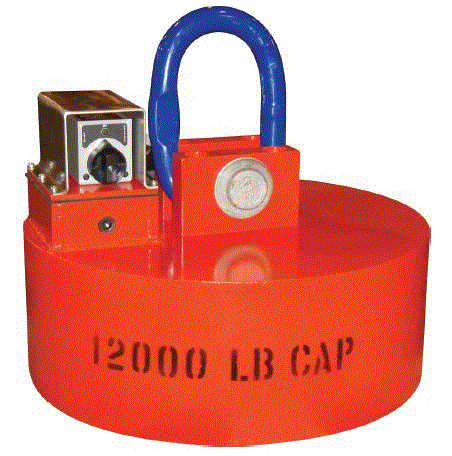
Overview
Barron Equipment carries round electromagnetic lifting magnets for below-the-hook material handling of flat ferrous metal loads. These electro lift magnets use a DC-powered magnetic field to grip steel plates, billets, bars, forgings, die castings, and other solid, compact ferrous metal materials from the top — eliminating the need for hooks, chains, slings, or manual rigging on every lift cycle.
Round electromagnetic lifters are designed for use with overhead cranes, jib cranes, and gantry systems. The operator positions the magnet on the load, energizes the magnetic field with a controller, and lifts. When the load reaches its destination, the release function breaks the magnetic field and the load is placed. This simple, repeatable cycle speeds up material movement in steel service centers, fabrication shops, machine shops, and warehouses where ferrous metal moves throughout the day.
How Electromagnetic Lifting Works
An electromagnetic lifting magnet generates its holding force by passing electrical current through a coil housed inside the magnet body. When energized, the coil produces a strong magnetic field that penetrates the ferrous metal load and creates a secure grip on the contact surface. When the current is switched off and the release function is activated, the residual magnetic field is cleared and the load releases cleanly.
Unlike permanent lifting magnets that rely on a fixed magnetic field, electromagnetic lifters give the operator full control over when the magnetic field is on and off. This makes them the preferred choice for applications where loads need to be picked up and set down repeatedly throughout a shift, and where the ability to demagnetize the load after release is important for downstream processing.
Features and Benefits
- Designed for lifting flat, solid, compact ferrous metal materials including steel plates, billets, bars, forgings, and die castings
- 115 volts AC power input with integrated rectifier for DC magnet operation
- Recessed on, off, and release controls to protect against accidental operation during handling
- Available in multiple diameters with lifting capacities ranging from 1,000 lbs. to 12,000 lbs. depending on model
- Can be used individually or in multiples on a spreader bar for handling longer or wider loads
- Strong magnetic holding force rated for low carbon steel at magnetic saturation with a cold rolled surface finish
- All capacity ratings include a 2:1 safety factor
- Complies with ASME standards for below-the-hook lifting devices
Electromagnetic vs. Permanent Lifting Magnets
Barron Equipment carries both electromagnetic and permanent lifting magnets, and the right choice depends on your application. Electromagnetic lifters require AC power but offer higher capacities, full on/off control, and the ability to demagnetize the load on release. They are the standard for steel service centers and heavy fabrication where loads are large, flat, and handled repeatedly.
Permanent lifting magnets require no external power — they use a lever-actuated permanent magnetic field that is not affected by power outages or battery life. They are ideal for field work, maintenance, and applications where electrical connections are not available at the crane hook. For permanent magnet options, see our Permanent Lifting Magnets Model CREM page.
Applications
Round electromagnetic lifting magnets serve steel service centers, metal fabrication shops, machine shops, die casting operations, and warehouses that handle ferrous metal materials overhead. Common applications include picking steel plates from inventory stacks and positioning them on cutting tables, saws, or CNC machines, loading and unloading steel billets and bars between storage racks and processing equipment, handling forgings and die castings between production stages, transferring flat steel sheets between workstations in fabrication and finishing operations, and loading finished ferrous metal parts onto shipping pallets or trucks.
Selection Assistance
Selecting the right electromagnetic lifting magnet starts with defining the weight of your heaviest load, the material type and thickness, and the surface condition of the contact face. Lifting capacity ratings are based on low carbon steel at magnetic saturation with a surface finish equivalent to cold rolled steel. Rougher surfaces, thinner materials, alloy steels, and air gaps between the magnet and load surface all reduce effective holding force — so selecting a magnet rated well above your typical load weight is essential for safe operation.
Barron Equipment's team can help evaluate your load profiles and recommend the right magnet diameter and capacity for your application. For loads that are non-ferrous or where magnetic attachment is not practical, Barron carries the full ANVER vacuum lifter line and Caldwell vacuum lifting systems as alternative below-the-hook solutions.
Contact Barron Equipment to request a quote or discuss an electromagnetic lifting solution for your facility.