
-
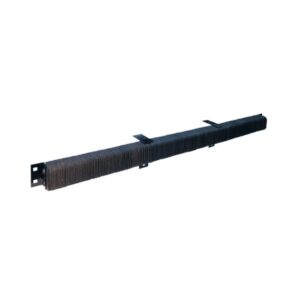
Extra-Length Laminated Loading Dock Bumper – Recycled Rubber – 51 In. to 123 In. Long – 4.5 In. W x 10 In. H
Item ID: B4510-A3From $329.65 Select options This product has multiple variants. The options may be chosen on the product page -
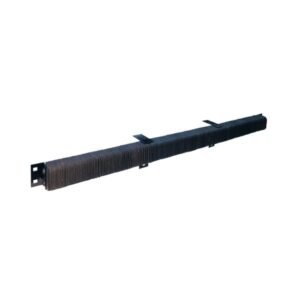
Extra-Length Laminated Loading Dock Bumper – Recycled Rubber – 51 In. to 123 In. Long – 4.5 In. W x 12 In. H
Item ID: B4512-A3From $411.26 Select options This product has multiple variants. The options may be chosen on the product page -
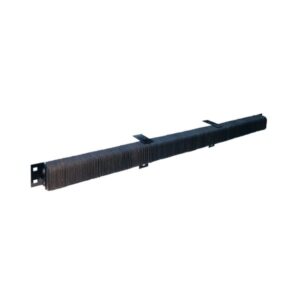
Extra-Length Laminated Loading Dock Bumper – Recycled Rubber – 51 In. to 123 In. Long – 6 In. W x 10 In. H
Item ID: B610-A3From $457.14 Select options This product has multiple variants. The options may be chosen on the product page -
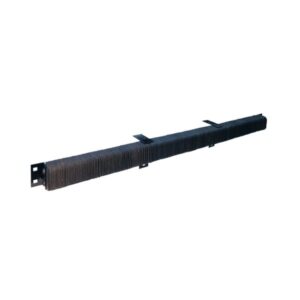
Extra-Length Laminated Loading Dock Bumper – Recycled Rubber – 51 In. to 123 In. Long – 6 In. W x 12 In. H
Item ID: B612-A3From $525.35 Select options This product has multiple variants. The options may be chosen on the product page -
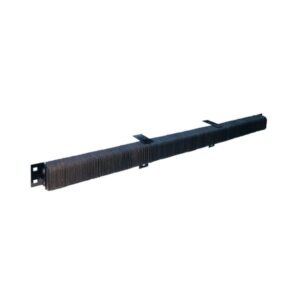
Extra-Length Laminated Loading Dock Bumper – Recycled Rubber – 87 to 99 In. Long – 4.5 In. W x 6 In. H
Item ID: B4506-A3From $388.55 Select options This product has multiple variants. The options may be chosen on the product page -

Extra-Thick Laminated Loading Dock Bumper – Recycled Rubber – 11 In. L x 10.5 In. W x 20 In. H
Item ID: B10520$439.85 Select options This product has multiple variants. The options may be chosen on the product page -

Extra-Thick Laminated Loading Dock Bumper – Recycled Rubber – 11 In. L x 12 In. W x 20 In. H
Item ID: B1220$471.77 Select options This product has multiple variants. The options may be chosen on the product page -

Extra-Thick Laminated Loading Dock Bumper – Recycled Rubber – 11 In. L x 8 In. W x 20 In. H
Item ID: B820$366.70 Select options This product has multiple variants. The options may be chosen on the product page -

Extra-Thick Laminated Loading Dock Bumper – Recycled Rubber – 11 In. L x 9 In. W x 20 In. H
Item ID: B920$366.70 Select options This product has multiple variants. The options may be chosen on the product page -

Extra-Thick Laminated Loading Dock Bumper – Recycled Rubber – 14 In. to 36 In. Long – 10.5 In. W x 10 In. H
Item ID: B10510From $261.25 Select options This product has multiple variants. The options may be chosen on the product page -

Extra-Thick Laminated Loading Dock Bumper – Recycled Rubber – 14 In. to 36 In. Long – 12 In. W x 10 In. H
Item ID: B1210From $282.15 Select options This product has multiple variants. The options may be chosen on the product page -
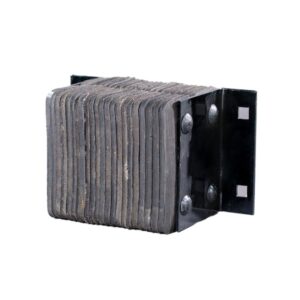
Extra-Thick Laminated Loading Dock Bumper – Recycled Rubber – 14 In. to 36 In. Long – 8 In. W x 10 In. H
Item ID: B810From $203.87 Select options This product has multiple variants. The options may be chosen on the product page
Cookie Consent
We use cookies to improve your experience on our site. By using our site, you consent to cookies.
Cookie Preferences
Manage your cookie preferences below:
Essential cookies enable basic functions and are necessary for the proper function of the website.
Name
Description
Duration
Cookie Preferences
This cookie is used to store the user's cookie consent preferences.
30 days
Google Tag Manager simplifies the management of marketing tags on your website without code changes.
Name
Description
Duration
cookiePreferences
Registers cookie preferences of a user
2 years
td
Registers statistical data on users' behaviour on the website. Used for internal analytics by the website operator.
session
CloudFlare provides web performance and security solutions, enhancing site speed and protecting against threats.
Service URL: developers.cloudflare.com (opens in a new window)
Name
Description
Duration
cf_ob_info
The cf_ob_info cookie provides information on: The HTTP Status Code returned by the origin web server. The Ray ID of the original failed request. The data center serving the traffic
session
cf_use_ob
The cf_use_ob cookie informs Cloudflare to fetch the requested resource from the Always Online cache on the designated port. Applicable values are: 0, 80, and 443. The cf_ob_info and cf_use_ob cookies are persistent cookies that expire after 30 seconds.
session
__cfwaitingroom
The __cfwaitingroom cookie is only used to track visitors that access a waiting room enabled host and path combination for a zone. Visitors using a browser that does not accept cookies cannot visit the host and path combination while the waiting room is active.
session
cf_chl_rc_i
These cookies are for internal use which allows Cloudflare to identify production issues on clients.
session
cf_chl_rc_ni
These cookies are for internal use which allows Cloudflare to identify production issues on clients.
session
cf_chl_rc_m
These cookies are for internal use which allows Cloudflare to identify production issues on clients.
session
__cfruid
Used by the content network, Cloudflare, to identify trusted web traffic.
session
__cf_bm
Cloudflare's bot products identify and mitigate automated traffic to protect your site from bad bots. Cloudflare places the __cf_bm cookie on End User devices that access Customer sites that are protected by Bot Management or Bot Fight Mode. The __cf_bm cookie is necessary for the proper functioning of these bot solutions.
session
__cflb
When enabling session affinity with Cloudflare Load Balancer, Cloudflare sets a __cflb cookie with a unique value on the first response to the requesting client. Cloudflare routes future requests to the same origin, optimizing network resource usage. In the event of a failover, Cloudflare sets a new __cflb cookie to direct future requests to the failover pool.
session
_cfuvid
The _cfuvid cookie is only set when a site uses this option in a Rate Limiting Rule, and is only used to allow the Cloudflare WAF to distinguish individual users who share the same IP address.
session
cf_clearance
Whether a CAPTCHA or Javascript challenge has been solved.
session
__cfseq
Sequence rules uses cookies to track the order of requests a user has made and the time between requests and makes them available via Cloudflare Rules. This allows you to write rules that match valid or invalid sequences. The specific cookies used to validate sequences are called sequence cookies.
session
Formidable Forms is a powerful WordPress plugin for creating advanced forms and data management solutions.
Name
Description
Duration
frm_form_
Saves the ID of the form and the time the entry was submitted.
2 hours
WooCommerce is a customizable eCommerce platform for building online stores using WordPress.
Name
Description
Duration
wp_woocommerce_session_
Contains a unique code for each customer so that it knows where to find the cart data in the database for each customer.
2 days
woocommerce_recently_viewed
Powers the Recent Viewed Products widget
session
store_notice
Allows customers to dismiss the Store Notice.
session
woocommerce_snooze_suggestions__
Allows dashboard users to dismiss Marketplace suggestions, if enabled.
2 days
woocommerce_dismissed_suggestions__
Count of suggestion dismissals, if enabled.
1 month
woocommerce_cart_hash
Helps WooCommerce determine when cart contents/data changes.
session
woocommerce_items_in_cart
Helps WooCommerce determine when cart contents/data changes.
session
Statistics cookies collect information anonymously. This information helps us understand how visitors use our website.
Clarity is a web analytics service that tracks and reports website traffic.
Service URL: clarity.microsoft.com (opens in a new window)
Name
Description
Duration
ANONCHK
Indicates whether MUID is transferred to ANID, a cookie used for advertising. Clarity doesn't use ANID and so this is always set to 0.
Session
CLID
Identifies the first-time Clarity saw this user on any site using Clarity.
12 months
_clsk
Connects multiple page views by a user into a single Clarity session recording.
12 months
_clck
Persists the Clarity User ID and preferences, unique to that site is attributed to the same user ID.
12 months
SourceBuster is used by WooCommerce for order attribution based on user source.
Name
Description
Duration
sbjs_session
The number of page views in this session and the current page path
30 minutes
sbjs_udata
Information about the visitor’s user agent, such as IP, the browser, and the device type
session
sbjs_first
Traffic origin information for the visitor’s first visit to your store (only applicable if the visitor returns before the session expires)
session
sbjs_current
Traffic origin information for the visitor’s current visit to your store
session
sbjs_first_add
Timestamp, referring URL, and entry page for your visitor’s first visit to your store (only applicable if the visitor returns before the session expires)
session
sbjs_current_add
Timestamp, referring URL, and entry page for your visitor’s current visit to your store
session
sbjs_migrations
Technical data to help with migrations between different versions of the tracking feature
session
Google Analytics is a powerful tool that tracks and analyzes website traffic for informed marketing decisions.
Service URL: policies.google.com (opens in a new window)
Name
Description
Duration
__utmc
Used only with old Urchin versions of Google Analytics and not with GA.js. Was used to distinguish between new sessions and visits at the end of a session.
End of session (browser)
__utmz
Contains information about the traffic source or campaign that directed user to the website. The cookie is set when the GA.js javascript is loaded and updated when data is sent to the Google Anaytics server
6 months after last activity
__utmv
Contains custom information set by the web developer via the _setCustomVar method in Google Analytics. This cookie is updated every time new data is sent to the Google Analytics server.
2 years after last activity
__utmx
Used to determine whether a user is included in an A / B or Multivariate test.
18 months
_ga
ID used to identify users
2 years
_gali
Used by Google Analytics to determine which links on a page are being clicked
30 seconds
_ga_
ID used to identify users
2 years
_gid
ID used to identify users for 24 hours after last activity
24 hours
_gat
Used to monitor number of Google Analytics server requests when using Google Tag Manager
1 minute
_gac_
Contains information related to marketing campaigns of the user. These are shared with Google AdWords / Google Ads when the Google Ads and Google Analytics accounts are linked together.
90 days
__utma
ID used to identify users and sessions
2 years after last activity
__utmt
Used to monitor number of Google Analytics server requests
10 minutes
__utmb
Used to distinguish new sessions and visits. This cookie is set when the GA.js javascript library is loaded and there is no existing __utmb cookie. The cookie is updated every time data is sent to the Google Analytics server.
30 minutes after last activity
Marketing cookies are used to follow visitors to websites. The intention is to show ads that are relevant and engaging to the individual user.
CallRail is a call tracking and analytics service. Its script swaps the phone numbers shown on a page and stores the visitor's referrer, landing page and session ID, so phone calls and form submissions can be attributed to the marketing source that brought the visitor to the site.
Service URL: www.callrail.com (opens in a new window)
Name
Description
Duration
calltrk_google_experiments
Stores the Google experiment IDs seen on the pages visited, so a phone call can be attributed to a test variant.
180 days
calltrk_nearest_tld
Written briefly to work out the broadest domain that will accept cookies when tracking across subdomains, then removed once that check completes.
3600 days, deleted as soon as the check finishes
calltrk_session_id
Stores a randomly generated visitor session ID so that a later phone call or form submission can be matched to this visit.
180 days
calltrk_referrer
Stores the referring URL that brought the visitor to the site, so the traffic source of a phone call can be reported.
180 days
calltrk_landing
Stores the first page the visitor landed on, so the page that led to a phone call can be reported.
180 days
calltrk_fcid
Stores a randomly generated form capture ID used to link a submitted form to this visitor session.
180 days
calltrk_override_src
Stores a traffic source supplied in the page URL, used to override the detected source and start a fresh tracking session.
180 days
Google Ads is an online advertising platform that enables businesses to create targeted ads displayed on Google search results and partner sites.
Service URL: policies.google.com (opens in a new window)
Name
Description
Duration
_gcl_aw
Google uses cookies for advertising, including serving and rendering ads, personalizing ads (depending on your ad settings at g.co/adsettings), limiting the number of times an ad is shown to a user, muting ads you have chosen to stop seeing, and measuring the effectiveness of ads.
90 Days
_gcl_gs
Google uses cookies for advertising, including serving and rendering ads, personalizing ads (depending on your ad settings at g.co/adsettings), limiting the number of times an ad is shown to a user, muting ads you have chosen to stop seeing, and measuring the effectiveness of ads.
90 Days
_gcl_gb
Google uses cookies for advertising, including serving and rendering ads, personalizing ads (depending on your ad settings at g.co/adsettings), limiting the number of times an ad is shown to a user, muting ads you have chosen to stop seeing, and measuring the effectiveness of ads.
90 Days
_gac_gb_
Google uses cookies for advertising, including serving and rendering ads, personalizing ads (depending on your ad settings at g.co/adsettings), limiting the number of times an ad is shown to a user, muting ads you have chosen to stop seeing, and measuring the effectiveness of ads.
90 Days
FPGCLGB
Google uses cookies for advertising, including serving and rendering ads, personalizing ads (depending on your ad settings at g.co/adsettings), limiting the number of times an ad is shown to a user, muting ads you have chosen to stop seeing, and measuring the effectiveness of ads.
90 Days
FPGCLAW
Google uses cookies for advertising, including serving and rendering ads, personalizing ads (depending on your ad settings at g.co/adsettings), limiting the number of times an ad is shown to a user, muting ads you have chosen to stop seeing, and measuring the effectiveness of ads.
90 Days
__Secure-1PAPISID
Targeting cookie. Used to create a user profile and display relevant and personalised Google Ads to the user.
2 years
__Secure-3PSID
Targeting cookie. Used to profile the interests of website visitors and display relevant and personalised Google ads.
2 years
Conversion
Google uses cookies for advertising, including serving and rendering ads, personalizing ads (depending on your ad settings at g.co/adsettings), limiting the number of times an ad is shown to a user, muting ads you have chosen to stop seeing, and measuring the effectiveness of ads.
90 days
__Secure-1PSID
Targeting cookie. Used to create a user profile and display relevant and personalised Google Ads to the user.
2 years
__Secure-1PSIDCC
Targeting cookie. Used to create a user profile and display relevant and personalised Google Ads to the user.
2 years
__Secure-3PAPISID
Profiles the interests of website visitors to serve relevant and personalised ads through retargeting.
2 years
AEC
AEC cookies ensure that requests within a browsing session are made by the user, and not by other sites. These cookies prevent malicious sites from acting on behalf of a user without that user's knowledge.
6 months
ADS_VISITOR_ID
Cookie required to use the options and on-site web services
2 months
__Secure-3PSIDCC
Targeting cookie. Used to create a user profile and display relevant and personalised Google Ads to the user.
2 years
__Secure-3PSIDTS
Targeting cookie. Used to create a user profile and display relevant and personalised Google Ads to the user.
2 years
__Secure-1PSIDTS
Targeting cookie. Used to create a user profile and display relevant and personalised Google Ads to the user.
2 years