
FIND US
Davenport, IA
4710 N Brady St
Davenport, IA 52806
Des Moines, IA
2276 NE 46th Ave
Des Moines, IA 50317
Residential Garage Door Opener Safety Sensors & Limit Switches
Safety Eyes and Travel Limit Controls for Residential Openers
Safety sensors and limit switches are the components responsible for preventing your garage door from closing on people, pets, or objects and for stopping the door at the correct open and closed positions. When either component fails, the door may refuse to close, reverse unexpectedly, or travel past its intended stopping point. Because these parts directly affect safe operation, replacing them promptly is essential. Barron Equipment offers replacement safety sensors, photo eye kits, and limit switches for residential garage door openers from Genie, LiftMaster, Overhead Door, and other brands, with short lead times on most parts.
-
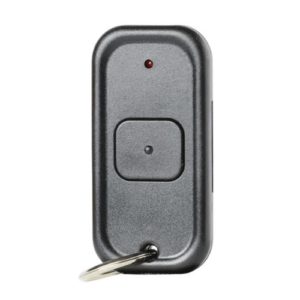
BEA 900 MHz Wireless Transmitters for Automatic Door Systems
Item ID: BEA-TRANSMITTERBEA 900 MHz wireless transmitters for automatic door operator systems. The hi-accessibility transmitter provides remote door activation for users with limited mobility. The touchless retrofit transmitter adds wireless capability to existing hardwired push plates and actuators.From $51.35 Select options This product has multiple variants. The options may be chosen on the product page
Safety Sensors and Photo Eyes
Federal safety standards have required auto-reversing mechanisms on all residential garage door openers manufactured since 1993. The most common method of compliance is a pair of photoelectric sensors — often called safety eyes or photo eyes — mounted near the floor on either side of the garage door opening. One sensor sends an invisible infrared beam across the opening, and the other receives it. If anything interrupts that beam while the door is closing, the opener automatically reverses the door to the fully open position.
A working pair of safety sensors is not optional. Without functioning sensors, the opener poses a serious entrapment hazard. Most modern openers are programmed to refuse the close command entirely if the sensors are misaligned, disconnected, or malfunctioning — which is why a door that opens normally but will not close is the most common symptom of a sensor issue.
Sensors fail for several reasons. The lenses become dirty or fogged over time, blocking the beam even when nothing is physically in the doorway. Wiring from the sensors back to the opener unit can be damaged by lawnmowers, foot traffic, rodents, or contact with the garage door itself during operation. Sun glare hitting the receiving sensor at certain times of day can overwhelm the infrared signal and cause intermittent false reversals. Physical impact from bikes, trash cans, or garden equipment can knock a sensor out of alignment or break the mounting bracket.
Troubleshooting Before Replacing
Not every sensor issue requires a new part. Before ordering a replacement, work through these common causes that can be resolved without a new sensor.
Check alignment first. Each sensor has a small LED indicator — typically green on the sending sensor and green or amber on the receiving sensor. If either LED is off or blinking, the sensors are misaligned. Loosen the wing nut on the mounting bracket, adjust the sensor until the LED shows a steady light, and retighten. Both LEDs should glow steadily when aligned correctly.
Clean both lenses with a soft dry cloth. A thin layer of dust, cobweb residue, or moisture condensation is enough to weaken the beam below the detection threshold.
Inspect the wiring from each sensor back to the opener. Look for nicked insulation, loose connections at the terminal strip on the opener unit, or wire that has been pinched under a bracket or staple. A damaged wire can cause intermittent behavior that appears to be a sensor failure.
If the sensors are aligned, clean, and properly wired but the opener still refuses to close or the receiving sensor’s LED flickers, the sensor itself has likely failed and needs replacement. Sensors are sold as matched pairs — sending and receiving units — and should be replaced as a set to ensure proper signal compatibility.
Limit Switches
Limit switches tell the opener where to stop the door in the fully open and fully closed positions. Depending on the opener type, these limits are set either electronically on the circuit board or mechanically through physical switch assemblies mounted on the rail or inside the opener housing.
Mechanical limit switches are most common on screw drive openers, where they are positioned along the rail and activated by contact with the trolley as it reaches the end of its travel. Over time, the switch mechanism can wear out, corrode, or shift position, causing the door to stop short of fully closed, travel past the fully open point, or reverse direction when it should be stopping.
Electronic limit systems store travel positions in the circuit board’s memory. If an electronic limit drifts, it is typically resolved through reprogramming rather than part replacement. However, if the board cannot hold its limit settings after repeated programming attempts, the issue may be a failing board rather than the limit system itself.
Signs that a mechanical limit switch needs replacement include the door consistently overshooting or undershooting its stop point, the door reversing at the bottom without an obstruction present, or the opener failing to recognize that the door has reached its end position. If adjusting the switch position does not resolve the problem, the switch mechanism has likely worn beyond its functional range.
Safety Compliance and Older Openers
Openers manufactured before 1993 were not required to include photoelectric safety sensors, and many of these units are still in service. While it is legal to continue operating a pre-1993 opener, the absence of safety sensors creates a significant entrapment risk, particularly in homes with children or pets. Adding aftermarket safety sensors to an older opener is possible in some cases, but compatibility is limited and the installation may not provide the same level of protection as a modern integrated system.
If your opener predates 1993 and does not have safety sensors, the safest course of action is replacing the entire opener with a current model that includes integrated safety features, rolling code security, and modern connectivity options. The cost of a new opener is modest relative to the safety improvement it provides.
Why does my garage door open but not close?
This is the most common symptom of a safety sensor issue. When the opener detects that the sensors are misaligned, obstructed, disconnected, or malfunctioning, it blocks the close command as a safety precaution. The opener light may blink a specific number of times to indicate a sensor fault. Check alignment, clean the lenses, and inspect the wiring. If the problem persists after troubleshooting, one or both sensors need to be replaced.
Do I need to replace both safety sensors at the same time?
It is strongly recommended. Safety sensors are sold as matched pairs — a sending unit and a receiving unit — and are calibrated to work together. Mixing an old sender with a new receiver, or vice versa, can result in unreliable detection and intermittent false reversals. Replacing both sensors as a set ensures consistent performance and proper beam alignment.
Can sunlight interfere with my garage door sensors?
Yes. Direct sunlight hitting the receiving sensor can overwhelm the infrared signal from the sending sensor, causing the opener to behave as if the beam is obstructed. This typically occurs at specific times of day when the sun angle aligns with the sensor. Shielding the receiving sensor with a small cardboard tube or an aftermarket sun shade can resolve the issue without replacing the sensor. If the problem persists after shielding, the receiving sensor may have degraded sensitivity and should be replaced.
How do I adjust the limit switches on my garage door opener?
On openers with mechanical limit switches, the switches are positioned along the rail and can be repositioned by loosening a set screw and sliding the switch to the correct point. On openers with electronic limits, the adjustment is made using the limit adjustment buttons or dials on the opener unit — typically labeled “up limit” and “down limit.” Make small adjustments and test after each change. Over-adjusting the down limit can cause the door to press too hard against the floor, triggering the auto-reverse safety feature.
Selection Assistance
Safety sensors and limit switches are model-specific, and using the wrong replacement can result in unreliable safety performance. Contact Barron Equipment with your opener brand, model number, and a description of the symptoms. We will confirm the correct sensor pair or limit switch and provide lead time and pricing. For customers in Iowa and surrounding states, our technicians can diagnose sensor and limit issues on-site, install replacement components, and verify proper operation before leaving.