
Overview
Installing or replacing the drive chain on a garage door operator means connecting two ends of roller chain into a continuous loop around the drive sprocket and the idler. Before the master link can be inserted to close the loop, both ends of the chain need to be pulled together under tension — tight enough that there’s no slack in the system, but with enough of the chain ends overlapping to get the master link seated. That’s a two-hand job, and without a tool to hold the chain taut, it becomes a three-hand job that nobody actually has the hands for.
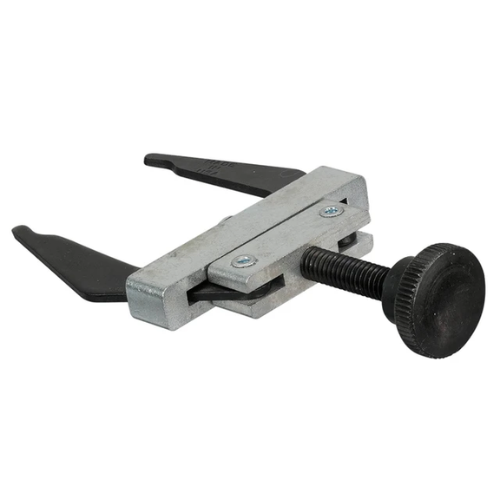
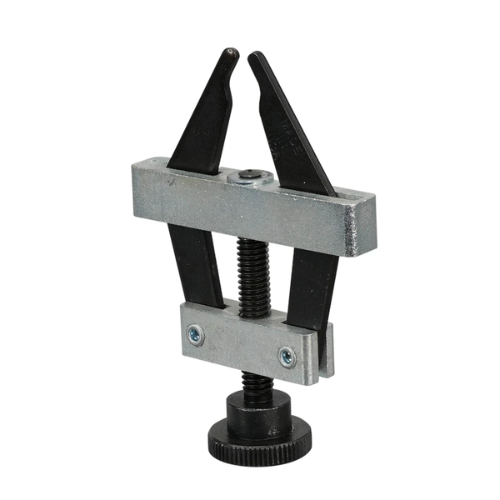
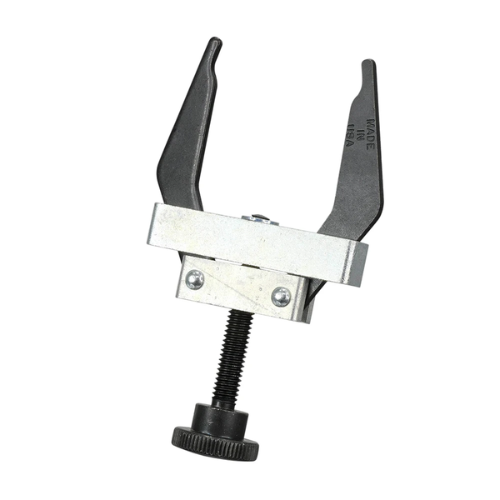
A chain puller grips the chain on both sides of the connection point and mechanically draws them together, holding the chain under tension while the technician installs the master link with both hands free. It’s one of those tools that turns an awkward, frustrating task into a clean, one-person operation.
Barron Equipment stocks this Action Industries chain puller for #35 through #60 roller chain — the full range of chain sizes used on residential and commercial garage door operator systems.
Product Details
11000-10-H — Chain Puller, #35–60 Chain
This chain puller accommodates roller chain sizes #35, #40, #41, #50, and #60 — covering the standard chain specifications found on residential trolley operators, commercial jackshaft operators, and industrial chain-drive door systems. The tool grips the chain links positively without damaging the rollers or side plates, and holds tension while the technician completes the connection.
- Chain compatibility: #35 through #60 roller chain
- Function: Pulls chain tight for master link connection
- Application: Garage door operators, jackshaft drives, trolley systems
- Benefit: Frees both hands for master link installation
Where This Tool Is Used
Any time a roller chain is being installed, replaced, or shortened on a garage door drive system, the chain puller is the tool that makes the final connection possible. The most common applications include:
Jackshaft operator installation: Commercial jackshaft operators drive the torsion shaft through a roller chain and sprocket system. The chain runs from the operator’s output sprocket to a sprocket on the torsion shaft. Getting the chain tension right at installation determines how smoothly and quietly the operator runs for the life of the system.
Trolley operator chain replacement: Residential and light commercial trolley-style operators (the kind that run a trolley along a rail above the door) use a roller chain or chain-and-cable hybrid to move the trolley. When the chain stretches or breaks, the replacement chain needs to be pulled tight before the master link goes in.
Industrial chain-drive systems: Larger commercial and industrial doors use heavier roller chain (up to #60) on high-torque drive systems. The chain puller handles these heavier chains just as effectively as the lighter residential sizes.
Why Proper Chain Tension Matters
The drive chain on a garage door operator isn’t just a connection — it’s the power transmission link between the motor and the door. If the chain is too loose, it slaps against the rail or housing during operation, creates noise, skips on the sprocket teeth, and wears prematurely. If it’s too tight, it puts excessive side load on the operator shaft bearings and the torsion shaft bearings, accelerating bearing failure and increasing the motor’s workload.
Correct tension means the chain has just enough deflection (typically 1/4″ to 1/2″ of play at the midpoint of the longest span) to run smoothly without slapping or binding. The chain puller lets the technician pull the chain to the right tension, hold it there, and lock in the master link at exactly the right length.
Selection Assistance
Confirm the roller chain size on the operator before ordering. The chain size is usually stamped on the side plates of the chain links (#35, #40, #41, #50, or #60) or listed in the operator’s installation manual. This single tool covers all five standard sizes, so one chain puller handles the full range of residential and commercial garage door operator chain work. Contact Barron Equipment for help identifying the chain size on your operator.