
Overview
Key stock locks components to the shaft so they rotate together. Shaft collars keep those components from sliding sideways along the shaft. Both are needed for a torsion assembly that stays in position — key stock handles the rotational hold, and shaft collars handle the lateral hold. Without collars in place, cable drums, couplers, and bearings can walk along the shaft during door operation, creating cable slack on one side, uneven door travel, and potential contact between components that should have clearance between them.
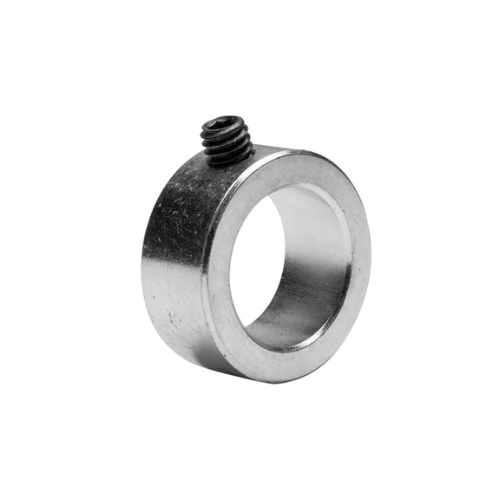
Barron Equipment stocks Action Industries set screw style shaft collars in two inside diameters to fit the standard torsion spring shaft sizes used on residential and commercial garage doors.
Available Sizes
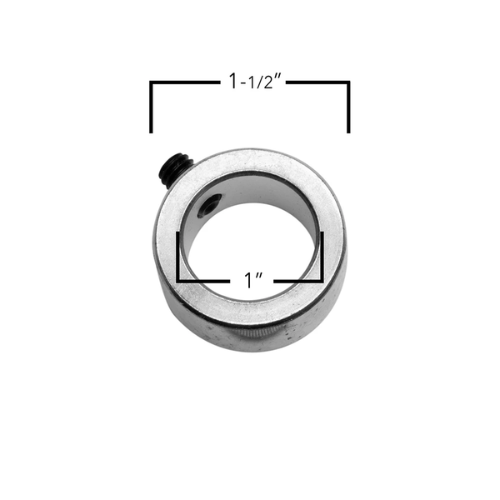
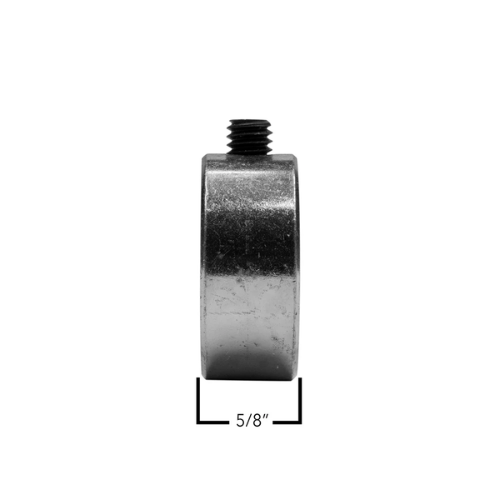
DA010-00-H — 1″ ID Shaft Collar
The 1″ inside diameter collar fits the standard torsion spring shaft used on most residential garage doors and many light commercial systems. This is the shaft collar you’ll use on the majority of residential service calls, spring replacements, and new door installations where the torsion bar measures 1 inch in diameter.
- Inside diameter: 1″
- Type: Set screw
- Application: Residential and light commercial torsion shafts
DA010-25-H — 1-1/4″ ID Shaft Collar
The 1-1/4″ collar steps up to the larger shaft diameter found on heavier commercial garage doors. Doors with wider openings, heavier panels, or higher cycle springs run on thicker shafts to handle the increased torsional load, and this collar matches that larger bore.
- Inside diameter: 1-1/4″
- Type: Set screw
- Application: Commercial and heavy-duty torsion shafts
How Shaft Collars Work
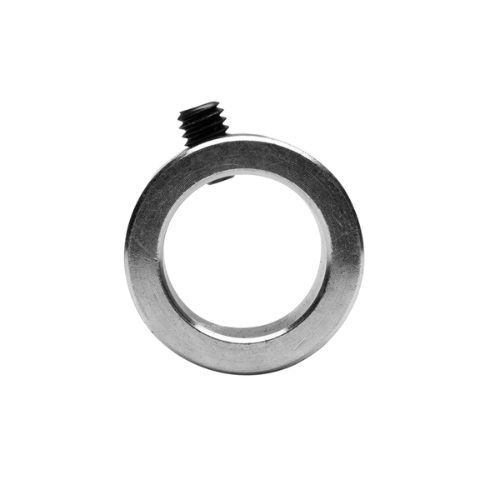
A set screw shaft collar is a steel ring that slides over the torsion shaft and locks in position by tightening a set screw against the shaft surface. The set screw creates a friction hold that prevents the collar — and anything it’s butted up against — from moving laterally. Collars are placed on either side of components that need to stay in a fixed position along the shaft: cable drums, shaft couplers, bearing plates, and chain hoist sprockets are all commonly secured with shaft collars.
On a typical residential torsion assembly, you’ll find collars on the outboard side of each cable drum (keeping the drums from sliding away from the spring) and at various points along the shaft where components need to be held in position relative to each other.
Common Applications on Garage Doors
Shaft collars are used at multiple points along a torsion spring assembly. The most frequent placements include the outboard side of each cable drum to prevent the drum from migrating away from the bearing plate, both sides of a shaft coupler on multi-piece shafts to keep the coupler from sliding, next to chain hoist sprockets to maintain sprocket-to-chain alignment, and adjacent to center bearing plates where the shaft needs to be held in position relative to the header. Any point where a component on the shaft needs to stay put laterally is a candidate for a shaft collar.
Selection Assistance
Measure the outside diameter of your torsion spring shaft. If the shaft measures 1 inch, use the DA010-00-H collar. If it measures 1-1/4 inches, use the DA010-25-H. If you’re not sure, the shaft size is typically specified in the door manufacturer’s installation manual or can be confirmed by measuring the bore of your existing cable drums or spring cones. Contact Barron Equipment for assistance.