
Overview
The bottom seal is the barrier between the garage floor and the bottom edge of the door. When it’s working, it keeps out rain, snow, wind, dust, leaves, insects, and rodents. When it’s cracked, flattened, torn, or missing, all of that gets in — and conditioned air gets out. On heated or cooled garages, a failed bottom seal can measurably increase energy costs. On any garage, it creates a visible gap under the door that compromises weather protection and security.
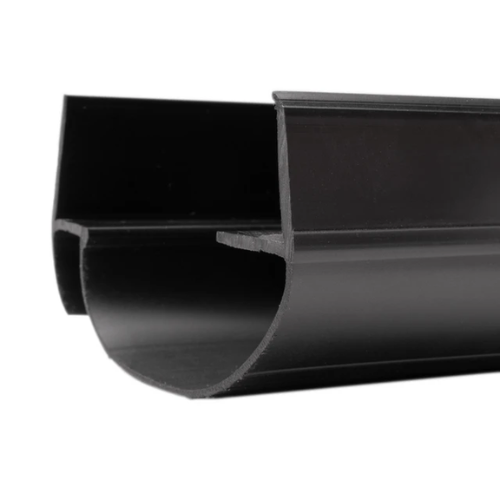
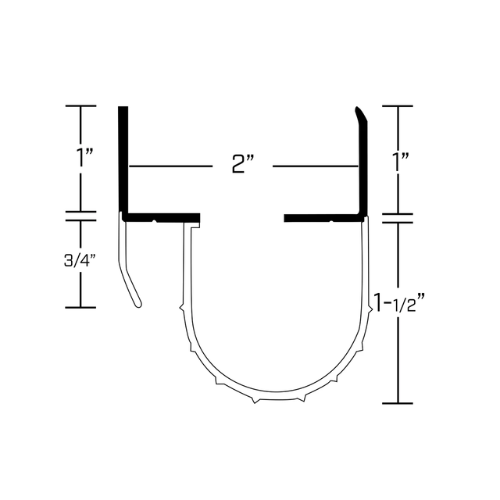
These universal vinyl bottom seals use a male and female interlocking system. Each seal section has a male end and a female end. When adjacent sections are pushed together, the male end slides into the female receiver, creating a continuous, gap-free seal across the entire width of the door. No adhesive, no hardware at the joint — the interlock holds the sections together mechanically.
Barron Equipment stocks these seals in black vinyl, available in three pre-cut lengths to fit standard single-car, double-car, and wide commercial garage door openings. Sold in boxes of 10 for professional installers, service trucks, and shop inventory.
Available SKUs
Male Pieces
The male piece features the protruding end that inserts into the female receiver to form the interlocking joint.
- PL238-ML-W-14-BX — 14 ft 4 in (172 in), box of 10
- PL238-ML-W-16-BX — 16 ft 4 in (196 in), box of 10
- PL238-ML-W-18-BX — 18 ft 4 in (220 in), box of 10
Female Pieces
The female piece features the receiving channel that accepts the male end, completing the interlocking connection.
- PL238-FM-W-16-BX — 16 ft 4 in (196 in), box of 10
- PL238-FM-W-18-BX — 18 ft 4 in (220 in), box of 10
How the Interlocking System Works
Traditional one-piece bottom seals run the full width of the door as a single continuous strip. That works fine when the seal is new, but it means that if any section of the seal is damaged — a tear, a flat spot, a section chewed through by a rodent — the entire seal has to be replaced end to end.
The male and female interlocking system takes a different approach. Each seal section locks to the next through a mechanical joint that creates the same continuous barrier as a one-piece seal, but with the ability to replace individual sections if one is damaged. The interlocking joint is tight enough to prevent air and water from passing through, and the connection holds through the repeated flexing that the bottom seal experiences every time the door opens and closes.
For installers stocking service trucks, the interlocking system also simplifies inventory. Instead of carrying full-width seals in every possible door width, the installer carries male and female sections in standard lengths and connects them on-site to fit the exact door width.
Sizing Guide
Select the seal length based on the garage door width:
14 ft 4 in (172 in): Fits standard single-car and narrow double-car garage doors. The extra 4 inches beyond the nominal door width provides trimming allowance for a precise fit.
16 ft 4 in (196 in): Fits standard 16-foot double-car garage doors — the most common residential two-car door width. Available in both male and female pieces.
18 ft 4 in (220 in): Fits wide double-car and light commercial garage doors up to 18 feet. Available in both male and female pieces.
If the door width falls between sizes, order the next size up and trim to fit. The vinyl cuts cleanly with scissors or a utility knife.
Why Garage Door Bottom Seals Fail
Bottom seals take more punishment than any other weather seal on the door. Every time the door closes, the seal compresses against the garage floor. Every time the door opens, the seal flexes and releases. Over thousands of cycles, this constant compression and flexing causes the vinyl to fatigue — it loses its memory, flattens out, and no longer springs back to form a tight seal against the floor.
Other common failure modes include UV degradation from sunlight hitting the seal when the door is open, chemical damage from road salt, gasoline, oil, and de-icing chemicals on the garage floor, cracking in cold temperatures when lower-quality seals stiffen and become brittle, and physical damage from rodents chewing through the seal to access the garage.
Vinyl bottom seals are designed to resist these conditions better than raw rubber in most residential environments. They maintain flexibility across a wide temperature range and resist the chemical exposure common in residential garages.
When to Replace the Bottom Seal
Inspect the bottom seal from inside the garage with the door closed and the lights off. If daylight is visible under the door, the seal is no longer making contact with the floor. Other signs include visible cracks or tears in the seal material, sections that have flattened and no longer spring back, water or debris entering the garage under the door after rain, and increased drafts or energy loss in heated garages.
Bottom seals are a maintenance item — they wear out by design. Plan to replace the bottom seal every few years on doors that cycle multiple times daily, or when visible deterioration appears on less frequently used doors.
Selection Assistance
Measure the door width before ordering. Select the length that matches or slightly exceeds the door width — excess can be trimmed on-site. If the installation requires interlocking multiple sections to span a wider opening, order matching male and female pieces in the appropriate lengths. These seals are sold in boxes of 10, making them ideal for professional installers handling multiple doors. Contact Barron Equipment for help sizing bottom seals for your garage door application.