
Overview
Running wire from a gate keypad to the gate operator is often the most expensive and disruptive part of a gate access control installation. The wire has to get from the entry point — which might be a gate post, a pedestal, or a column — to the operator, which could be 50, 100, or more feet away. That means trenching through pavement, boring under driveways, running conduit along fences, or cutting into finished landscaping. On a new construction site, it’s manageable. On an existing property with paved driveways, established landscaping, or decorative hardscaping, the wiring cost can exceed the cost of the keypad and operator combined.
The Ridge 2.0 by Security Brands eliminates the wire entirely. The keypad is battery-powered and mounts at the entry point with no electrical connection. When a user enters a code, the keypad transmits the signal wirelessly to the Ridge transceiver mounted at the gate operator. The transceiver receives the signal and activates the operator to open the gate. No trenching, no conduit, no wire pull, no pavement cuts.
Barron Equipment stocks both Ridge 2.0 components — the wireless keypad and the wireless transceiver. Both are required for a complete system.
System Components
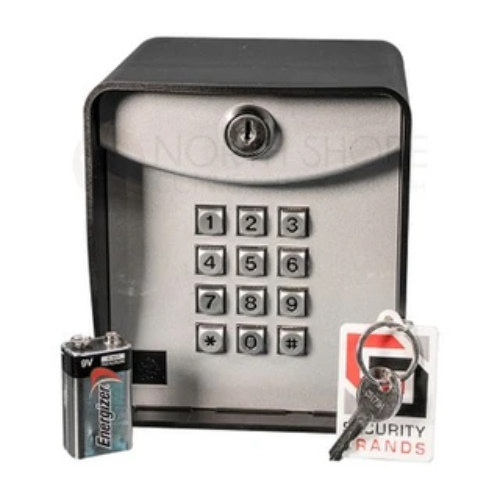
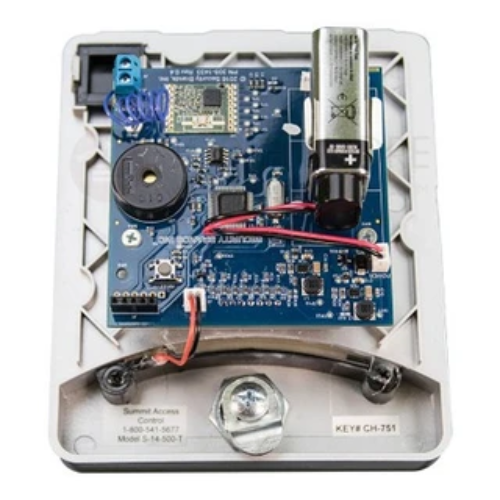
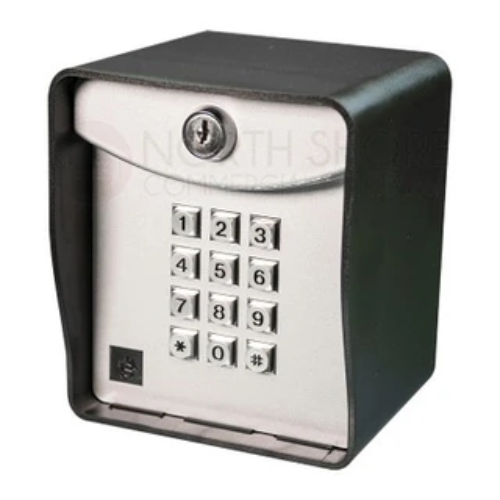
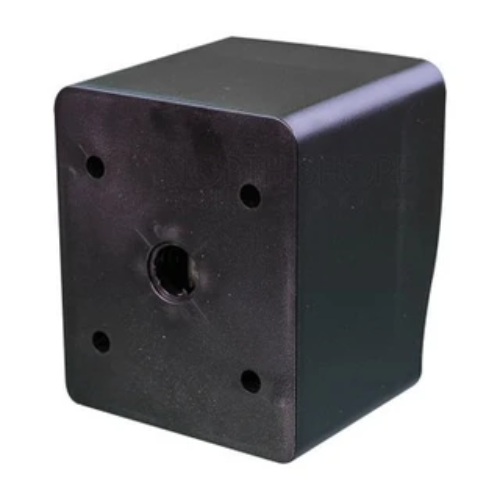
S-14-500T — Ridge 2.0 Wireless Digital Keypad
The entry-point component. A battery-powered digital keypad that mounts on a gate post, pedestal, column, or any surface at the gate entry point. Users enter their access code on the keypad, and the code is transmitted wirelessly to the Ridge transceiver at the gate operator. No electrical wiring is connected to the keypad — it runs entirely on battery power.
Battery operation means the keypad can be mounted anywhere within wireless range of the transceiver without regard to where electrical power is available. This opens up mounting locations that wired keypads can’t reach — remote gate posts, freestanding columns in the middle of driveways, decorative pillars, and retrofit installations where the ideal keypad location has no power source nearby.
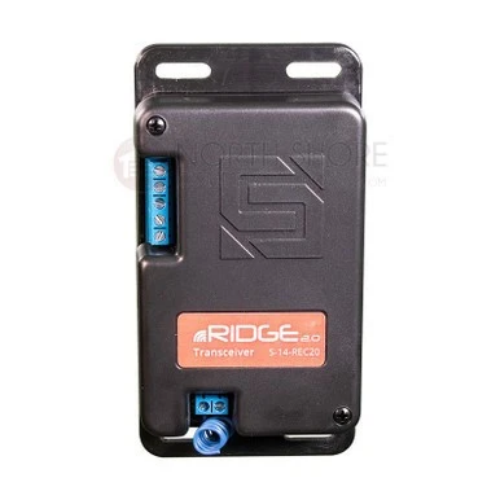
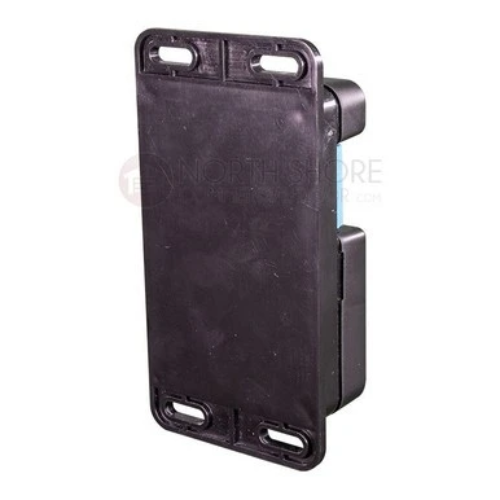
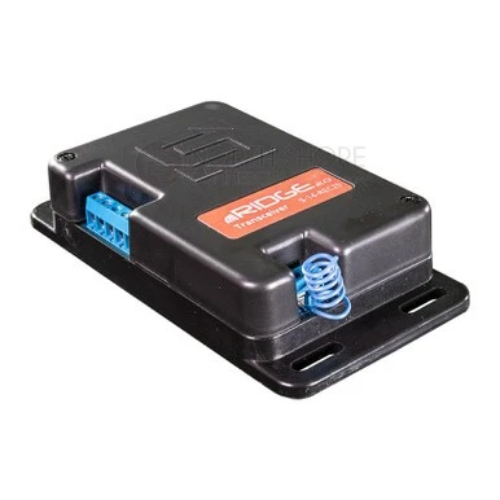
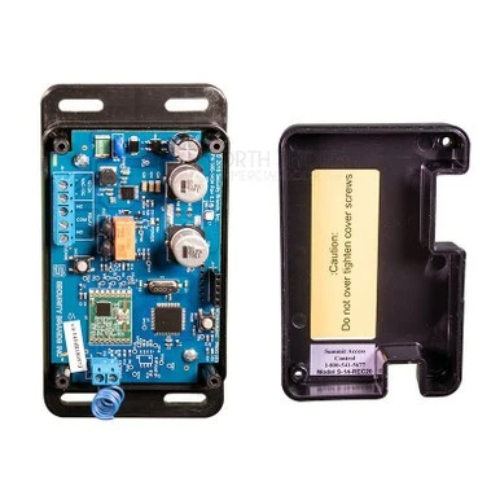
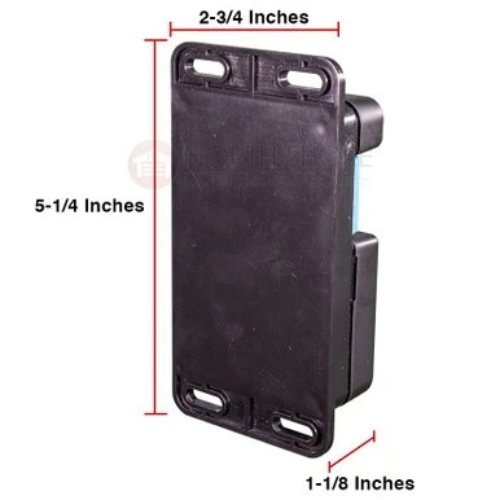
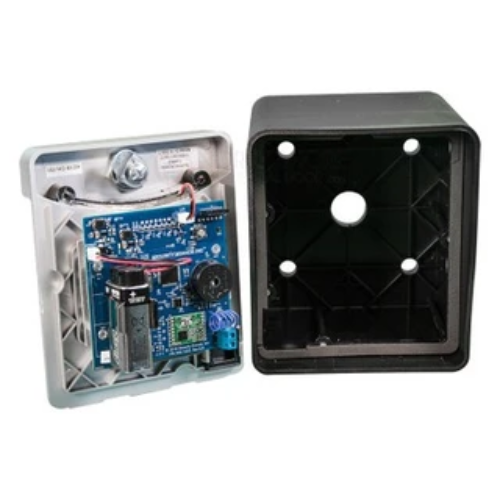
S-14-REC20 — Ridge 2.0 Wireless Digital Transceiver
The operator-side component. A battery-powered wireless transceiver that mounts at or near the gate operator. It receives the wireless code transmission from the Ridge keypad, validates the code, and sends the activation signal to the gate operator to open the gate. The transceiver is the bridge between the wireless keypad and the wired gate operator — it receives wireless input and converts it to the relay output the operator needs.
The transceiver mounts close to the gate operator where the relay output can be connected to the operator’s activation terminals with a short wire run — typically just a few feet. The long-distance wire run between the entry point and the operator is completely eliminated.
How the Ridge 2.0 System Works
The system operates as a two-component wireless link:
Step 1: The user arrives at the gate and enters their access code on the Ridge keypad at the entry point.
Step 2: The keypad transmits the code wirelessly to the Ridge transceiver mounted at the gate operator.
Step 3: The transceiver receives and validates the code, then activates its relay output.
Step 4: The relay output triggers the gate operator to open the gate.
The entire process takes seconds. From the user’s perspective, the experience is identical to a wired keypad — enter the code, the gate opens. The wireless communication happens invisibly between the keypad and the transceiver.
When Wireless Makes Sense
The Ridge 2.0 isn’t a replacement for every wired keypad — it’s the solution for installations where wiring is the obstacle. The most common scenarios include retrofit installations on existing properties where trenching or boring for wire would damage driveways, landscaping, or hardscaping, properties where the distance between the keypad location and the gate operator makes wiring cost-prohibitive, temporary or seasonal gate access points that need to be set up and removed without permanent wiring, remote gate locations where electrical power isn’t available at the keypad mounting point, and any installation where the property owner wants gate access control installed quickly without construction disruption.
For new construction where conduit is being run anyway, a wired keypad is typically the simpler and lower-cost choice. The Ridge 2.0’s value is in the situations where wiring is the problem.
Battery Life and Maintenance
Both the keypad and the transceiver are battery-powered. Battery life depends on how frequently the keypad is used — more daily activations consume more battery. Under typical residential or light commercial gate cycling, the batteries provide extended service life before replacement is needed. Battery status should be checked periodically and batteries replaced before they deplete completely to avoid loss of gate access.
Because the system is entirely wireless and battery-powered, maintenance is minimal — there are no wires to inspect, no conduit to maintain, and no connections to corrode. The primary maintenance task is monitoring and replacing batteries on the established schedule.
Selection Assistance
Both the keypad (S-14-500T) and the transceiver (S-14-REC20) are required for a functioning system. The keypad alone cannot open the gate — it needs the transceiver to receive the wireless signal and activate the operator. The transceiver alone has nothing to receive — it needs the keypad to transmit the code. Order both components for each gate that needs wireless keypad access. For properties with multiple gates, each gate needs its own keypad and transceiver pair. Contact Barron Equipment for help configuring the Ridge 2.0 system for your gate installation.