
FIND US
Davenport, IA
4710 N Brady St
Davenport, IA 52806
Des Moines, IA
2276 NE 46th Ave
Des Moines, IA 50317
Gravity Conveyors
-

138A Aluminum 138G Galvanized Gravity Roller Conveyors/Curves
Read more -

1418 – Straight Roller Conveyor with 1.38″ Diameter, 18 ga. Rollers
Read more -

1418C – Curve Roller Conveyor with 1.38″ Diameter, 18 ga. Rollers
Read more -
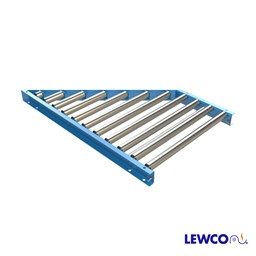
1418SL – Gravity Spur, Left Hand Flow, 1.38″ Diameter, 18 ga. Rollers
Read more -
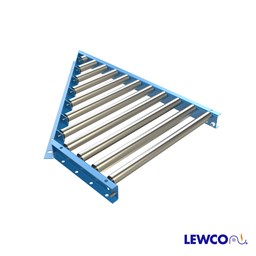
1418SR – Gravity Spur, Right Hand Flow, 1.38″ Diameter, 18 ga. Rollers
Read more -
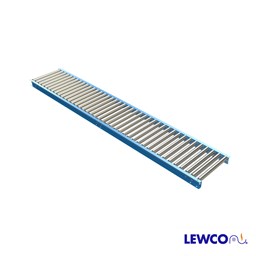
1909 – Straight Roller Conveyor with 1.9″ Diameter, 9 ga. Rollers
Read more -
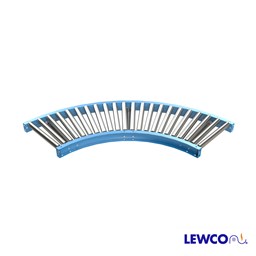
1909C – Curve Roller Conveyor with 1.90″ Diameter, 9 ga. Rollers
Read more -

1912 – Straight Roller Conveyor with 1.9″ Diameter, 12 ga. Rollers
Read more -
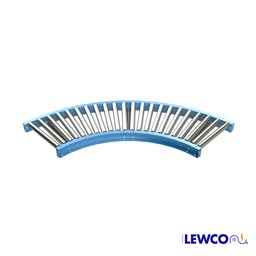
1912C – Curve Roller Conveyor with 1.90″ Diameter, 12 ga. Rollers
Read more -

1916 – Straight Roller Conveyor with 1.9″ Diameter, 16 ga. Rollers
Read more -

1916C – Curve Roller Conveyor with 1.90″ Diameter, 16 ga. Rollers
Read more -
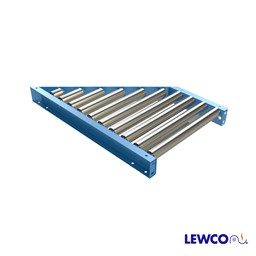
1916SL – Gravity Spur, Left Hand Flow, 1.90″ Diameter, 16 ga. Rollers
Read more
Gravity Conveyor Sizes and Duty Ratings
Choosing the correct gravity conveyor starts with the weight, size, and bottom surface of the items being handled. Roller diameter and wall gauge determine the conveyor’s general duty classification and capacity.
| Model Series | Roller Diameter | Roller Gauge | Duty Rating | Capacity Per Roller | Best For |
|---|---|---|---|---|---|
| 1418 | 1-3/8″ | 18 ga. | Light Duty | 50 lbs | Parcels and small packages |
| 1916 | 1.9″ | 16 ga. | Medium Duty | 250 lbs | Cartons, totes and distribution |
| 1912 | 1.9″ | 12 ga. | Medium-Heavy Duty | 260 lbs | Heavier cartons and manufacturing |
| 1909 | 1.9″ | 9 ga. | Heavy Duty | 300 lbs | Industrial and automotive loads |
| 138A | 1-3/8″ aluminum | 18 ga. | Light Duty | 35 lbs | Portable and lightweight applications |
| 138G | 1-3/8″ galvanized | 18 ga. | Light Duty | 50 lbs | General light-duty handling |
How to Read Gravity Conveyor Model Numbers
The four-digit LEWCO Conveyors model number describes the roller diameter and wall gauge.
- 14 indicates a 1⅜-inch roller diameter.
- 19 indicates a 1.9-inch roller diameter.
- 18, 16, 12, or 09 indicates the roller wall gauge.
- A lower gauge number indicates a thicker roller wall and a heavier-duty construction.
For example:
- 1418: 1⅜-inch-diameter, 18-gauge rollers
- 1916: 1.9-inch-diameter, 16-gauge rollers
- 1912: 1.9-inch-diameter, 12-gauge rollers
- 1909: 1.9-inch-diameter, 9-gauge rollers
Letter suffixes identify the conveyor configuration:
- C: Curve
- SL: Left-hand spur
- SR: Right-hand spur
- No suffix: Straight section
Straight, Curve, and Spur Conveyors
Straight Sections
Straight gravity conveyors move products in one direction along the main material-handling line. They are commonly used at packing stations, assembly areas, warehouses, and loading docks.
Curve Sections
Curves redirect products around corners or equipment. Available configurations may include 30-, 45-, 60-, and 90-degree turns, depending on the selected product series.
Spur Sections
Spurs merge products onto or divert products away from the main conveyor line. Left- and right-hand configurations can connect workstations, sorting areas, or secondary conveyor sections to the primary line.
How to Choose the Right Gravity Conveyor
Load Weight
Begin with the heaviest item the conveyor will handle. Choose a roller diameter and gauge rated for the expected load, then verify the complete frame capacity for the selected width, length, and support arrangement.
Roller Spacing
A minimum of three rollers should support the smallest item at all times. To estimate the maximum roller-center spacing, divide the shortest load dimension by three.
Shortest load dimension ÷ 3 = Maximum roller spacing
For example:
12″ carton ÷ 3 = 4″ maximum roller spacing
Conveyor Width
The conveyor should support the load without unnecessary overhang. Product width, orientation, and expected movement through curves should be considered before final sizing.
Pitch and Product Flow
Gravity conveyors require either a manual push or a slight downward incline. The analysis identifies a general pitch range of approximately 2 to 8 inches per 10-foot section.
The appropriate pitch depends on:
- Product weight
- Bottom-surface condition
- Roller material
- Roller condition
- Required travel speed
- Conveyor length
Lighter products may require a steeper slope, while heavier products may move on a shallower pitch.
Gravity Roller vs. Skatewheel Conveyors
Gravity roller and skatewheel conveyors are both non-powered systems, but they serve different applications.
| Feature | Gravity Roller Conveyor | Gravity Skatewheel Conveyor |
|---|---|---|
| Typical Loads | Light to heavy unit loads | Light, flat-bottomed loads |
| Construction | Cylindrical steel or aluminum rollers | Rows of small wheels |
| Configuration | Rigid conveyor sections | Often flexible or expandable |
| Best For | Warehouses, manufacturing and mixed loads | Parcels, truck loading and temporary lines |
Gravity vs. Powered Conveyors
Choose a gravity conveyor when:
- A slight downward incline is available
- Manual pushing is practical
- Throughput is moderate
- Easy reconfiguration is important
- Motorized movement is unnecessary
Consider a powered conveyor when:
- Products must travel horizontally over longer distances
- Automated accumulation is required
- Speed control is important
- The process requires continuous, high-volume movement
Many facilities combine both systems, using powered conveyors for primary transport and gravity sections for staging, packing, assembly, and loading.
Common Applications
Gravity conveyors are commonly used for:
- Warehousing and distribution
- E-commerce order fulfillment
- Manufacturing and assembly
- Packing and shipping stations
- Truck loading and unloading
- Parcel and small-package handling
- Automotive parts
- Industrial supplies
The appropriate conveyor depends on the load, throughput, floor layout, pitch, and required duty rating.
Gravity Conveyor Accessories
Accessories can improve product control, layout flexibility, and system operation.
Common options include:
- End stops
- Guard rails and side guides
- Tripod supports
- H-stand supports
- Permanent floor supports
- Brake and speed-control rollers
- Conveyor couplings
- Hinge gates
- Walkover plates
Accessory requirements should be evaluated with the conveyor layout so supports, product controls, and access points work together.
Frequently Asked Questions
What is a gravity conveyor?
A gravity conveyor is a non-powered system that moves cartons, totes, packages, and other unit loads using a downward slope or manual push. It does not require motors, belts, or electrical power.
What is the difference between the 1418, 1916, 1912, and 1909 models?
The 1418 is a light-duty conveyor with 1⅜-inch, 18-gauge rollers rated at 50 pounds per roller. The 1916 uses 1.9-inch, 16-gauge rollers rated at 250 pounds per roller. The 1912 uses thicker 12-gauge rollers rated at 260 pounds per roller. The 1909 uses 9-gauge rollers rated at 300 pounds per roller.
What is the difference between straight, curve, and spur conveyors?
Straight sections move products along the main line. Curves redirect products around corners, while spurs merge items onto or divert items away from the main conveyor.
What is the three-roller rule?
The three-roller rule states that at least three rollers should support the smallest item being conveyed. Divide the item’s shortest bottom dimension by three to estimate the maximum roller-center spacing.
When should I choose gravity instead of powered conveying?
Gravity conveyors are appropriate when a slope or manual push can move the load and automated speed control or accumulation is unnecessary. Powered conveyors are generally better for longer horizontal travel, continuous high-volume movement, and automated product control.
Does Barron Equipment install gravity conveyors?
Yes. Barron Equipment provides gravity conveyor planning, installation, and service support. Barron Equipment serves all of Iowa and Illinois, plus parts of Wisconsin, Minnesota, Missouri, and Nebraska.
Gravity Conveyor Selection and Installation
Barron Equipment helps warehouses, manufacturers, distribution centers, fulfillment operations, and industrial facilities select gravity conveyors based on product dimensions, load weight, roller spacing, conveyor pitch, duty rating, and facility layout.
Request a quote online to determine the right gravity conveyor configuration for your application.