
FIND US
Davenport, IA
4710 N Brady St
Davenport, IA 52806
Des Moines, IA
2276 NE 46th Ave
Des Moines, IA 50317
Dock Seals and Shelters
-
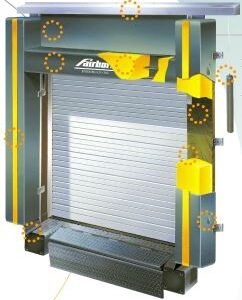
Adjustable Head Pad Dock Seals – Series 1200
Read more -
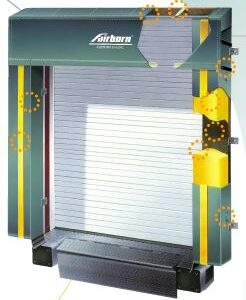
Dock Seal with Head Curtain – Series 1400
Read more -

Flexible Dock Shelter – 2500 Series
Read more -

Flexible Dock Shelter – 3500 Series
Read more -

Flexible Dock Shelters – 3000 Series
Read more -
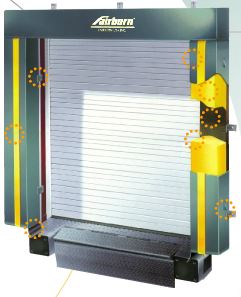
Foam Dock Seal with Fixed Head Pad – Series 1000
Read more -
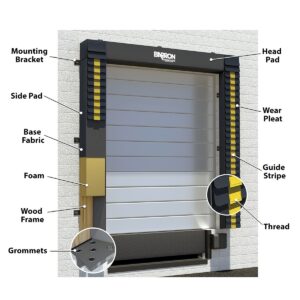
Foam Pad Dock Seals – FP Series
Read more -

Hood Curtain Dock Seals – FPH Series
Read more -

L-Pad Dock Seal – Series 1000L
Read more -

L-Pad Foam Dock Seal with Head Curtain – Series 1400L
Read more -

L-Pad Hood Dock Seals – FPHU Series
Read more -
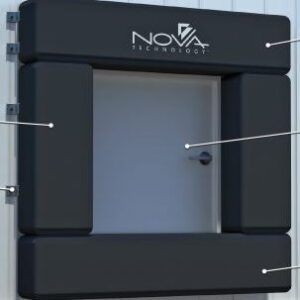
Milk Tanker Dock Seals
Read more
Dock Seal vs. Dock Shelter
Both products serve the same purpose, but they accomplish it differently.
A dock seal uses foam side pads and a head pad or head curtain that compress directly against the trailer body. This creates a tight perimeter seal around the trailer opening and is often the preferred solution for facilities serving a consistent fleet of trailers.
A dock shelter extends beyond the dock bumper and wraps around the rear of the trailer with side frames and a head curtain. Because shelters accommodate greater variation in trailer sizes, they are often selected for mixed fleets, high-volume loading docks, and climate-controlled environments.
Seal vs. Shelter Comparison
| Decision Factor | Choose a Dock Seal | Choose a Dock Shelter |
|---|---|---|
| Fleet Type | Consistent trailer sizes | Mixed trailer sizes and heights |
| Door Opening | Standard openings | Larger openings and varying trailers |
| Climate Control | Tight compression seal | Full trailer enclosure |
| Traffic Volume | Moderate traffic | High-volume operations |
| Initial Investment | Typically lower | Typically higher |
Dock Seal Configurations
Different seal designs address different trailer heights, door sizes, and operating conditions.
Fixed Head Pad
Used when trailer heights are relatively consistent. The foam head pad compresses against the trailer to create a perimeter seal.
Adjustable Head Pad
Uses a cable-and-counterweight mechanism that allows the head pad to move and adapt to varying trailer heights.
Hood Curtain
A fabric curtain extends over the top of the trailer, making it a common choice for facilities with varying trailer heights.
L-Pad Dock Seal
L-shaped side pads wrap beneath the trailer body to create additional sealing at the lower corners of the opening.
WeatherGuard® Header Seal
Designed to help address water infiltration at the top of the trailer opening, particularly where approach grades direct rainwater toward the dock.
Dock Shelter Types
Barron Equipment & Overhead Doors offers several shelter constructions, each designed for different applications.
Rigid Dock Shelters
Rigid shelters use fixed wood or steel framing and are commonly selected for facilities serving consistent trailer sizes where durability is a priority.
Foam-Sided Dock Shelters
Foam side pads compress when trailers approach off-center and then return to their original position, making them useful for mixed fleets and variable docking conditions.
Flexible Spring-Return Dock Shelters
Spring-biased frames automatically return to their operating position after trailer contact, reducing manual adjustment and supporting high-volume operations.
Pivot-Arm Dock Shelters
Pivot-arm shelters provide additional flexibility and projection options for facilities serving varying trailer profiles. Tapered versions are available where adjacent dock openings are closely spaced.
Choosing the Right Dock Seal or Shelter
The best solution depends on four primary factors:
- Trailer size consistency
- Door opening dimensions
- Traffic volume
- Climate-control requirements
Facilities serving a consistent fleet often select dock seals because of their compression-style sealing performance. Facilities serving mixed trailer fleets frequently choose shelters because they accommodate a broader range of trailer heights and widths.
Application Guide
| Application | Recommended Product |
|---|---|
| Consistent Trailer Fleet | Fixed Head Pad Dock Seal |
| Variable Trailer Heights | Adjustable Head Pad or Hood Curtain Dock Seal |
| Mixed Fleet Operations | Flexible or Foam-Sided Dock Shelter |
| Cold Storage & Food Processing | High-Performance Dock Seal or Shelter |
| Water Infiltration Concerns | WeatherGuard® Header Seal |
| Milk Tanker Applications | Milk Tanker Dock Seal |
Construction and Durability
Dock seals and shelters rely on high-density foam and durable cover fabrics to withstand repeated trailer contact. The analysis identifies Fairborn’s proprietary polyurethane foam, Dynalon® cover fabric with a five-year weathering warranty, Dyna-Armor® wear systems, and NOVA’s high-performance fabric options including NOVA MAX-1000™, which is rated for 65,000 abrasion cycles. NOVA fabrics are also identified as passing cold-resistance testing at -40°F.
Available constructions may include:
- Polyurethane foam cores
- Pressure-treated lumber frames
- Structural steel frames
- Dynalon® and Dynaflex fabric systems
- Dyna-Armor® wear pleats
- High-visibility guide stripes
- Air-exhaust vents
- Flame-retardant fabric options on qualifying NOVA products
Applications
Warehouses and Distribution Centers
Dock seals and shelters help reduce weather exposure and maintain operational efficiency where trailers cycle through dock positions throughout the day.
Food Processing and Refrigerated Facilities
Maintaining environmental separation is important for food processing and cold-storage operations. Properly fitted seals and shelters can help reduce unwanted air movement around the opening.
Pharmaceutical and Precision Manufacturing
Facilities requiring greater control of dust, contaminants, and environmental conditions often include dock seals or shelters as part of their dock design.
Dairy Operations
Milk tanker dock seals are available for specialized dairy-transfer applications and are designed around typical hatch dimensions used in milk tanker operations.
Installation and Service
Proper sizing starts with accurate measurements. Before a dock seal or shelter is ordered, factors such as door width, door height, dock height, bumper projection, approach grade, and trailer-height range should be evaluated. The analysis identifies a minimum bumper projection of 4 inches for dock seal and shelter applications.
Many components, including curtains, pleat assemblies, and cover fabrics, can often be repaired or replaced without removing the entire unit, helping reduce downtime and replacement costs.
For a complete loading-dock system, consider pairing dock seals and shelters with:
- Loading Dock Bumpers
- Loading Dock Levelers
- Dock and Truck Restraints
- Trailer Wheel Chocks
- Loading Dock Safety Equipment
Frequently Asked Questions
What is a dock seal?
A dock seal uses foam side pads and a head pad or curtain that compress directly against the trailer body, creating a tight perimeter seal around the loading dock opening.
What is a dock shelter?
A dock shelter wraps around the rear of a trailer using side frames and a head curtain, providing environmental protection while accommodating a wider range of trailer sizes.
What is the difference between a dock seal and a dock shelter?
Dock seals compress against the trailer body, while dock shelters surround the rear of the trailer. Seals are generally better for consistent fleets, while shelters are often preferred for mixed fleets.
What is an L-Pad dock seal?
An L-Pad dock seal uses L-shaped side pads that wrap beneath the trailer body to improve sealing at the lower corners of the opening.
What is the WeatherGuard® Series 1600?
The WeatherGuard® Series 1600 is a specialized header seal designed to help address water infiltration at the top of the dock opening.
How much bumper projection is required?
The analysis identifies a minimum dock-bumper projection of 4 inches for dock seal and shelter applications.
Are dock seals and shelters used in food-processing facilities?
Yes. Food-processing, refrigerated, dairy, and pharmaceutical facilities are identified as common applications.
Where does Barron Equipment install dock seals and shelters?
Barron Equipment & Overhead Doors serves Iowa and Illinois, along with parts of Wisconsin, Minnesota, Missouri, and Nebraska.
Dock Seal and Shelter Selection
Barron Equipment & Overhead Doors helps warehouses, manufacturers, distribution centers, food-processing facilities, and commercial operations evaluate dock seals and shelters based on fleet composition, door size, trailer variation, environmental requirements, and loading dock conditions. Request a quote online to determine the right dock seal or dock shelter for your facility.