
The Financial Guide to Modular Offices: Capitalizing on IRS Section 179 & Accelerated Depreciation
Why Businesses Are Rethinking Traditional Construction
When facilities outgrow their available office space, many decision-makers immediately assume traditional construction is the only option. While conventional construction can create permanent office environments, it often involves lengthy timelines, significant facility disruption, and limited flexibility for future reconfiguration.
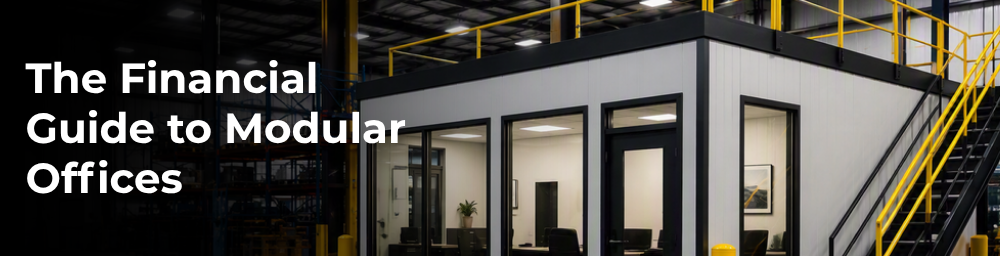
Modular office systems provide an alternative approach by creating enclosed office, conference room, break room, quality control, and management spaces within existing facilities. Because these structures are prefabricated and installed inside existing buildings, they can often be deployed faster than conventional construction while providing long-term flexibility for changing operational needs.
What Are Modular Offices?
Modular offices are prefabricated, pre-engineered building systems designed to create enclosed workspaces within industrial and commercial facilities. Constructed using reusable wall panels and integrated building components, these systems can be configured as offices, conference rooms, cleanrooms, break rooms, quality control spaces, and equipment enclosures.
Unlike traditional stick-built construction, modular offices are designed to be reconfigured, relocated, expanded, or modified as facility requirements evolve.
Understanding Total Project Cost
When evaluating space expansion projects, decision-makers often focus only on the initial purchase price.
A more complete financial evaluation should consider:
- Construction timelines
- Labor costs
- Facility disruption
- Future reconfiguration costs
- Energy efficiency
- Long-term adaptability
- Asset depreciation schedules
The ability to reconfigure and relocate modular structures may reduce the need for future renovation projects compared to permanent construction.
Modular Construction vs. Traditional Construction
Traditional Construction
Traditional construction projects often involve:
- Permanent structural modifications
- Extended construction schedules
- Higher labor requirements
- Facility disruption
- Limited flexibility after completion
Modular Office Construction
Modular building systems often provide:
- Faster installation timelines
- Reduced disruption
- Expandable configurations
- Relocatable structures
- Flexible space planning
- Simplified future modifications
For facilities expecting future growth or layout changes, flexibility can become a significant financial consideration.
Understanding IRS Section 179
Many financial decision-makers evaluate modular office projects based not only on operational benefits, but also on asset treatment and depreciation considerations.
According to the analysis, modular office systems are frequently evaluated alongside IRS Section 179 and accelerated depreciation discussions because modular buildings may qualify differently than traditional stick-built construction depending on project design and ownership structure.
Because tax treatment varies based on individual circumstances, businesses should consult qualified tax professionals when evaluating depreciation opportunities.
Porta-King Modular Offices and Section 179 Tax Benefits
In addition to providing valuable office space within your facility, Porta-King modular offices may also offer significant tax advantages. Barron Equipment recently confirmed with Porta-King that these modular office systems are classified as capital equipment, which may make them eligible for Section 179 accelerated depreciation.
This means qualifying businesses may be able to deduct a substantial portion of their investment in the year the modular office is placed into service rather than depreciating it over a longer period. As always, consult your tax advisor to determine how Section 179 applies to your specific situation.
Accelerated Depreciation Considerations
One reason modular construction receives attention from operations leaders and finance teams is the potential difference between the depreciation treatment of certain modular building systems and traditional real estate improvements.
The analysis specifically identifies the importance of discussing accelerated depreciation and financial planning concepts when evaluating modular office investments.
Businesses should work with tax advisors, accountants, and financial professionals to determine how specific modular building projects may be classified and depreciated under current regulations.
Additional Financial Benefits of Modular Offices
Reduced Facility Downtime
Construction projects can disrupt daily operations. Modular office systems often minimize disruption by reducing the amount of on-site construction activity required.
Scalability
As companies grow, modular spaces can often be expanded or reconfigured more easily than permanent structures.
Asset Flexibility
Many modular systems can be relocated or modified as operational needs change.
Better Use of Existing Space
Rather than expanding a facility footprint, modular offices frequently allow organizations to optimize existing square footage.
Common Modular Office Applications
Modular buildings can be configured as:
- In-plant offices
- Conference rooms
- Break rooms
- Cleanrooms
- Packaging rooms
- Quality control facilities
- CMM rooms
- Restrooms
- Machine enclosures
- Controlled environments
These applications allow facilities to create specialized workspaces without major structural modifications.
Frequently Asked Questions
Are modular offices permanent?
Modular offices are designed to provide long-term functionality while maintaining flexibility for future reconfiguration and relocation.
Can modular offices be expanded later?
Many modular systems are designed for expansion and modification as facility requirements change.
Why do organizations choose modular offices?
Common reasons include flexibility, reduced disruption, space optimization, and long-term adaptability.
Should businesses consult tax professionals before evaluating depreciation benefits?
Yes. Tax treatment varies based on project structure, asset classification, and current regulations.
Conclusion
Modular office systems provide a flexible alternative to traditional construction for organizations seeking additional workspace inside existing facilities. By combining operational flexibility, scalable design, and potential financial advantages, modular offices continue to be a popular solution for companies looking to optimize facility space without committing to major construction projects.