
The Complete Guide to Portable Yard Ramps: Straight vs. Level-Off Configurations
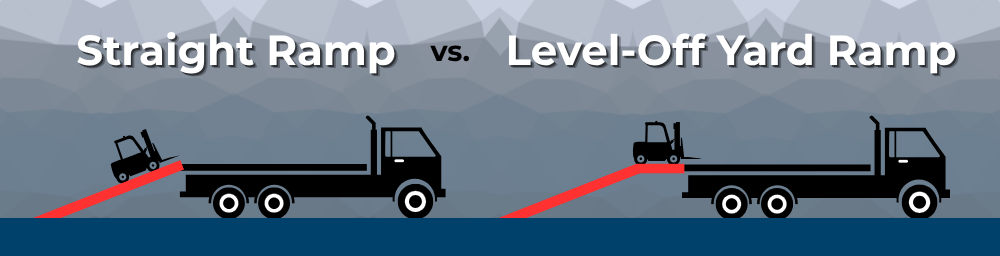
Portable yard ramps provide a flexible solution for facilities that need forklift access to trailers, shipping containers, loading docks, or temporary loading areas. Whether you’re operating a warehouse, distribution center, manufacturing plant, or shipping yard, selecting the correct yard ramp configuration can improve loading efficiency, increase safety, and support smoother material handling operations.
One of the most important decisions when selecting a portable yard ramp is choosing between a straight yard ramp and a yard ramp with a level-off section. While both provide forklift access between different elevations, each is designed for specific loading applications and operating environments.
What Is a Portable Yard Ramp?
A portable yard ramp is a heavy-duty steel ramp designed to create a transition between ground level and an elevated loading surface. Unlike permanent loading docks, yard ramps can be repositioned as operational needs change, making them ideal for temporary loading locations, remote facilities, shipping yards, and warehouses without dedicated dock access.
Most portable yard ramps feature heavy-duty steel construction, hydraulic height adjustment systems, undercarriage assemblies, and industrial tire configurations that allow operators to move and position the ramp as needed. These features help provide safe forklift access while improving the efficiency of loading and unloading operations.
Ground-to-Truck Applications: Why Level-Off Sections Matter
For facilities loading directly into trailers from ground level, a yard ramp with a level-off section is often the preferred solution.
A typical ground-to-truck yard ramp may include a 36-foot overall length with a 6-foot level-off section at the upper end of the ramp. The level-off provides a flat working area where forklifts can safely transition into and out of the trailer before beginning the incline.
This configuration offers several advantages:
- Improved forklift stability during trailer entry
- Smoother pallet handling at the trailer threshold
- Increased operator confidence when loading and unloading
- Better control when transporting heavy palletized loads
Because trailers sit above ground level, the level-off section helps reduce abrupt changes in grade and creates a safer transition between the ramp and the trailer floor.
Ground-to-Dock Applications: When a Straight Ramp Makes Sense
Facilities requiring access between ground level and a fixed loading dock often benefit from a straight yard ramp design.
A common ground-to-dock configuration utilizes a 30-foot straight ramp that provides a continuous incline from the ground to the dock elevation. Since forklifts are traveling to a permanent dock structure rather than directly into a trailer, an extended level-off section is often unnecessary.
Straight yard ramps are commonly used for:
- Warehouse dock access
- Manufacturing facilities
- Ground-level forklift access to elevated platforms
- Remote loading locations
- Permanent outdoor loading operations
The simplified design offers efficient access while maximizing usable ramp length.
Understanding Hydraulic Height Adjustment Systems
One of the key advantages of portable yard ramps is the ability to accommodate varying trailer and dock heights.
Many portable yard ramps incorporate a double-acting hydraulic pump system that allows operators to quickly raise or lower the ramp to create a proper loading angle. Hydraulic height adjustment helps improve loading efficiency while reducing the challenges associated with changing trailer heights throughout the day.
By allowing precise positioning, hydraulic systems help create smoother transitions for forklifts, pallet jacks, and other material handling equipment.
Tire and Mobility Options
Portable yard ramps are designed to be repositioned when loading locations change.
Many mobile yard ramps feature a heavy-duty undercarriage assembly equipped with 18-inch solid rubber tires, which provide dependable traction, resistance to punctures, and reliable performance in demanding industrial environments. Some models may also offer pneumatic tire options for facilities operating on rough or uneven outdoor surfaces.
These mobility features allow facilities to relocate the ramp as needed while maintaining safe and efficient loading operations.
Traction and Safety Features
Modern yard ramps are designed with safety and operator performance in mind.
Many models incorporate serrated steel grating that provides enhanced traction for forklifts operating in wet, dusty, or debris-prone environments. The open-deck grating design allows water, dirt, and other materials to pass through the deck surface, creating a self-cleaning, all-weather loading surface.
Additional safety features may include:
- Heavy-duty side curbs
- Forklift-rated load capacities
- Beveled approaches
- Safety chains
- Hydraulic positioning systems
These design elements help improve operator confidence while supporting safe material handling practices.
How to Choose the Right Yard Ramp
Selecting the right yard ramp depends on how the equipment will be used.
Choose a Level-Off Yard Ramp If:
- Forklifts will load directly into trailers.
- Ground-to-truck access is required.
- Smooth trailer entry is a priority.
- Operators regularly handle heavy palletized loads.
Choose a Straight Yard Ramp If:
- Ground-to-dock access is required.
- The destination is a permanent loading dock.
- A continuous incline is preferred.
- Loading operations occur in fixed locations.
Straight Yard Ramp vs. Level-Off Yard Ramp Comparison
| Feature | Straight Yard Ramp | Level-Off Yard Ramp |
|---|---|---|
| Primary Application | Ground-to-dock access | Ground-to-truck access |
| Typical Configuration | 30′ continuous incline | 36′ ramp with 6′ level-off section |
| Trailer Access | Less ideal for frequent trailer entry | Designed for direct trailer loading |
| Forklift Stability at Trailer Threshold | Moderate | Improved stability during trailer entry and exit |
| Pallet Handling | Suitable for dock access applications | Smoother pallet movement into trailers |
| Loading Environment | Fixed loading docks and elevated platforms | Ground-level loading into semi-trailers |
| Common Users | Warehouses, manufacturing facilities, dock operations | Distribution centers, freight yards, logistics operations |
| Best For | Accessing permanent dock structures | Frequent trailer loading and unloading |
Bluff Manufacturing Yard Ramp Solutions
Barron Equipment is an authorized distributor of Bluff Manufacturing yard ramps and loading dock equipment. Bluff yard ramps are engineered to support demanding industrial loading applications and are available in configurations designed for both ground-to-truck and ground-to-dock operations. With options that include hydraulic adjustment systems, heavy-duty undercarriage assemblies, solid rubber or pneumatic tires, and serrated steel grating surfaces, Bluff yard ramps help facilities improve forklift access, loading efficiency, and workplace safety.
Contact Us