
Welding Screen Tint Selection: Choosing the Right Shade for MIG, TIG, and Plasma Operations
Posted on by Samantha Lyon
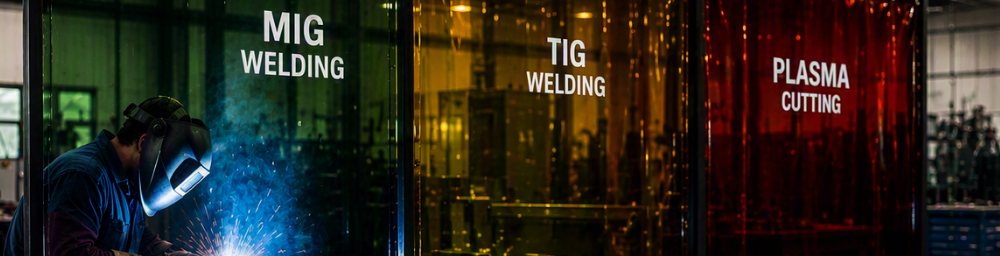
Why Welding Screen Tint Matters
Industrial welding screens do more than simply separate one workspace from another. They are designed to function as optical safety barriers that help reduce exposure to welding arc radiation, ultraviolet light, blue light, sparks, and molten spatter. Selecting the correct screen tint is an important part of maintaining visibility while helping protect nearby personnel from welding-related hazards. Different welding processes generate varying intensities of visible light, ultraviolet radiation, and arc flash. As a result, selecting the appropriate welding screen color can help improve workplace safety and support a more comfortable working environment.What Does a Welding Screen Actually Do?
An industrial welding screen is a specialized safety barrier engineered to isolate welding workstations and help protect personnel from hazardous sparks, molten spatter, and intense optical radiation. Welding screens are commonly manufactured from flame-resistant PVC vinyl or specialized industrial fabrics that filter harmful UV and blue light wavelengths while maintaining visibility throughout the work area. These screens help protect bystanders and nearby workers who may not otherwise require welding helmets or direct arc protection.Understanding Optical Filtration
Different welding screen tints provide varying levels of visibility and light filtration. When evaluating welding screen materials, facilities typically consider:- UV protection
- Blue light filtration
- Visibility through the screen
- Arc flash exposure
- Process-specific suitability
- Workplace lighting conditions
Welding Processes That Require Screening
MIG Welding
MIG welding is one of the most common welding processes used in fabrication shops and manufacturing facilities. Because MIG welding can generate bright arcs and significant UV exposure, welding screens are frequently used around individual workstations to help reduce bystander exposure while allowing supervisors and coworkers to maintain visual awareness of surrounding operations.TIG Welding
TIG welding is commonly used when a high-quality, precision weld is required. The process generates intense arc light and ultraviolet radiation despite often appearing cleaner than other welding applications. Welding screens help create a controlled work area while limiting unnecessary exposure to personnel working nearby.Plasma Cutting
Plasma cutting operations generate bright light, sparks, and high-energy cutting arcs. Welding screens are frequently positioned around plasma cutting stations to help contain visual hazards and improve workplace separation between cutting and non-cutting activities.Stick (Arc) Welding
Stick welding remains common in maintenance departments, construction projects, and heavy industrial environments. Because stick welding can create substantial arc flash and visible radiation, screen selection should provide adequate protection for nearby employees while maintaining workplace visibility.Common Welding Screen Tint Options
Amber Tint
Amber-colored screens are frequently selected when facilities want a balance between visibility and arc flash filtration. Benefits may include:- Improved visibility
- Good general-purpose screening
- Effective workspace separation
- Enhanced visual awareness
Dark Green Tint
Dark green screens are often selected for more intensive welding environments where increased light filtration is desired. Benefits may include:- Higher optical filtration
- Reduced arc glare
- Enhanced bystander protection
- Improved comfort in high-intensity welding areas
Orange-Tinted Screens
Orange welding screens remain a popular option throughout fabrication facilities. Benefits may include:- Good visibility
- Effective UV filtration
- Bright workspace appearance
- Versatility across multiple welding processes
Portable vs. Permanent Welding Screen Systems
Facilities can choose between:Portable Welding Screens
- Easily repositioned
- Supports changing layouts
- Ideal for temporary work cells
- Frequently used in fabrication shops
Welding Curtain Systems
- Permanent installation
- Large-area coverage
- Suitable for dedicated welding departments
- Supports long-term facility separation
Choosing the Best Tint for Your Facility
Factors to consider include:- Welding process
- Arc intensity
- Workstation layout
- Employee proximity
- Visibility requirements
- Facility safety goals
- Productivity considerations