Category: Blog Posts

Updates on our latest and greatest jobs well done.

The Ultimate Guide to OSHA Loading Dock Lighting Requirements

Hydraluic Dock Leveler (10)

Loading dock lighting plays a critical role in warehouse safety, operational efficiency, and OSHA compliance. Poor illumination can contribute to slips, trips, falls, forklift accidents, trailer loading errors, and damaged products. For facilities that operate around the clock or frequently load trailers with dark interiors, proper dock lighting is an essential part of an effective workplace safety program.

Whether you’re managing a warehouse, distribution center, manufacturing facility, or shipping department, understanding OSHA lighting expectations can help reduce risk and improve productivity.

Does OSHA Require Loading Dock Lighting?

OSHA requires employers to provide workplaces that are adequately illuminated so employees can work safely and recognize potential hazards. While OSHA does not specify a universal minimum lumen requirement for loading docks, employers are responsible for maintaining sufficient lighting levels that allow employees to safely perform job tasks, operate forklifts, identify obstructions, and move materials without unnecessary risk.

Loading dock environments often present unique visibility challenges because employees move between brightly lit interiors and darker trailer spaces. As trailer doors open and close throughout the day, lighting conditions can change rapidly, making dedicated dock lighting systems a critical safety component.

OSHA Standard 1910.178 and Loading Dock Safety

One of the most frequently referenced standards for warehouse operations is OSHA Standard 1910.178, which governs powered industrial trucks, including forklifts.

Because forklifts are commonly used on loading docks, adequate visibility is essential for compliance and safe operation. Forklift operators must be able to:

  • Clearly identify dock edges
  • See pedestrians and other equipment
  • Safely enter and exit trailer interiors
  • Detect load placement hazards
  • Navigate changing light conditions

Poor lighting can increase the likelihood of collisions, damaged inventory, and workplace injuries.

Why Loading Dock Illumination Matters

A proper loading dock lighting system helps facilities:

  • Improve employee visibility during loading and unloading
  • Reduce accidents caused by low-light conditions
  • Increase forklift operator awareness
  • Identify damaged pallets and products
  • Support warehouse safety initiatives
  • Enhance overall loading dock productivity

Many facilities also use specialized lighting systems to improve communication between drivers and dock personnel, further reducing operational risk.

Types of Loading Dock Lights

Barron Equipment offers several categories of loading dock lighting solutions designed for industrial environments.

Loading Dock Light TypePrimary PurposeCommon ApplicationsSafety Benefits
LED Dock Task LightsIlluminate trailer interiors and loading areas during loading and unloading operationsWarehouses, distribution centers, manufacturing facilities, and shipping docksImproves visibility, helps forklift operators identify hazards, and supports safer cargo handling
Loading Dock Traffic LightsProvide visual communication between truck drivers and dock personnel using red/green signalsHigh-traffic loading docks, distribution hubs, and busy warehouse facilitiesHelps prevent accidental trailer departures and improves communication during loading operations
Explosion-Proof Dock LightsDeliver illumination in hazardous environments where flammable vapors, dust, or combustible materials may be presentChemical facilities, manufacturing plants, oil and gas operations, and hazardous material storage areasSupports workplace safety in specialized environments requiring protected lighting solutions

LED Dock Task Lights

LED dock lights provide focused illumination inside trailers and loading areas. These fixtures are designed to help employees clearly see cargo, pallet positions, trailer walls, and potential hazards during loading and unloading operations.

Benefits include:

  • High visibility
  • Long service life
  • Reduced maintenance
  • Energy efficiency
  • Improved trailer illumination

Loading Dock Traffic Lights

Dock traffic lights provide visual communication between truck drivers and warehouse personnel.

These systems typically use red and green signal indicators to communicate when trailers can safely move or when loading operations are still in progress.

Benefits include:

  • Improved loading dock safety
  • Reduced accidental trailer departures
  • Better communication between drivers and employees
  • Increased operational efficiency

Explosion-Proof Dock Lights

Facilities handling flammable materials, chemicals, or combustible environments may require explosion-proof lighting systems.

These specialized fixtures are engineered to operate safely in hazardous locations where standard lighting equipment may not be appropriate.

Benefits include:

  • Hazardous location compatibility
  • Enhanced workplace safety
  • Improved visibility in specialized environments
  • Support for industrial safety requirements

Best Practices for Loading Dock Lighting

When evaluating a loading dock lighting system, consider:

Trailer Interior Visibility

The lighting system should provide sufficient illumination deep inside the trailer, not just at the dock door opening.

Fixture Durability

Industrial loading docks experience vibration, impacts, weather exposure, and frequent use. Durable fixtures help minimize downtime and maintenance costs.

Energy Efficiency

LED technology can reduce energy consumption while delivering consistent light output.

Flexibility and Coverage

Adjustable fixtures help employees direct light where it is needed most as trailer configurations change.

Driver Communication

Traffic light systems help improve communication between truck drivers and dock staff, reducing the risk of accidents and unexpected trailer movement.

Choosing OSHA-Compliant Loading Dock Lights

While lighting requirements vary by facility and application, the goal remains the same: ensuring employees can safely perform their work while maintaining visibility throughout loading and unloading operations.

Facilities that regularly operate forklifts, service multiple trailers per day, or work in low-light conditions should prioritize high-quality industrial dock lighting systems that improve visibility, support safety objectives, and help maintain compliance with workplace safety standards.

For warehouses seeking to improve loading dock safety and visibility, explore our selection of OSHA-compliant loading dock lights to find solutions for trailer illumination, driver communication, and hazardous location applications.
Contact Us

Summary

Captcha

Understanding ANSI MH30.3 Standards for Loading Dock Safety

Blog Images (1)

What Is ANSI MH30.3?

ANSI MH30.3 is an American National Standard that addresses the design, testing, performance, operation, maintenance, and safety considerations associated with vehicle restraint systems used at loading docks. The standard provides guidance intended to improve loading dock safety and reduce the risks associated with trailer movement during loading and unloading operations.

Because vehicle restraints play a critical role in preventing trailer separation incidents, adherence to recognized safety standards is an important consideration when evaluating loading dock equipment.

Why ANSI MH30.3 Matters

Loading docks face numerous safety hazards, including:

  • Trailer creep
  • Early departure
  • Landing gear collapse
  • Trailer pop-up
  • Trailer up-ending
  • Unsecured trailer movement

ANSI MH30.3 helps establish performance expectations for restraint systems that are designed to reduce these risks.

How Vehicle Restraints Improve Dock Safety

Vehicle restraints help create a physical connection between the loading dock and the trailer.

Rather than relying entirely on operator actions, restraint systems help maintain trailer positioning while loading and unloading activities occur.

This additional layer of protection can help reduce hazardous trailer separation incidents and improve loading dock safety practices.

Common Types of Vehicle Restraints


Hook-Style Restraints

Hook-style systems engage the trailer’s rear impact guard and secure the trailer directly to the dock structure.

Barrier-Style Restraints

Barrier-style restraints physically block trailer movement using a heavy-duty barrier assembly positioned against the trailer.

Automatic Vehicle Restraints

Automatic systems utilize powered operation and communication controls to simplify trailer securement procedures.

Mechanical Vehicle Restraints

Mechanical systems provide trailer securement without requiring hydraulic or powered operation.

Hook Style Restraints

Communication Systems and Safety Interlocks

Modern restraint systems often incorporate communication and interlock systems designed to improve loading dock safety.

Examples include:

  • Interior communication lights
  • Exterior communication lights
  • Trailer engagement indicators
  • Interlock controls
  • Loading authorization systems

These systems help provide clear visual information to both dock personnel and vehicle operators.

Importance of Inspection and Maintenance

Even the most advanced restraint system requires routine inspection and maintenance.

Facilities should regularly review:

  • Structural components
  • Hook assemblies
  • Communication systems
  • Hydraulic systems
  • Electrical controls
  • Fasteners and mounting points

Routine maintenance helps ensure equipment continues operating correctly throughout its service life.

Evaluating ANSI MH30.3 Compliance

When comparing vehicle restraint solutions, facility managers should review:

  • Manufacturer documentation
  • Safety testing information
  • Operating specifications
  • Installation requirements
  • Training resources
  • Maintenance recommendations

Understanding how a restraint system aligns with recognized industry standards helps support informed purchasing decisions.

Frequently Asked Questions

What does ANSI MH30.3 cover?

ANSI MH30.3 addresses safety and performance considerations for vehicle restraint systems used at loading docks.

Why is ANSI MH30.3 important?

The standard helps establish recognized guidelines intended to improve loading dock safety and reduce trailer movement hazards.

Do all vehicle restraints follow the same design?

No. Vehicle restraints are available in multiple designs, including hook-style, barrier-style, mechanical, and automatic configurations.

Does ANSI MH30.3 help reduce loading dock risk?

The standard supports safe design and operational practices intended to reduce safety hazards commonly found at loading docks.

Conclusion

ANSI MH30.3 plays an important role in modern loading dock safety by providing guidance for vehicle restraint performance, operation, and risk reduction. Facilities evaluating dock safety equipment should understand how restraint systems function, the hazards they are designed to address, and how recognized standards support safer loading and unloading operations.

How to Choose the Right Loading Dock Leveler for Your Facility

Hydraluic Dock Leveler (1)

A loading dock is one of the busiest areas in any warehouse, manufacturing facility, or distribution center. The dock leveler plays a critical role in keeping products moving safely and efficiently between trailers and the building floor. Choosing the right dock leveler can improve productivity, reduce equipment wear, enhance employee safety, and minimize long-term maintenance costs.

With several dock leveler options available, including hydraulic, air powered, mechanical, edge-of-dock, and vertical storing designs, selecting the best solution requires evaluating your operation’s specific needs. This guide outlines the key factors to consider when choosing a loading dock leveler and explains which type may be best for your facility.

What Is a Loading Dock Leveler?

A loading dock leveler bridges the height gap between a loading dock and a trailer bed, creating a smooth transition for forklifts, pallet jacks, and other material handling equipment. Without a dock leveler, loading and unloading operations become slower, less efficient, and significantly more hazardous.

Dock levelers help facilities:

  • Improve loading and unloading efficiency
  • Reduce product damage
  • Enhance worker safety
  • Accommodate varying trailer heights
  • Support forklift traffic between trailers and warehouses

Modern dock levelers are available in multiple styles and capacities to meet the needs of different industries and applications.

Step 1: Determine Your Capacity Requirements

One of the most important factors when selecting a dock leveler is capacity.

It’s important to consider more than just the weight of the product being transported. The total load includes:

  • Forklift weight
  • Operator weight
  • Product weight
  • Frequency of use

For example, a forklift carrying a 4,000-pound pallet could place substantially more stress on a dock leveler than the pallet weight alone suggests.

Common loading dock leveler capacities include:

  • 25,000 lbs
  • 30,000 lbs
  • 35,000 lbs
  • 40,000 lbs
  • 50,000 lbs

For heavy-duty operations, hydraulic dock levelers are available with capacities up to 120,000 lbs, making them ideal for demanding industrial applications.

Tip:

When in doubt, choose a capacity that accounts for future growth rather than current requirements alone.

Step 2: Evaluate Daily Dock Traffic

Not all loading docks experience the same amount of activity.

A facility handling hundreds of trailer movements each week will have different requirements than a facility receiving occasional shipments.

High-Traffic Facilities

Examples include:

  • Distribution centers
  • Manufacturing plants
  • Food processing facilities
  • Third-party logistics providers

These operations often benefit from hydraulic dock levelers because they provide fully powered operation and exceptional durability under frequent cycling.

Moderate-Traffic Facilities

Examples include:

  • Regional warehouses
  • Commercial facilities
  • General industrial operations

Air powered dock levelers are commonly used in these environments because they offer reliable push-button operation with simplified maintenance requirements.

Understanding how frequently your dock doors are used each day can help narrow down the best leveler solution.

Step 3: Compare Dock Leveler Types

There is no one-size-fits-all dock leveler. Each type offers distinct advantages depending on the facility.

Hydraulic Dock Levelers

Hydraulic dock levelers are among the most popular options for modern loading docks.

Advantages include:

  • Push-button operation
  • Fully powered deck and lip activation
  • High load capacities
  • Reduced operator effort
  • Enhanced safety features
  • Low-maintenance design

Hydraulic dock levelers are often selected for facilities that require maximum performance, capacity, and productivity.

Air Powered Dock Levelers

Air powered dock levelers use compressed air and a bellows system to raise the deck.

Advantages include:

  • Push-button activation
  • Reduced maintenance requirements
  • Fewer moving parts
  • Competitive ownership costs
  • Reliable operation

These systems work particularly well for facilities that already have compressed air available and want a simple, dependable solution.

Mechanical Dock Levelers

Mechanical dock levelers use springs and manual activation.

Advantages include:

  • Lower initial investment
  • Proven, traditional design
  • No hydraulic system required

While many facilities are moving toward hydraulic or air powered options, mechanical dock levelers can still be a practical solution for certain applications.

Edge-of-Dock Levelers

Edge-of-dock levelers are mounted directly to the dock face rather than in a pit.

Advantages include:

  • Lower installation costs
  • Compact footprint
  • Ideal for lighter-duty operations

These levelers are often used where pit construction is impractical or unnecessary.

Vertical Storing Dock Levelers

Vertical storing dock levelers store in an upright position when not in use.

Advantages include:

  • Better environmental control
  • Easier pit cleaning
  • Improved sanitation
  • Ideal for food and beverage facilities

Because the leveler stores vertically, the pit can be cleaned more easily and environmental separation between the dock and warehouse is improved.

Step 4: Prioritize Safety

Safety should always be a primary consideration when evaluating dock equipment.

A properly selected dock leveler can help reduce accidents, improve forklift stability, and create a safer work environment.

Important safety features may include:

  • Free-fall protection
  • Velocity fuses
  • Safety toe guards
  • Lockout/tagout systems
  • Maintenance supports
  • Slip-resistant deck surfaces

Poweramp dock levelers are manufactured to comply with OSHA requirements and ANSI MH 30.1 standards for dock leveling devices.

Facilities with heavy forklift traffic should pay particular attention to built-in safety features and long-term equipment reliability.

Step 5: Consider Maintenance Requirements

Every piece of loading dock equipment requires some level of maintenance, but maintenance needs can vary significantly between dock leveler types.

Air powered dock levelers contain fewer moving parts than hydraulic systems, which can simplify maintenance and reduce service requirements over time.

Hydraulic dock levelers remain a low-maintenance option but include components such as:

  • Hydraulic cylinders
  • Motors
  • Pumps
  • Hoses
  • Hydraulic fluid

Regular inspections and preventative maintenance can help maximize service life regardless of the dock leveler style selected.

Step 6: Plan for Future Growth

Many companies purchase dock equipment based solely on their current operation.

However, facilities often experience growth that increases:

  • Trailer volume
  • Forklift traffic
  • Product weight
  • Shipping frequency

Selecting a dock leveler that can support future operational demands may provide better long-term value than choosing the lowest-cost option available today.

A dock leveler is a long-term investment, and planning ahead can help prevent costly equipment upgrades later.

Dock Leveler Selector

Not sure which loading dock leveler is right for your facility? Answer a few quick questions to get a recommended dock leveler type based on capacity, traffic volume, maintenance needs, and facility conditions.

1. How busy is your loading dock?

2. What type of loads does your facility handle?

3. What is your top priority?

4. Does your facility have compressed air available?

5. Is your facility sanitation-sensitive or temperature-controlled?

Please answer each question to get the best recommendation.
Recommended Dock Leveler

Why this may be the right fit:
    Other options to consider:

    This selector is intended as a general guide. A product specialist can help confirm the best dock leveler based on your dock dimensions, trailer traffic, load weights, and facility layout.

    Quick Comparison Guide

    Edit
    Facility Need Recommended Dock Leveler
    High-volume distribution center Hydraulic Dock Leveler
    Heavy load applications Hydraulic Dock Leveler
    Existing plant air system Air Powered Dock Leveler
    Lower maintenance needs Air Powered Dock Leveler
    Budget-conscious applications Mechanical Dock Leveler
    Lighter-duty loading operations Edge-of-Dock Leveler
    Food processing and sanitation-sensitive facilities Vertical Storing Dock Leveler

    Frequently Asked Questions

    What is the most common type of loading dock leveler?

    Hydraulic dock levelers are among the most commonly used solutions because they offer push-button operation, high capacities, and strong safety features.

    How do I determine the correct dock leveler capacity?

    Capacity should be based on the combined weight of the forklift, operator, and load, as well as loading frequency and operational demands.

    Which dock leveler requires the least maintenance?

    Air powered dock levelers generally have fewer moving parts than hydraulic systems, which can reduce maintenance requirements.

    Are hydraulic dock levelers worth the investment?

    For facilities with frequent loading cycles, heavy products, and high forklift traffic, hydraulic dock levelers can provide significant long-term value through productivity and performance.

    How long does a dock leveler last?

    The lifespan of a dock leveler depends on usage, maintenance practices, environmental conditions, and equipment quality. Routine inspections and preventative maintenance can help extend service life.

    Choose the Right Dock Leveler with Confidence

    Choosing the right loading dock leveler is about more than simply matching capacities. The best solution depends on traffic volume, product weights, maintenance preferences, safety goals, and future growth plans.

    Whether you’re considering a hydraulic, air powered, mechanical, edge-of-dock, or vertical storing dock leveler, taking the time to evaluate your facility’s needs will help improve efficiency, increase safety, and maximize your return on investment for years to come.

    Please select a valid form

    The Complete Guide to Portable Yard Ramps: Straight vs. Level-Off Configurations

    11

    Portable yard ramps provide a flexible solution for facilities that need forklift access to trailers, shipping containers, loading docks, or temporary loading areas. Whether you’re operating a warehouse, distribution center, manufacturing plant, or shipping yard, selecting the correct yard ramp configuration can improve loading efficiency, increase safety, and support smoother material handling operations.

    One of the most important decisions when selecting a portable yard ramp is choosing between a straight yard ramp and a yard ramp with a level-off section. While both provide forklift access between different elevations, each is designed for specific loading applications and operating environments.

    What Is a Portable Yard Ramp?

    A portable yard ramp is a heavy-duty steel ramp designed to create a transition between ground level and an elevated loading surface. Unlike permanent loading docks, yard ramps can be repositioned as operational needs change, making them ideal for temporary loading locations, remote facilities, shipping yards, and warehouses without dedicated dock access.

    Most portable yard ramps feature heavy-duty steel construction, hydraulic height adjustment systems, undercarriage assemblies, and industrial tire configurations that allow operators to move and position the ramp as needed. These features help provide safe forklift access while improving the efficiency of loading and unloading operations.

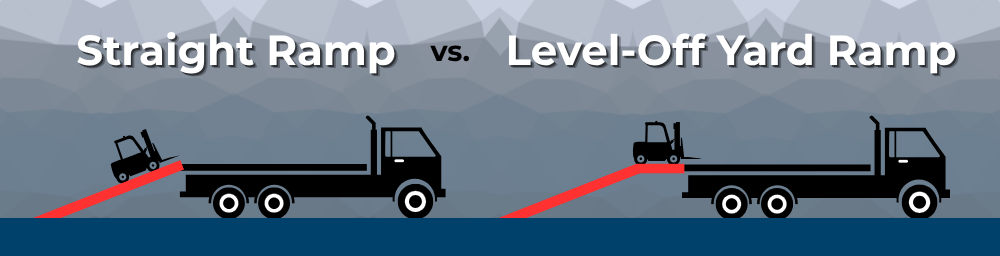
    Ground-to-Truck Applications: Why Level-Off Sections Matter

    For facilities loading directly into trailers from ground level, a yard ramp with a level-off section is often the preferred solution.

    A typical ground-to-truck yard ramp may include a 36-foot overall length with a 6-foot level-off section at the upper end of the ramp. The level-off provides a flat working area where forklifts can safely transition into and out of the trailer before beginning the incline.

    This configuration offers several advantages:

    • Improved forklift stability during trailer entry
    • Smoother pallet handling at the trailer threshold
    • Increased operator confidence when loading and unloading
    • Better control when transporting heavy palletized loads

    Because trailers sit above ground level, the level-off section helps reduce abrupt changes in grade and creates a safer transition between the ramp and the trailer floor.

    Ground-to-Dock Applications: When a Straight Ramp Makes Sense

    Facilities requiring access between ground level and a fixed loading dock often benefit from a straight yard ramp design.

    A common ground-to-dock configuration utilizes a 30-foot straight ramp that provides a continuous incline from the ground to the dock elevation. Since forklifts are traveling to a permanent dock structure rather than directly into a trailer, an extended level-off section is often unnecessary.

    Straight yard ramps are commonly used for:

    • Warehouse dock access
    • Manufacturing facilities
    • Ground-level forklift access to elevated platforms
    • Remote loading locations
    • Permanent outdoor loading operations

    The simplified design offers efficient access while maximizing usable ramp length.

    Understanding Hydraulic Height Adjustment Systems

    One of the key advantages of portable yard ramps is the ability to accommodate varying trailer and dock heights.

    Many portable yard ramps incorporate a double-acting hydraulic pump system that allows operators to quickly raise or lower the ramp to create a proper loading angle. Hydraulic height adjustment helps improve loading efficiency while reducing the challenges associated with changing trailer heights throughout the day.

    By allowing precise positioning, hydraulic systems help create smoother transitions for forklifts, pallet jacks, and other material handling equipment.

    Tire and Mobility Options

    Portable yard ramps are designed to be repositioned when loading locations change.

    Many mobile yard ramps feature a heavy-duty undercarriage assembly equipped with 18-inch solid rubber tires, which provide dependable traction, resistance to punctures, and reliable performance in demanding industrial environments. Some models may also offer pneumatic tire options for facilities operating on rough or uneven outdoor surfaces.

    These mobility features allow facilities to relocate the ramp as needed while maintaining safe and efficient loading operations.

    Traction and Safety Features

    Modern yard ramps are designed with safety and operator performance in mind.

    Many models incorporate serrated steel grating that provides enhanced traction for forklifts operating in wet, dusty, or debris-prone environments. The open-deck grating design allows water, dirt, and other materials to pass through the deck surface, creating a self-cleaning, all-weather loading surface.

    Additional safety features may include:

    • Heavy-duty side curbs
    • Forklift-rated load capacities
    • Beveled approaches
    • Safety chains
    • Hydraulic positioning systems

    These design elements help improve operator confidence while supporting safe material handling practices.

    How to Choose the Right Yard Ramp

    Selecting the right yard ramp depends on how the equipment will be used.

    Choose a Level-Off Yard Ramp If:

    • Forklifts will load directly into trailers.
    • Ground-to-truck access is required.
    • Smooth trailer entry is a priority.
    • Operators regularly handle heavy palletized loads.

    Choose a Straight Yard Ramp If:

    • Ground-to-dock access is required.
    • The destination is a permanent loading dock.
    • A continuous incline is preferred.
    • Loading operations occur in fixed locations.

    Straight Yard Ramp vs. Level-Off Yard Ramp Comparison

    FeatureStraight Yard RampLevel-Off Yard Ramp
    Primary ApplicationGround-to-dock accessGround-to-truck access
    Typical Configuration30′ continuous incline36′ ramp with 6′ level-off section
    Trailer AccessLess ideal for frequent trailer entryDesigned for direct trailer loading
    Forklift Stability at Trailer ThresholdModerateImproved stability during trailer entry and exit
    Pallet HandlingSuitable for dock access applicationsSmoother pallet movement into trailers
    Loading EnvironmentFixed loading docks and elevated platformsGround-level loading into semi-trailers
    Common UsersWarehouses, manufacturing facilities, dock operationsDistribution centers, freight yards, logistics operations
    Best ForAccessing permanent dock structuresFrequent trailer loading and unloading

    Bluff Manufacturing Yard Ramp Solutions

    Barron Equipment is an authorized distributor of Bluff Manufacturing yard ramps and loading dock equipment. Bluff yard ramps are engineered to support demanding industrial loading applications and are available in configurations designed for both ground-to-truck and ground-to-dock operations. With options that include hydraulic adjustment systems, heavy-duty undercarriage assemblies, solid rubber or pneumatic tires, and serrated steel grating surfaces, Bluff yard ramps help facilities improve forklift access, loading efficiency, and workplace safety.

    Contact Us

    Contact Us

    Summary

    Captcha

    Wheel Chocks vs. Vehicle Restraints: Which Dock Safety System is Best?

    Blog Images

    Why Loading Dock Safety Matters

    Loading docks remain one of the busiest and most hazardous areas in industrial facilities. Every day, forklifts move between trailers and warehouse floors while employees work around moving equipment, heavy loads, and constantly changing trailer positions.

    Without proper trailer securement, facilities face risks such as trailer creep, early departure, trailer movement, trailer pop-up, landing gear collapse, and trailer separation incidents. These hazards can increase the risk of equipment damage, cargo loss, operational disruptions, and workplace injuries.

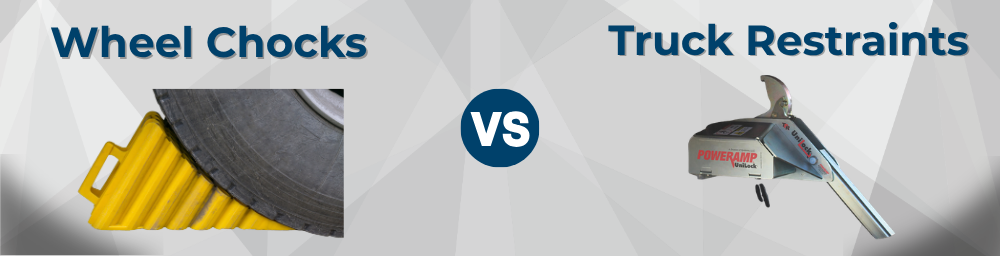
    As a result, facilities typically choose between two primary trailer securement methods: wheel chocks and vehicle restraints.

    What Is a Wheel Chock?

    A wheel chock is a device placed against a trailer tire to help reduce unwanted trailer movement during loading and unloading operations.

    Traditional wheel chocks are commonly made from rubber, urethane, steel, or composite materials and rely on physical placement by employees before loading begins.

    Some facilities also utilize electronic wheel chock systems that integrate with loading dock communication systems and interlocks to improve operational consistency.

    What Is a Vehicle Restraint?

    A vehicle restraint system, commonly known as a dock lock, is an industrial safety device designed to secure a semi-trailer’s rear impact guard (RIG) to a loading dock. By locking the vehicle in place, these systems help prevent trailer creep, landing gear collapse, and premature truck departure during forklift loading and unloading operations.

    Vehicle restraints are available in mechanical, hydraulic, automatic, and barrier-style configurations depending on facility requirements.

    Wheel Chocks vs. Vehicle Restraints

    Wheel Chocks

    Benefits include:

    • Lower initial cost
    • Simple operation
    • Minimal installation requirements
    • Portable deployment
    • Suitable for select low-volume applications

    Potential limitations include:

    • Dependence on employee placement
    • Exposure to weather conditions
    • Reduced effectiveness if improperly positioned
    • Increased opportunity for inconsistent use

    Vehicle Restraints

    Benefits include:

    • Positive trailer engagement
    • Secure connection to the trailer’s rear impact guard
    • Reduced dependence on operator judgment
    • Integration with communication lights and interlocks
    • Improved overall loading dock safety

    Potential limitations include:

    • Higher upfront investment
    • Installation requirements
    • Equipment-specific compatibility considerations

    How Vehicle Restraints Help Prevent Trailer Creep

    Trailer creep occurs when the repeated movement of forklifts entering and exiting a trailer gradually pushes the trailer away from the dock.

    As the gap widens, dock equipment and personnel may become exposed to dangerous operating conditions.

    Vehicle restraints are specifically designed to help reduce trailer movement by securing the trailer to the dock structure throughout the loading process.

    How Vehicle Restraints Help Prevent Early Departure

    Early departure occurs when a driver pulls away from the dock before loading operations are complete.

    Communication systems integrated into many restraint systems help create visual confirmation that loading is still in progress, reducing the likelihood of accidental trailer removal.

    Which System Is Best?

    The ideal solution depends on:

    • Trailer volume
    • Facility traffic
    • Safety requirements
    • Loading frequency
    • Regulatory considerations
    • Budget priorities

    For many higher-volume facilities, vehicle restraints provide a more comprehensive dock safety solution because they physically secure the trailer rather than relying solely on wheel immobilization.

    Frequently Asked Questions

    Are wheel chocks still used?

    Yes. Many facilities continue to use wheel chocks, particularly in lower-volume operations.

    Are vehicle restraints safer than wheel chocks?

    Vehicle restraints provide positive trailer engagement and are often preferred in facilities seeking enhanced dock safety.

    Can wheel chocks and restraints be used together?

    Some facilities utilize multiple layers of dock safety depending on operational requirements.

    Conclusion

    Both wheel chocks and vehicle restraints play important roles in loading dock safety. However, facilities seeking higher levels of trailer securement, improved operational consistency, and reduced exposure to trailer movement hazards often select vehicle restraint systems as part of a comprehensive dock safety program.

    The Financial Guide to Modular Offices: Capitalizing on IRS Section 179 & Accelerated Depreciation

    Blog Images (6)

    Why Businesses Are Rethinking Traditional Construction

    When facilities outgrow their available office space, many decision-makers immediately assume traditional construction is the only option. While conventional construction can create permanent office environments, it often involves lengthy timelines, significant facility disruption, and limited flexibility for future reconfiguration.

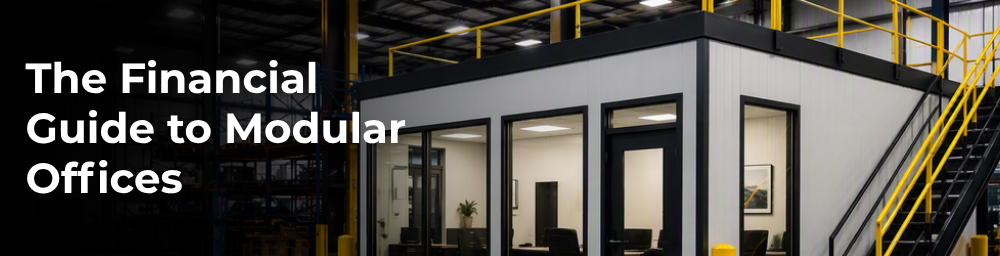
    Modular office systems provide an alternative approach by creating enclosed office, conference room, break room, quality control, and management spaces within existing facilities. Because these structures are prefabricated and installed inside existing buildings, they can often be deployed faster than conventional construction while providing long-term flexibility for changing operational needs.

    What Are Modular Offices?

    Modular offices are prefabricated, pre-engineered building systems designed to create enclosed workspaces within industrial and commercial facilities. Constructed using reusable wall panels and integrated building components, these systems can be configured as offices, conference rooms, cleanrooms, break rooms, quality control spaces, and equipment enclosures.

    Unlike traditional stick-built construction, modular offices are designed to be reconfigured, relocated, expanded, or modified as facility requirements evolve.

    Understanding Total Project Cost

    When evaluating space expansion projects, decision-makers often focus only on the initial purchase price.

    A more complete financial evaluation should consider:

    • Construction timelines
    • Labor costs
    • Facility disruption
    • Future reconfiguration costs
    • Energy efficiency
    • Long-term adaptability
    • Asset depreciation schedules

    The ability to reconfigure and relocate modular structures may reduce the need for future renovation projects compared to permanent construction.

    Modular Construction vs. Traditional Construction

    Traditional Construction

    Traditional construction projects often involve:

    • Permanent structural modifications
    • Extended construction schedules
    • Higher labor requirements
    • Facility disruption
    • Limited flexibility after completion

    Modular Office Construction

    Modular building systems often provide:

    • Faster installation timelines
    • Reduced disruption
    • Expandable configurations
    • Relocatable structures
    • Flexible space planning
    • Simplified future modifications

    For facilities expecting future growth or layout changes, flexibility can become a significant financial consideration.

    Understanding IRS Section 179

    Many financial decision-makers evaluate modular office projects based not only on operational benefits, but also on asset treatment and depreciation considerations.

    According to the analysis, modular office systems are frequently evaluated alongside IRS Section 179 and accelerated depreciation discussions because modular buildings may qualify differently than traditional stick-built construction depending on project design and ownership structure.

    Because tax treatment varies based on individual circumstances, businesses should consult qualified tax professionals when evaluating depreciation opportunities.

    Porta-King Modular Offices and Section 179 Tax Benefits

    In addition to providing valuable office space within your facility, Porta-King modular offices may also offer significant tax advantages. Barron Equipment recently confirmed with Porta-King that these modular office systems are classified as capital equipment, which may make them eligible for Section 179 accelerated depreciation.

    This means qualifying businesses may be able to deduct a substantial portion of their investment in the year the modular office is placed into service rather than depreciating it over a longer period. As always, consult your tax advisor to determine how Section 179 applies to your specific situation.

    Accelerated Depreciation Considerations

    One reason modular construction receives attention from operations leaders and finance teams is the potential difference between the depreciation treatment of certain modular building systems and traditional real estate improvements.

    The analysis specifically identifies the importance of discussing accelerated depreciation and financial planning concepts when evaluating modular office investments.

    Businesses should work with tax advisors, accountants, and financial professionals to determine how specific modular building projects may be classified and depreciated under current regulations.

    Additional Financial Benefits of Modular Offices

    Reduced Facility Downtime

    Construction projects can disrupt daily operations. Modular office systems often minimize disruption by reducing the amount of on-site construction activity required.

    Scalability

    As companies grow, modular spaces can often be expanded or reconfigured more easily than permanent structures.

    Asset Flexibility

    Many modular systems can be relocated or modified as operational needs change.

    Better Use of Existing Space

    Rather than expanding a facility footprint, modular offices frequently allow organizations to optimize existing square footage.

    Common Modular Office Applications

    Modular buildings can be configured as:

    • In-plant offices
    • Conference rooms
    • Break rooms
    • Cleanrooms
    • Packaging rooms
    • Quality control facilities
    • CMM rooms
    • Restrooms
    • Machine enclosures
    • Controlled environments

    These applications allow facilities to create specialized workspaces without major structural modifications.

    Frequently Asked Questions

    Are modular offices permanent?

    Modular offices are designed to provide long-term functionality while maintaining flexibility for future reconfiguration and relocation.

    Can modular offices be expanded later?

    Many modular systems are designed for expansion and modification as facility requirements change.

    Why do organizations choose modular offices?

    Common reasons include flexibility, reduced disruption, space optimization, and long-term adaptability.

    Should businesses consult tax professionals before evaluating depreciation benefits?

    Yes. Tax treatment varies based on project structure, asset classification, and current regulations.

    Conclusion

    Modular office systems provide a flexible alternative to traditional construction for organizations seeking additional workspace inside existing facilities. By combining operational flexibility, scalable design, and potential financial advantages, modular offices continue to be a popular solution for companies looking to optimize facility space without committing to major construction projects.

    The Industrial Guide to Loading Dock Leveler Capacity Selection

    How to actually choose the right capacity -- without guessing

    If you’re trying to size a dock leveler, you’ve probably run into this question:

    “What capacity dock leveler do I need for my forklift?”

     
    It seems like a simple question to answer, but in reality, it’s one of the most commonly misunderstood parts of a loading dock.
     
    When it’s answered incorrectly, it not only causes wear and tear on the leveler, but it also leads to:
    • Structural damage
    • Frequent maintenance issues
    • Premature equipment failure
    • Debilitating and sometimes fatal injuries

    Instead of making assumptions or defaulting to “whatever we’ve always used,” this guide walks through how to actually size dock levelers correctly.

    Why Capacity Isn’t as Simple as It Looks

    Most people assume:
    “If my forklift weighs 10,000 lbs, I need a 10,000 lb leveler.”
    Unfortunately, that’s not how dock levelers work. Because once a forklift starts moving across a leveler, the load is no longer static—it becomes dynamic. And that changes everything.

    Static Capacity vs. Dynamic Capacity

    Before you do any math, you need to understand this one concept.

    Static Capacity

    This is what most specs reference.

    • Load sitting still
    • Evenly distributed
    • No movement, no impact

    It’s basically a theoretical number.

    Dynamic Capacity (What actually matters)

    This is real-world performance.

    It accounts for:

    • Forklift movement
    • Speed across the leveler
    • Transition onto the dock
    • Load shifting
    • Impact forces

    Bottom line:

    The moment your forklift starts moving, the load increases.

    That’s why it’s critical to never size a dock leveler off static capacity alone.

    The Biggest Missed Factor: Forklift Axle Load

    Where most capacity calculations breakdown is not just in the assumption of static load vs. dynamic load, but the fact that a forklift does not distribute weight evenly across the deck. 

    Instead:

    • The front axle carries most of the load
    • The weight becomes concentrated in a smaller area
    • That creates significantly higher stress on the leveler

    So even if your total weight looks reasonable, the actual force on the deck is much higher.

    3-Wheel vs. 4-Wheel Forklifts (Yes, It Matters)

    7

    Not all forklifts operate the same way on a dock leveler. 

    3-Wheel Forklifts

    • More concentrated load
    • Smaller contact footprint
    • Higher stress on deck and lip

    4-Wheel Forklifts

    • More evenly distributed load
    • Lower point impact

    If you’re running 3-wheel units, you should already be thinking:

    “We probably need more capacity than the standard calculation.”

    The Simple Way to Calculate Capacity

    You don’t need complicated formulas to get this right.

    You just need to follow the process.

    Step 1: Add Your Weights

    Forklift Weight + Heaviest Load = Total Load

    Example:

    • Forklift = 10,000 lbs
    • Load = 4,000 lbs
    • Total = 14,000 lbs

    Step 2: Apply a Multiplier

    This is where dynamic forces come in.

    Typical multipliers:

    • 2.0× → Light use
    • 2.5× → Standard industrial use
    • 3.0×+ → Heavy duty / high cycle / aggressive conditions

    If you’re unsure, default to 2.5×. It’s a safe, realistic baseline.

    Step 3: Calculate Required Capacity

    Total Load x Multiplier = Required Capacity

    Example:

    14,000 x 2.5 = 35,000 lbs

    Therefore, your selection becomes: 35,000-40,000 lbs dock leveler

    Quick Reference: Common Scenarios

    Forklift + LoadTypical UseRecommended Capacity
    8,000 + 2,000 Light duty20,000-25,000 lbs
    10,000 + 4,000Standard35,000-40,000 lbs
    12,000 + 6,000Moderate/heavy45,000 lbs
    15,000 + 8,000High demand60,000 lbs+

    When in doubt, it’s important to round up, not down. Capacity is one of the cheapest upgrades you can make compared to the cost of failure. 

    What Actually Drives Capacity Higher

    It’s important to note that real-world applications can sometimes change the manual calculations. If any of the below apply, you should increase your multiplier:

    • Steeper dock angles
    • Forklifts hitting the leveler at speed
    • Frequent daily cycles
    • Forklift attachments (clamps, rotators, etc.)
    • Turning on the leveler
    • Narrow or solid tires
    • 3-wheel forklifts

    Each of these scenarios can increase stress on the equipment—even if the weight doesn’t change.

    The Cost of Getting It Wrong

    Under sizing a dock leveler doesn’t necessarily fail immediately. 

    It shows up over time in the following ways:

    • Deck deflection (“dishing”)
    • Hinge and structural fatigue
    • Increased maintenance
    • Shortened lifespan

    If it doesn’t cause a major issue in the beginning, eventually, it turns into a replacement issue—not a repair.

    At that point, the cost difference between a 35k and 45k unit is no longer relevant. 

    The Standard Behind It (ANSI MH14.1)

    Dock levelers are designed around ANSI MH14.1, which defines performance and safety expectations.
     
    Understanding the standards are important for protecting employees and the business. Capacity of dock levelers plays a direct role in meeting the standards. If your leveler is under sized for the application, you’re at risk for going against ANSI standards. 

    How We Approach It at Barron

    8

    Instead of simply asking for the capacity, our team requests more information about the application. We want to try and understand:

    • What forklifts are actually being used
    • The heaviest real-world load (not average)
    • Traffic and cycle frequency
    • Dock geometry and conditions
    Once understanding the real application, we can size it correctly the first time. 
     
    The goal isn’t just to meet spec, it’s to extend equipment life, reduce long-term maintenance, and keep our dock running without issues. 
     

    Bottom Line

    If you retain anything from this guide, let it be that the dock leveler capacity is not about forklift weight — it’s about real-world impact. 

    Remember to use the total load, apply the multiplier and account for your actual operating conditions. Lastly, when in doubt, size up. 

    For assistance with loading dock equipment, fill out the contact form below and we’ll be in touch soon!

    Contact Us

    Summary

    Captcha

    How Loading Dock Lights Improve Warehouse Safety and Efficiency

    Hydraluic Dock Leveler (4)

    Loading dock visibility plays a major role in warehouse safety, productivity, and communication. When trailer interiors are dark, dock door openings are difficult to see, or drivers and dock workers do not have a clear signal system, loading and unloading operations become more dangerous and less efficient.

    Loading dock lights help solve these challenges by improving visibility inside trailers, around dock openings, and throughout active loading areas. The right lighting setup can help forklift operators see freight more clearly, guide truck drivers into position, and communicate whether a docked trailer is safe to enter or pull away.

    For warehouses, distribution centers, manufacturing facilities, and shipping operations, loading dock lights are a simple but important investment in daily dock safety and efficiency.

    What Are Loading Dock Lights?

    Loading dock lights are specialized lighting products designed for use at truck and warehouse loading docks. Unlike general building lights, dock lights are built to direct light where it is needed most — inside trailers, around dock openings, and near active shipping and receiving areas.

    Common types of loading dock lights include:

    • Truck dock lights
    • LED dock lights
    • Flexible arm dock lights
    • Dock guide lights
    • Bumper guide lights
    • Stop and go traffic lights
    • Dock communication lights

    Each type serves a different purpose. Some lights improve visibility for forklift operators inside trailers, while others help truck drivers align with the dock or alert employees when it is safe to enter a trailer.

    Why Loading Dock Lighting Matters

    A trailer can be difficult to see inside, even during daytime operations. Once a truck is backed into the dock, the trailer interior may become shadowed or poorly lit. This makes it harder for workers to see pallets, freight, trailer walls, floor conditions, and potential hazards.

    Poor dock visibility can contribute to:

    • Forklift accidents
    • Product damage
    • Slower loading and unloading
    • Miscommunication between drivers and dock workers
    • Increased risk around dock openings
    • Difficulty backing trailers into position

    Loading dock lights help reduce these risks by providing focused illumination where employees and drivers need it most.

    Truck Dock Lights for Trailer Visibility

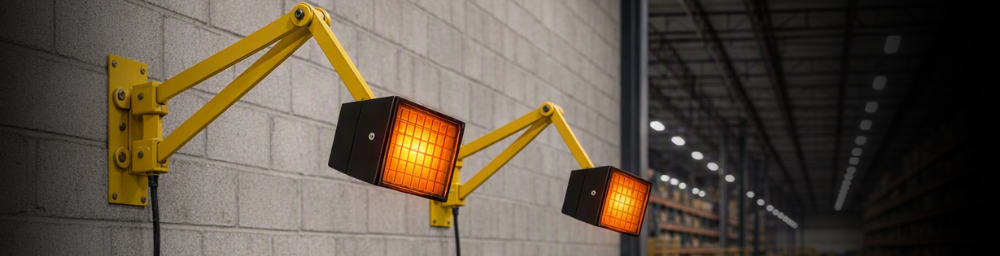
    Truck dock lights are designed to illuminate the inside of trailers during loading and unloading. These lights are typically mounted near the dock door and attached to an adjustable or articulating arm so workers can direct light into the trailer.

    This helps forklift operators and dock workers see:

    • Trailer contents
    • Pallets and packaging
    • Trailer walls
    • Floor conditions
    • Obstructions
    • Damaged freight

    Flexible arm dock lights are especially useful because they can be moved into position as needed and then adjusted out of the way when not in use. This makes them a practical option for facilities with frequent loading activity.

    Hydraluic Dock Leveler (5)

    LED Dock Lights vs. Traditional Dock Lights

    Many facilities are upgrading to LED loading dock lights because they offer better long-term performance than older lighting options.

    Benefits of LED Dock Lights

    LED dock lights provide bright, focused illumination while using less energy than many traditional bulbs. They also last longer, which can help reduce replacement costs and maintenance downtime.

    LED lighting is a strong choice for facilities that want:

    • Brighter trailer visibility
    • Lower energy usage
    • Longer service life
    • Less frequent bulb replacement
    • More consistent lighting performance
    • Improved dock safety

    For busy warehouse and distribution environments, LED dock lights are often the most efficient and practical choice.

    When Traditional Dock Lights May Still Be Used

    Some facilities still use incandescent or other traditional dock light styles, especially in lower-traffic applications or existing dock setups. However, for facilities focused on safety, efficiency, and long-term value, LED dock lighting is often the better option.

    Loading Dock Guide Lights for Driver Alignment

    Loading dock guide lights help truck drivers back trailers into position more accurately. These lights are installed near the dock opening or dock bumpers to provide a clear visual guide for trailer alignment.

    Guide lights are especially helpful in:

    • Low-light conditions
    • Enclosed dock bays
    • Busy shipping yards
    • Tight dock areas
    • Poor weather
    • Facilities with frequent trailer traffic

    Some guide lights can also be installed inside dock openings to help forklift operators identify safe entry points. This makes them useful for both driver visibility and dock worker safety.

    Stop and Go Traffic Lights for Dock Communication

    Stop and go traffic lights add another layer of communication between truck drivers and dock personnel. These systems use red and green lights to indicate when a trailer is safe to enter, when a truck should remain parked, and when it is safe to leave the dock.

    A typical dock communication setup may work like this:

    • Green light inside: forklift operator may enter the trailer
    • Red light outside: truck driver should stay parked
    • Red light inside: dock worker should stay away from the trailer
    • Green light outside: truck driver may pull away

    This type of system helps reduce confusion and supports safer loading dock procedures. It is especially valuable at high-traffic docks where multiple trucks, employees, and forklifts are operating throughout the day.

    Key Features to Look for in Loading Dock Lights

    Choosing the right loading dock light depends on the layout of your dock, your daily volume, and the type of visibility problem you need to solve.

    Important features to consider include:

    Light Output

    The light should be bright enough to illuminate the full trailer interior. LED options are often ideal because they provide strong, consistent illumination.

    Adjustable Arm Design

    Flexible arm, swing arm, or double-strut dock lights allow workers to position the light exactly where it is needed.

    Durability

    Dock environments are demanding. Lights should be able to withstand vibration, daily movement, and normal warehouse wear.

    Application Environment

    Some locations may require dock lights designed for wet locations, harsh environments, or hazardous areas. The right fixture should match the conditions of your facility.

    Communication Needs

    If your dock experiences frequent truck traffic, stop and go lights or dock communication systems may be just as important as trailer lighting.

    Driver Visibility

    If trucks have difficulty backing into position, guide lights or bumper guide lights can help drivers align more accurately with the dock opening.

    Which Type of Loading Dock Light Do You Need?

    The best dock lighting setup depends on the problem you are trying to solve.

    Facility NeedBest Lighting Option
    Support wet or demanding environmentsWet location LED dock lights
    Improve trailer visibilityTruck dock lights or LED dock lights
    Improve driver/dock worker communicationStop and go traffic lights
    Reduce maintenanceLED dock lights
    Help forklift operators see inside trailersFlexible arm dock lights
    Support hazardous conditionsExplosion-proof dock lights
    Help drivers back into positionDock guide lights or bumper guide lights

    For many facilities, the best solution is a combination of lighting products. A dock position may need a truck dock light for trailer visibility, guide lights for driver alignment, and stop and go lights for communication.

    How Loading Dock Lights Improve Safety

    Loading dock lights support safety by improving visibility during some of the most active parts of the loading process.

    Better lighting helps workers:

    • See freight clearly
    • Avoid trailer obstructions
    • Identify damaged pallets
    • Navigate inside trailers
    • Reduce forklift impacts
    • Communicate dock status more effectively

    When employees can see clearly, they can work more confidently and make fewer mistakes.

    How Loading Dock Lights Improve Efficiency

    Good lighting does more than improve safety. It also helps teams work faster and more accurately.

    Loading dock lights can help reduce time spent:

    • Repositioning forklifts
    • Checking trailer contents
    • Searching for freight
    • Correcting loading mistakes
    • Waiting for unclear dock signals

    In high-volume facilities, even small improvements at each dock position can lead to meaningful productivity gains over time.

    Hydraluic Dock Leveler (6)

    Industries That Benefit from Loading Dock Lights

    Loading dock lights are useful in nearly any facility that ships or receives freight.

    Common applications include:

    • Warehouses
    • Distribution centers
    • Manufacturing plants
    • Food and beverage facilities
    • Cold storage operations
    • Retail distribution centers
    • Logistics facilities
    • Industrial shipping departments

    Any operation with trailers, forklifts, or regular dock traffic can benefit from improved dock lighting.

    Loading Dock Lights and Other Dock Equipment

    Loading dock lights work best when they are part of a complete dock safety system. They often support other loading dock equipment such as:

    • Dock levelers
    • Dock bumpers
    • Dock seals and shelters
    • Vehicle restraints
    • Dock safety barriers
    • Loading dock communication systems

    Together, these products help create a safer and more efficient loading dock environment. Dock lights improve visibility, while other dock equipment helps control trailer movement, protect dock openings, and support safe material handling.

    When Should You Upgrade Your Loading Dock Lights?

    Your facility may need better dock lighting if employees are dealing with:

    • Dark trailer interiors
    • Frequent product damage
    • Forklift visibility issues
    • Poor driver alignment
    • Confusion between drivers and dock staff
    • Outdated incandescent dock lights
    • High bulb replacement costs
    • Low-light dock areas
    • Increased safety concerns

    If any of these issues are present, upgrading dock lighting may be a practical way to improve daily operations.

    Frequently Asked Questions

    What are loading dock lights used for?

    Loading dock lights are used to improve visibility inside trailers, around dock openings, and throughout loading areas. They help forklift operators, dock workers, and truck drivers work more safely and efficiently.

    Are LED loading dock lights better than traditional dock lights?

    LED loading dock lights are often preferred because they provide bright illumination, use less energy, last longer, and require less maintenance than many traditional lighting options.

    Where should loading dock lights be installed?

    Truck dock lights are typically installed near the dock door and directed into the trailer. Guide lights are often installed near dock openings or bumpers to help drivers align trailers with the dock.

    What are stop and go dock lights?

    Stop and go dock lights are communication lights that use red and green signals to show when a trailer is safe to enter, when a truck should remain parked, or when it is safe for the truck to leave the dock.

    Do loading dock lights improve safety?

    Yes. Loading dock lights improve visibility, help workers identify hazards, reduce confusion, and support safer loading and unloading operations.

    What type of loading dock light is best?

    The best loading dock light depends on your application. LED truck dock lights are ideal for trailer visibility, guide lights help drivers align trailers, and stop and go lights improve communication between dock workers and truck drivers.

    Choose the Right Loading Dock Lights for Your Facility

    Loading dock lights are a small but important part of an efficient dock operation. Whether you need to improve trailer visibility, help drivers back into position, reduce product damage, or create clearer communication between workers and drivers, the right lighting system can make a measurable difference.

    From LED truck dock lights and flexible arm fixtures to guide lights and stop and go traffic lights, choosing the right combination of products helps create a safer, brighter, and more productive loading dock.

    Contact Us

    Summary

    Captcha

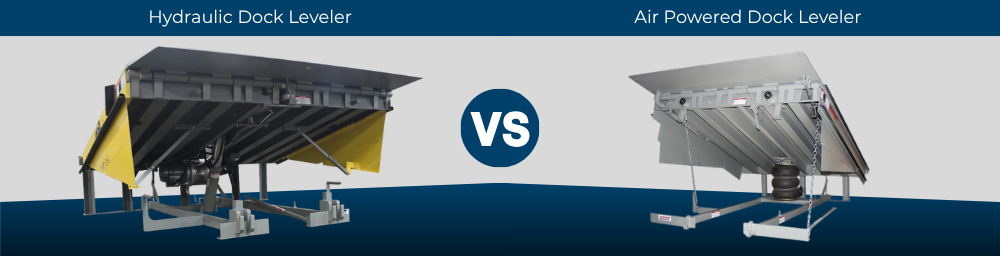
    Hydraulic vs. Air Powered Dock Levelers: Which Loading Dock Solution Is Right for Your Facility?

    When selecting a loading dock leveler, two of the most popular options are hydraulic dock levelers and air powered dock levelers. Both provide push-button operation, improve loading dock safety, and help forklifts and pallet jacks move efficiently between trailers and warehouse floors. However, the way they operate, and the types of facilities they best serve,  can differ significantly. If you’re evaluating loading dock equipment for a warehouse, distribution center, manufacturing plant, or logistics operation, understanding the advantages and limitations of each system can help you make a more informed decision.

    What Is a Hydraulic Dock Leveler?

    A hydraulic dock leveler uses hydraulic cylinders, pumps, and motors to raise the deck and extend the lip. These systems are fully powered and activated with a push button, requiring minimal operator effort. Hydraulic dock levelers offer the highest available capacities and are commonly selected for heavy-duty loading dock operations. Key hydraulic dock leveler features include:
    • Push-button operation
    • Fully powered deck and lip control
    • High-capacity load handling
    • Velocity fuse free-fall protection
    • Low operator effort
    • OSHA and ANSI MH 30.1 compliant designs

    What Is an Air Powered Dock Leveler?

    An air powered dock leveler uses compressed air and a bellows system to raise the deck. Rather than hydraulic fluid and cylinders, the unit relies on plant air or a dedicated compressor to lift the platform. Once the operator releases the activation button or lanyard, the leveler lowers and floats to the trailer bed. Air powered dock levelers are often considered a middle ground between mechanical and hydraulic systems because they offer push-button convenience while maintaining a relatively simple operating system. Key air powered dock leveler features include:
    • Push-button activation
    • Compressed air operation
    • Fewer moving parts
    • Reduced maintenance requirements
    • Lower ownership costs
    • OSHA and ANSI MH 30.1 compliant construction

    Hydraulic vs. Air Powered Dock Levelers: Side-by-Side Comparison

    Operation

    Hydraulic dock levelers use hydraulic cylinders and pumps to power both the deck and lip movement. Air powered dock levelers use compressed air and a bellows system to raise and position the deck.

    Winner: Tie

    Both systems provide push-button operation and eliminate the manual lifting required by traditional mechanical dock levelers.

    Load Capacity

    Hydraulic dock levelers offer the widest capacity range, with models available from 20,000 to 120,000 pounds capacity. This makes them suitable for virtually every loading dock application, from retail distribution to heavy industrial manufacturing. Air powered dock levelers are commonly available in capacities ranging from 25,000 to 50,000 pounds and are designed for standard commercial and industrial loading dock operations.

    Winner: Hydraulic Dock Levelers

    Facilities handling heavy loads or operating around-the-clock distribution centers typically benefit from the higher capacities offered by hydraulic systems.

    Maintenance

    One of the primary advantages of air powered dock levelers is simplicity. Because they contain fewer moving parts than hydraulic systems, maintenance requirements are often reduced. This can contribute to a lower total cost of ownership over time. Hydraulic dock levelers are also designed for long-term reliability but include pumps, motors, cylinders, hoses, and hydraulic fluid that require periodic inspection and service.

    Winner: Air Powered Dock Levelers

    Facilities prioritizing simplicity and reduced maintenance often find air powered systems appealing.

    Safety

    Both hydraulic and air powered dock levelers are designed to improve loading dock safety and are manufactured to comply with OSHA requirements and ANSI MH 30.1 standards. Hydraulic systems utilize in-line velocity fuses that help prevent uncontrolled platform descent. Air powered systems feature toe guards, safety stops, lockout/tagout provisions, and other built-in safety measures designed to protect operators and maintenance personnel.

    Winner: Tie

    Both technologies provide reliable and safe operation when properly maintained and serviced.

    When Should You Choose a Hydraulic Dock Leveler?

    A hydraulic dock leveler may be the best choice if your operation:
    • Handles heavy loads on a regular basis
    • Operates a high-volume warehouse or distribution center
    • Requires maximum dock throughput
    • Utilizes forklifts continuously throughout the day
    • Needs capacities beyond standard dock applications
    • Prefers fully powered deck and lip operation
    Hydraulic systems are often selected by facilities looking for maximum performance, capacity, and operational efficiency.

    When Should You Choose an Air Powered Dock Leveler?

    An air powered dock leveler may be the better option if your facility:
    • Already has compressed air infrastructure
    • Wants push-button convenience without a hydraulic system
    • Prioritizes reduced maintenance requirements
    • Is looking for a cost-effective alternative to hydraulic technology
    • Supports typical warehouse and shipping operations
    • Wants to minimize electrical consumption at the dock position
    Air powered dock levelers offer an effective balance between performance, simplicity, and affordability.

    Hydraulic vs. Air Powered Dock Levelers: Quick Comparison

    Edit
    Feature Hydraulic Dock Levelers Air Powered Dock Levelers
    Operation Fully hydraulic cylinders and pump system Compressed air bellows system
    Best For High-volume and heavy-duty facilities Standard industrial and commercial facilities
    Maintenance Low maintenance Reduced maintenance due to fewer moving parts
    Activation Push-button Push-button
    Electrical Requirements Requires hydraulic pump and motor Uses existing compressed air infrastructure
    Capacity Up to 120,000 lbs Typically up to 50,000 lbs
    Safety Features Velocity fuses and hydraulic safety systems Toe guards, safety stops, lockout features

    Frequently Asked Questions

    Are hydraulic dock levelers better than air powered dock levelers?

    Not necessarily. Hydraulic dock levelers are often preferred for heavy-duty operations because of their higher capacities and fully powered operation. Air powered dock levelers can provide lower maintenance requirements and may be more economical for standard dock applications.

    Do air powered dock levelers require compressed air?

    Yes. Air powered dock levelers use compressed air and a bellows lifting system. Some facilities use existing plant air, while others may use a dedicated compressor.

    Which dock leveler requires less maintenance?

    Air powered dock levelers typically contain fewer moving parts than hydraulic systems, which can reduce maintenance requirements over the life of the equipment.

    Are hydraulic dock levelers safer than air powered dock levelers?

    Both hydraulic and air powered dock levelers are designed with safety features and comply with OSHA and ANSI standards. The best choice depends on the operational requirements of your facility.

    Which dock leveler is best for a warehouse?

    The right dock leveler depends on loading volume, trailer traffic, capacity requirements, available utilities, and maintenance preferences. High-cycle facilities often choose hydraulic systems, while many standard warehouse applications perform exceptionally well with air powered dock levelers.

    Choosing the Right Dock Leveler for Your Facility

    Both hydraulic and air powered dock levelers offer significant advantages over traditional mechanical systems. Hydraulic dock levelers deliver exceptional performance, high capacities, and fully powered operation for demanding environments. Air powered dock levelers provide push-button convenience, simplified maintenance, and dependable performance for many warehouse and industrial applications. The best solution ultimately depends on your facility’s loading dock traffic, operational demands, maintenance goals, and available infrastructure. Careful evaluation of these factors can help ensure you select the dock leveler that delivers the greatest long-term value for your operation.
    Please select a valid form

    Cold Storage Doors in Industrial Efficiency

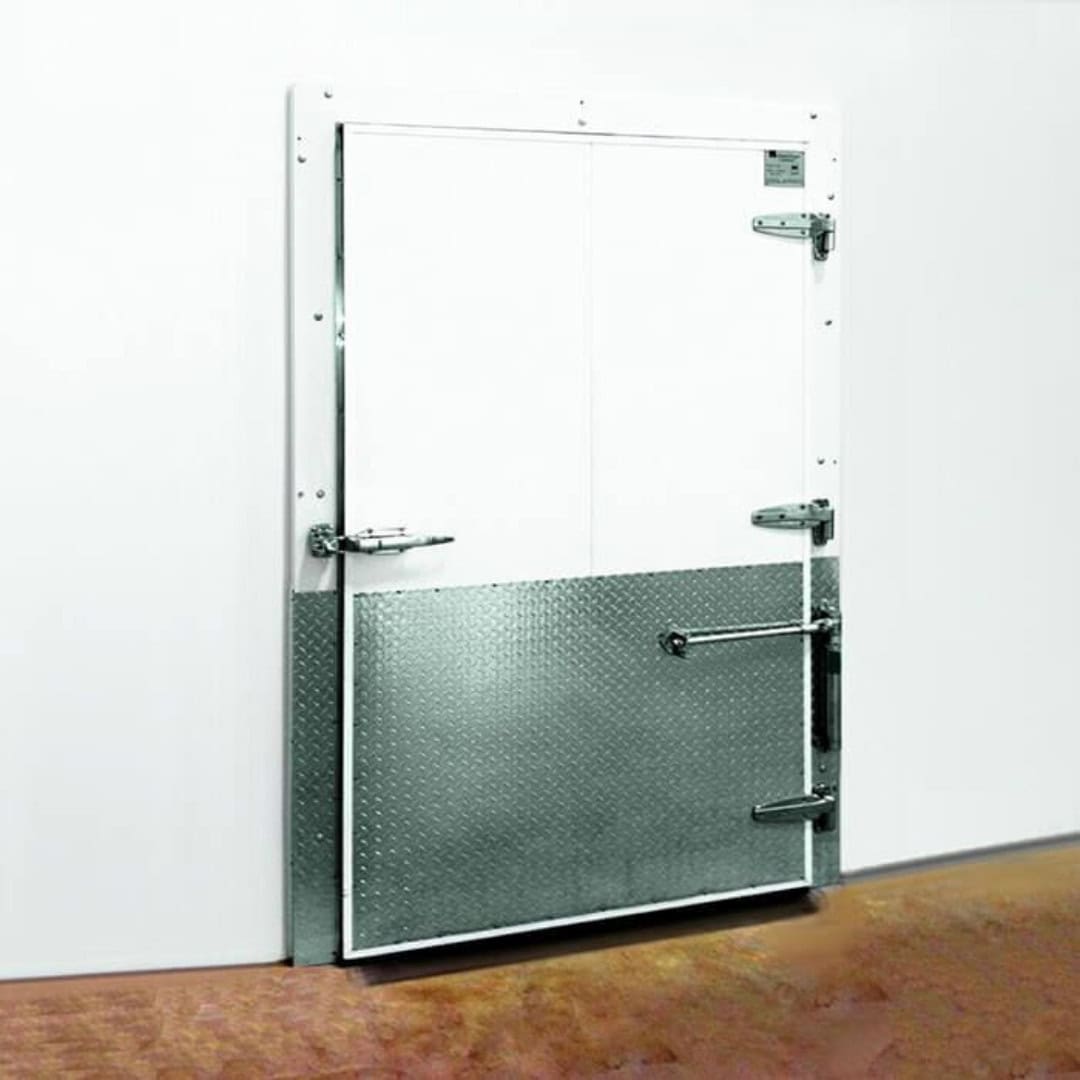
    Cold Storage Door form Barron Equipment

    A cold storage door is a specialized door system designed to maintain a controlled temperature environment in industrial and commercial refrigerated spaces. These are most applicable for walk-in freezers, refrigerated warehouses, food processing plants, pharmaceutical storage facilities, and distribution centers.

    Core Purpose

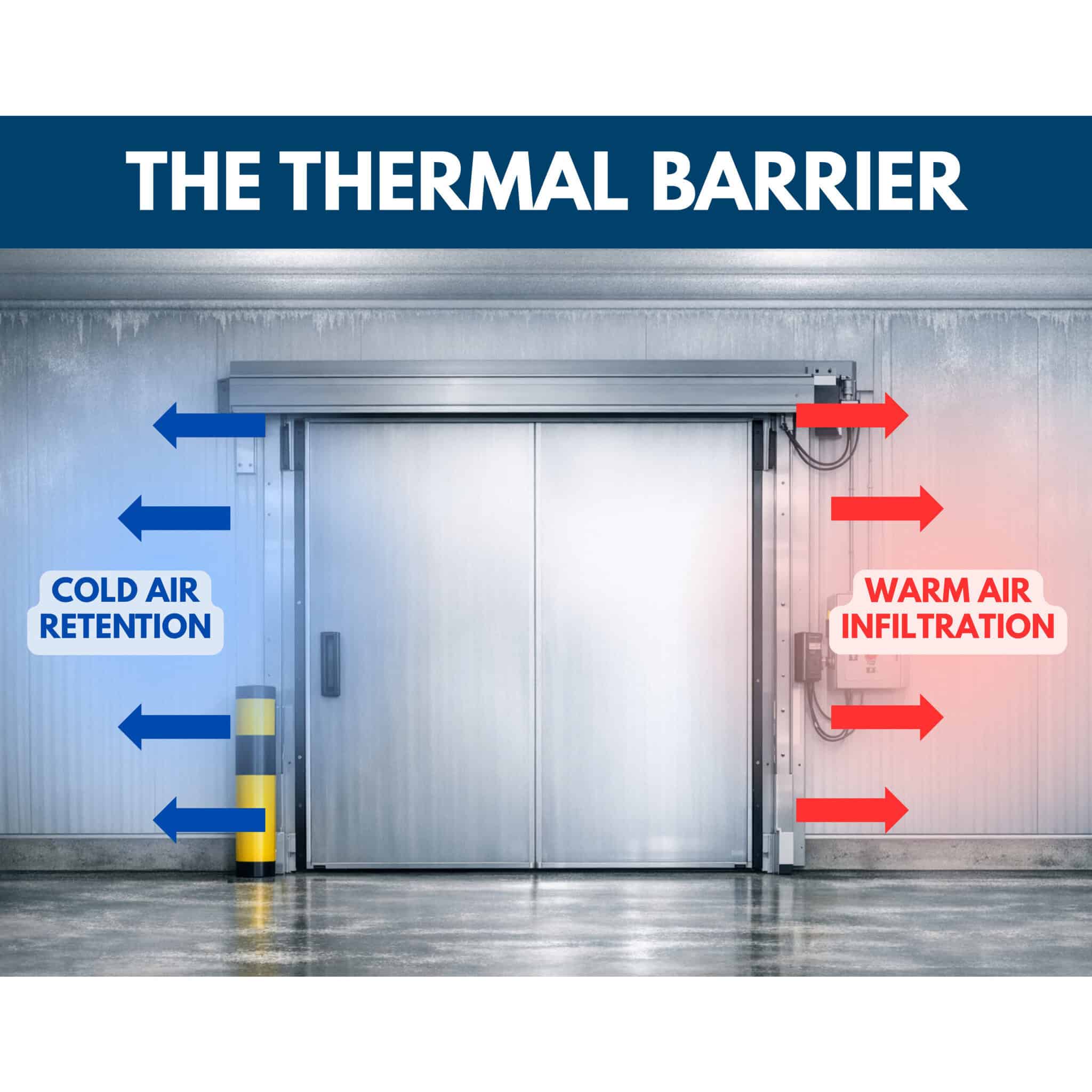
    The fundamental role of a cold storage door is to act as a thermal barrier — minimizing the exchange of air (and therefore heat) between a refrigerated zone and the ambient environment. Every time the barrier is breached or poorly sealed, warm air infiltrates the cold zone, forcing refrigeration systems to work harder to restore the ideal temperature.

    diagram of the thermal barrier form barron equipment

    Why It Matters for Industrial Efficiency

    Energy consumption is the biggest factor. Refrigeration systems can account for 30–50% of total energy costs in food distribution and cold chain facilities. A poorly performing door — one that leaks, stays open too long, or lacks adequate insulation — directly inflates that number. Well-designed cold storage doors reduce infiltration losses and cut refrigeration load significantly.

    Throughput and workflow also depend on door performance. High-traffic areas (loading docks, production lines) need doors that open and close quickly without creating bottlenecks. Slow or malfunctioning doors either impede operations or are propped open, both of which hurt efficiency.

    Product integrity is a downstream consequence of temperature control. Inconsistent cold zones lead to spoilage, failed pharmaceutical compliance, or rejected shipments — all costly outcomes that efficient door systems help prevent.

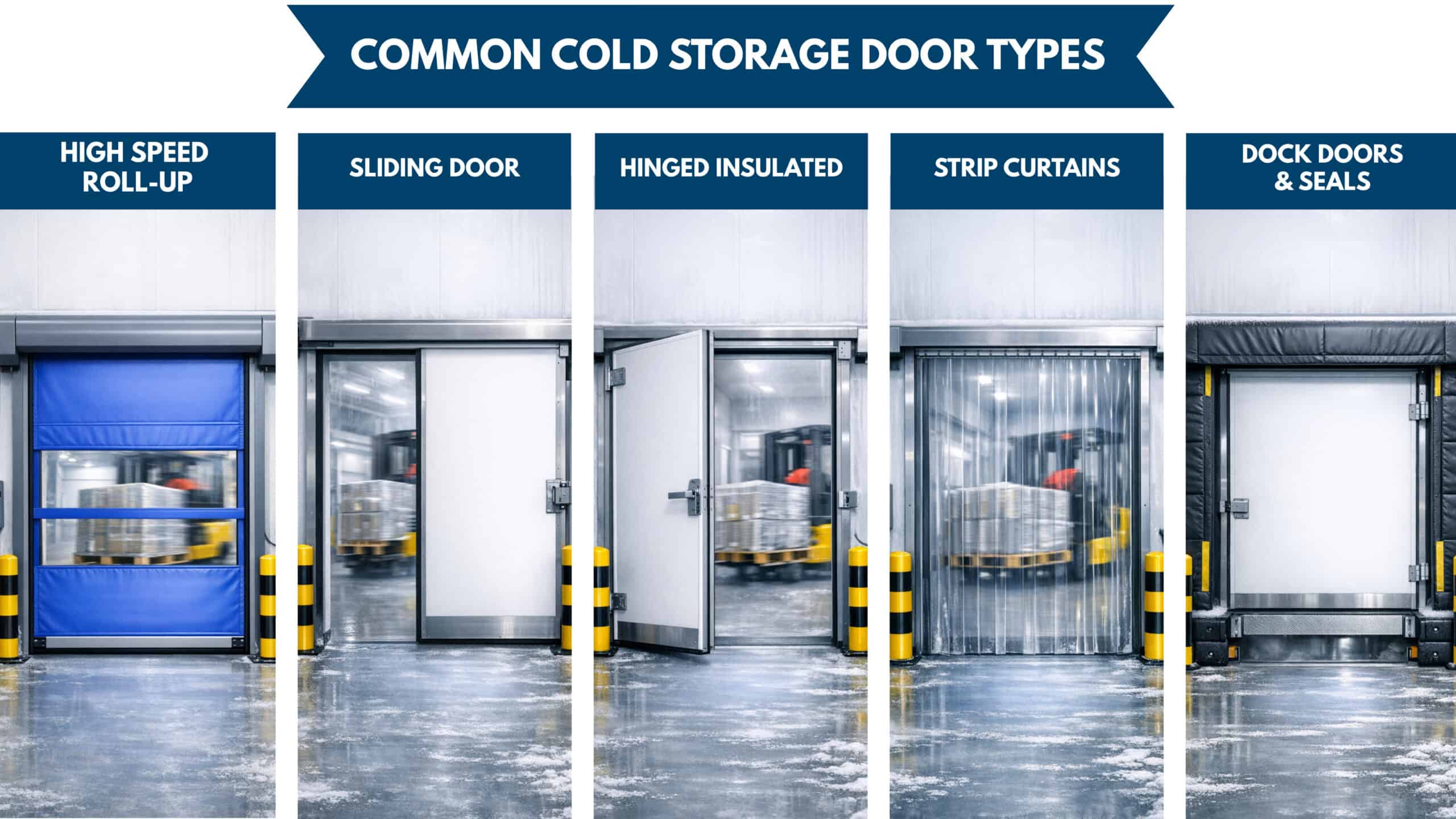
    Common Types Used in Industrial Settings

    • High-speed roll-up doors — Used in high-traffic areas; open and close in seconds to minimize air exchange during forklift or foot traffic.
    • Sliding cold storage doors — Common in large refrigerated warehouses; move horizontally to accommodate wide openings.
    • Hinged insulated doors — Heavy-duty, thick-panel doors for walk-in coolers and freezers; prioritize insulation over speed.
    • Strip curtains / PVC curtain doors — Low-cost supplemental barriers, often used alongside roll-up doors to further reduce infiltration.
    • Dock doors and dock seals — Designed to mate with truck trailers at loading bays, sealing the gap to prevent warm air intrusion during loading/unloading.

    Common types of cold storage doors from barron equipment

    Key Performance Attributes

    Attribute Why It Matters
    Insulation value (R-value) Higher R-value = less heat transfer through the door panel
    Seal tightness Gaskets and bottom seals prevent air infiltration when closed
    Opening/closing speed Faster cycles = less time the cold zone is exposed
    Durability Industrial doors face heavy use; failures cause downtime and temperature excursions
    Automatic closing Self-closing mechanisms prevent doors from being left open accidentally

    The Efficiency Equation

    In practice, facilities evaluate cold storage doors as part of a broader cold chain efficiency strategy. A high-performance door system typically pays for itself through energy savings within a few years, while also reducing wear on compressors and refrigeration equipment — extending their service life and lowering maintenance costs.

    In short, a cold storage door is far more than just an entry point — it’s a critical component of the thermal envelope that determines how efficiently a refrigerated facility operates.

    Upload PO

    5% Off All Stronghold Cabinets